Project Canopy Launches Vulnerability Intelligence Hub for Open Source
Korea's AI security initiative Project Canopy has opened a platform that gives partner organizations real-time views of open-source flaws, risk scores and official patches.
 SUMO· the number puzzle
 Dialo· learn languages by speaking
 ediviewer· read EDI files like documents
 giftdetect· the right gift in minutes
Project Canopy, an AI-driven public-interest security initiative run by the nonprofit Project Plasma in South Korea, has launched a dedicated platform called the Vulnerability Intelligence Hub, the group said on November 3.
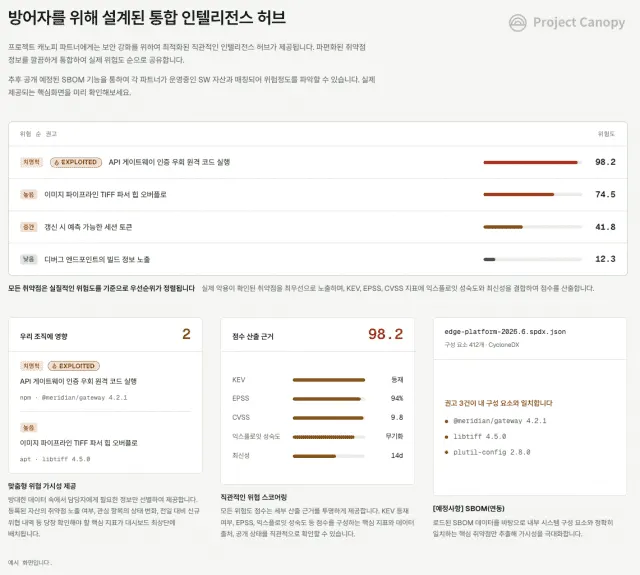
The hub brings together vulnerabilities verified by Canopy's research team, multi-dimensional risk indicators (CVSS, EPSS and KEV), official patches and security advisories in one place. Participating agencies and companies can see which open-source flaws affect their own systems, track patch status in real time and act before attackers do.
Research already under way
The launch follows a period in which attackers have been using increasingly advanced AI to find and exploit weaknesses faster. Canopy has responded by applying AI-based offensive security techniques to open-source software and public-service infrastructure that underpin government networks and services for citizens.
Its researchers have analyzed projects including eGovFRAME, the foundation of South Korean public services, as well as Spring Framework/Boot, Docker, LiteLLM, Grafana, Istio, libdb and python.org. They identified numerous vulnerability candidates, completed proof-of-concept work and reported the findings, including high-risk cases, to project maintainers in sequence. Some key fixes are done. The remaining items will be disclosed as official patches ship, in line with Coordinated Vulnerability Disclosure (CVD) guidelines.
Demand-driven model
Canopy also introduced a demand-based structure in which partners propose what should be analyzed. When an organization asks for a review of open-source software it relies on, researchers rank the request by user base, blind-spot status (patching capacity and incident history) and social need, then begin focused analysis.
The group plans to widen its network beyond local governments and public bodies to sectors such as healthcare and education, which often lack dedicated security budgets and staff. Any organization or company can apply to join.
Chairman Park Se-jun said defenders must deploy AI proactively when attackers exploit flaws at AI speed, and that Canopy aims to protect infrastructure and open-source ecosystems that are prone to security gaps because of limited funding and personnel.
Apps worth a look
SUMO: the number puzzleTap the right tiles, add them up, hit the target. Easy to learn, hard to master. Free, for all ages.
Dialo: learn languages by speakingTalk to an AI conversation partner; every sentence comes back corrected and explained in your language. 9 languages, A1 to C2.
ediviewer: read EDI files like documentsOpen EDIFACT and X12 messages, see every segment explained, convert to JSON/XML, export PDF and Excel. Runs locally, no upload.
giftdetect: the right gift in minutesPick who it is for, the occasion and their personality. The search engine reads product descriptions from local shops and ranks what fits. Free, no sign-up.
More from this day
See all →
Razorpay Gets Sebi Approval for Rs 5,000-6,000 Crore IPO

Rently Secures $12 Million Credit Facility to Expand in UAE

Samsung Galaxy Buds 4 Pro and 3 Pro Get Korean Hearing Aid Approval

Oman's mamun raises $3M seed for Gulf–Asia trade finance
More in: Security
See all →
Denny's Japan App Hit by Unauthorized Access, Data May Leak
7-Eleven's 7NOW: 160,000+ Customer Records Exposed in Breach

I4C warns banks and fintechs of AI agent-driven fraud attacks