Polish Robot Discovers Four New Chemical Reactions on Its Own
A robot at the Polish Academy of Sciences ran experiments for 30 days, made over 3,000 decisions and helped uncover four previously undescribed reactions.
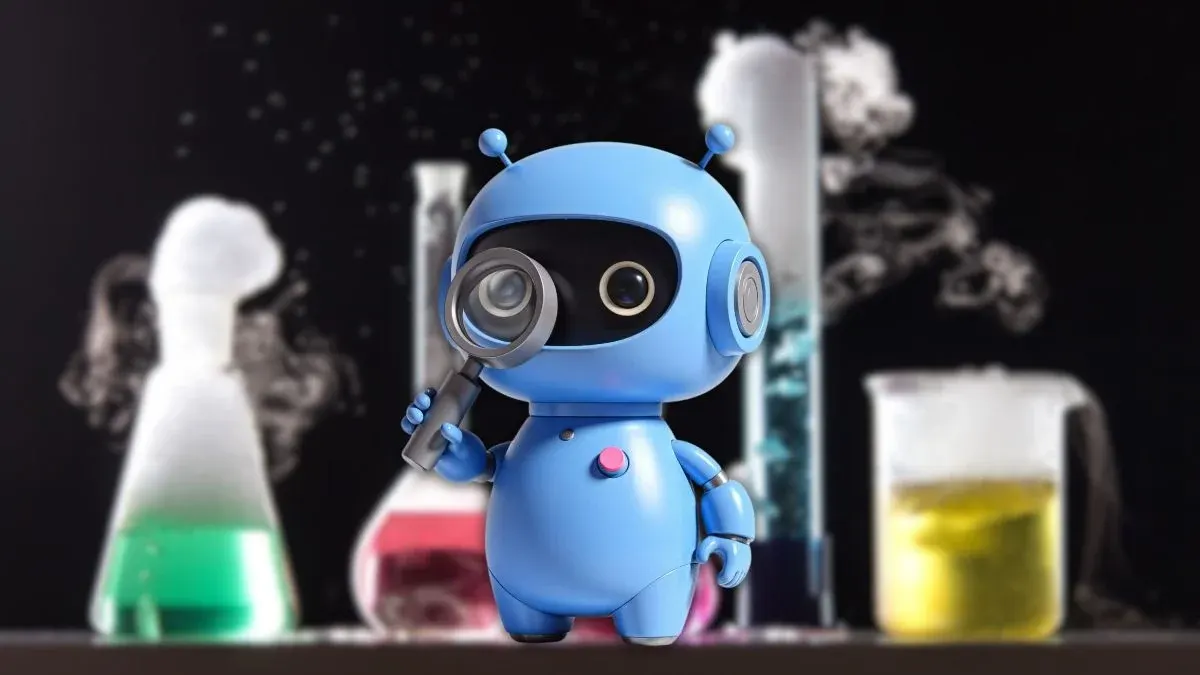
A robot built at the Institute of Organic Chemistry of the Polish Academy of Sciences in Warsaw spent 30 days running experiments, analysing results and deciding what to try next. It made more than 3,000 decisions and helped researchers discover four previously undescribed chemical reactions, according to a study published in Nature Communications.
The team was led by Dr Jarosław M. Granda. The figure of 3,000 does not mean 3,000 experiments: it counts decisions made by the software, such as whether to keep exploring particular conditions. Analysis of 100 selected reactions led to four new transformations with high enantioselectivity. These are new ways of carrying out chemical reactions, not new elements or substances of unknown composition.
How the system works
The hardware is a three-axis liquid-handling robot with a needle connected to a syringe pump, which moves prepared solutions into vials held in 3D-printed holders. It can run reactions at temperatures from -40 to about 90 °C and analyses the resulting mixtures by chromatography. Two analytical modules handled 40 to 50 mixtures a day, including nights and weekends.
Decisions are made by a deep reinforcement learning algorithm, which learns from the outcomes of its own actions. Before controlling the real device, two AI agents were trained in virtual environments that simulated experiments and chromatographic analyses: one through 20 million interactions, the other through 10 million. The robot could then decide how long to run a reaction, which temperature to use and whether a line of investigation was worth continuing.
Why it matters, and the limits
The researchers focused on asymmetric organocatalysis, used to make molecules with a defined three-dimensional shape. That matters in pharmaceuticals because mirror-image molecules can behave differently in the body. One of the four reactions yields a compound with axial chirality, while three allow the synthesis of allenes. One result concerns the first enantioselective functionalisation of a fragment known as pyrrolopyrrole.
The authors stress that the robot does not do fully independent science. People defined the search area, prepared the substrates, built the apparatus and designed the analysis, and the discovered products still needed further characterisation. The robot worked within one group of reactions using chiral phosphoric acids, and it is not yet known whether it would cope as well with entirely different chemistry. There is also no basis to claim the reactions will soon lead to new drugs. The practical gain is that chemists can hand repetitive experiments, and part of the choice of what to test next, to a machine, freeing time for planning and interpretation.
More from this day
See all →
80 Top-Funded Startups and Tech Firms in Southeast Asia Ranked
Family Sues OpenAI After Woman's Death Linked to ChatGPT Advice
Sam Altman Says Idle PC RAM Is Wasted Amid Memory Shortage
Reflect Orbital Draws Backlash After Night-Sky Light Test
More in: Science
See all →
OpenAI Yang-Mills Proof Under Review as NASA's Swift Ends Mission
Underwater Umbrellas Reduce Coral Bleaching in Florida Keys Test

Sheffield Researchers Recreate Roman Color-Changing Dichroic Glass