OpenAI Yang-Mills Proof Under Review as NASA's Swift Ends Mission
Physicists are holding back OpenAI's 1,147-page Yang-Mills proof until it is verified, while NASA's Swift ends after 20 years and an ISS airlock is sealed.
Three science stories stood out this week: a contested AI-generated proof in theoretical physics, the end of a veteran NASA observatory and a permanent fault on the International Space Station.
OpenAI's proof waits for verification
The five physicists tasked with examining a 1,147-page proof produced by an OpenAI model have declined to publish it before confirming it is correct. Mathematicians had urged a quicker release, but the reviewers say the complexity of the document is formidable.
They plan to check first how the proof is formalized in Lean, the proof-verification software, and only then submit their analysis to the scientific community. Even if it holds up, the demonstration would cover only the existence of Yang-Mills theory. It would not settle the mass gap problem, which is the part required for the Millennium Prize.
Swift telescope falls silent
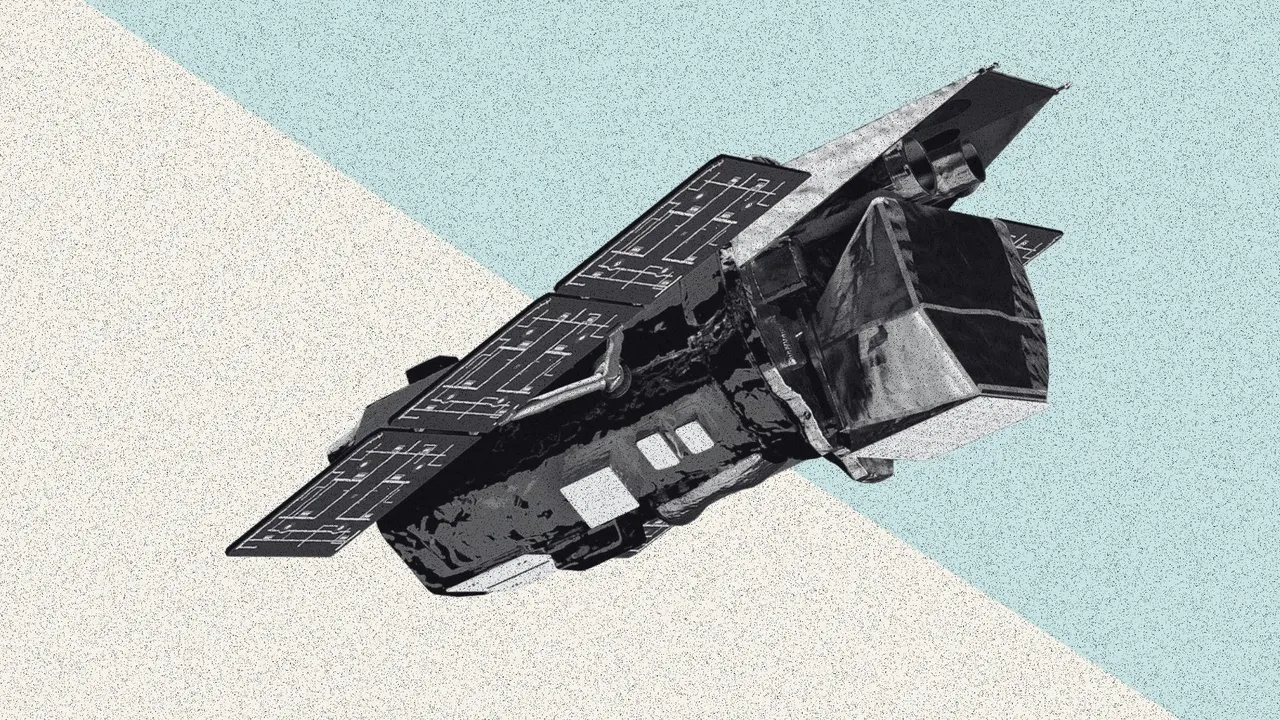
NASA has announced the end of scientific operations for the Swift telescope after 20 years in orbit and says it is preparing the observatory's deorbiting. A private rescue attempt led by Katalyst failed: its Link tug never managed to reach the spacecraft.
No operational telescope can currently take over Swift's hunt for gamma-ray bursts. The SVOM mission offers only a partial alternative, which leaves a gap for astronomers who relied on rapid follow-up of these events.
ISS airlock condemned
On the International Space Station, the rear airlock of the Zvezda module has been permanently closed. Microfissures cause air leaks that cannot be sealed.
As a result, Progress cargo ships will have to be unloaded at another port before being moved to Zvezda, where they are used to raise the station's orbit. The failure highlights the age of the ISS: Zvezda has been in service since 2000.
More from this day
See all →
80 Top-Funded Startups and Tech Firms in Southeast Asia Ranked
Family Sues OpenAI After Woman's Death Linked to ChatGPT Advice
Sam Altman Says Idle PC RAM Is Wasted Amid Memory Shortage
Reflect Orbital Draws Backlash After Night-Sky Light Test
More in: Science
See all →
Polish Robot Discovers Four New Chemical Reactions on Its Own
Underwater Umbrellas Reduce Coral Bleaching in Florida Keys Test

Sheffield Researchers Recreate Roman Color-Changing Dichroic Glass