OpenAI and Mazda Start Joint Research on AI-Driven Car Design
OpenAI has begun joint research with Mazda on AI-assisted vehicle design, working with the carmaker's aerodynamics and crash-safety engineers on simulations.
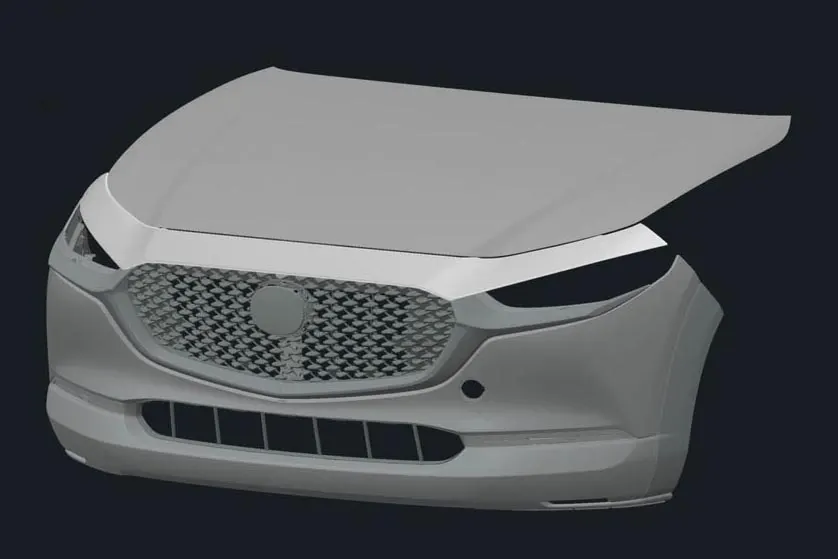
OpenAI has started joint research with Mazda on using AI in vehicle design, the company announced. The project pairs OpenAI's tools with Mazda's aerodynamics and crash-safety engineers to simulate the airflow around a vehicle and the behavior of its body structure, while also weighing design and cost.
In the aerodynamics work, the team uses "GPT-6 Astra" inside Codex to generate multiple variations of the vehicle's front-end shape. Airflow is then analyzed to narrow the options down to those expected to reduce drag. OpenAI says it plans to publish progress and results from the collaboration over the next few months.
Racing team and prototype device
OpenAI is also expanding its work with the US racing team Chip Ganassi Racing. The two are testing a method that turns 3D scan data of existing parts into editable CAD models and 2D manufacturing drawings. The approach could be used for parts whose original design data is no longer available. The team's engineers will check the accuracy of the models and drawings and whether the parts can actually be manufactured.
Alongside the announcements, OpenAI showed a prototype device designed with GPT-6 Astra. The device can be operated by voice through Codex. Two OpenAI employees designed it in under a week, and a contract manufacturer built a small batch of prototypes in under a month.
The AI handled the enclosure and printed circuit board (PCB) design, component selection and firmware. According to the company, reflecting manufacturing constraints, dimensional tolerances and assembly conditions in the design still required several rounds of review and revision.
Why it matters
The projects show OpenAI pushing its models beyond software into physical engineering, where designs must satisfy manufacturing and safety constraints. The prototype example suggests AI can compress early design timelines, though human review remains necessary. The coming Mazda results should show whether the aerodynamic gains hold up in practice.
Apps worth a look
 SUMO: the number puzzle
Tap the right tiles, add them up, hit the target. Easy to learn, hard to master. Free, for all ages.
 Dialo: learn languages by speaking
Talk to an AI conversation partner; every sentence comes back corrected and explained in your language. 9 languages, A1 to C2.
 ediviewer: read EDI files like documents
Open EDIFACT and X12 messages, see every segment explained, convert to JSON/XML, export PDF and Excel. Runs locally, no upload.
More from this day
See all →
Hacked fridges: supermarket cooling systems hit across Europe

Arkane Lyon draws three bids, including Ubisoft, from Microsoft

Naver Speeds Up Unified AI Agent as Kakao, Baemin Expand

Termit Raises Seed Round for AI Commerce Content Agent Creage
More in: Automotive
See all →
BMW to Allow Hands-Free Driving on Polish Roads This Month

Waymo and Toyota to Test bZ4X Robotaxis in Japan in 2027

Russia Proposes Treating Powerful E-Scooters Like Mopeds