NASA Seeks Industry Ideas to Save Hubble From Falling by 2033
NASA has asked industry for ways to raise Hubble's orbit, service it or bring it down in a controlled reentry, as an analysis puts the odds of a 2033 fall at 50%.
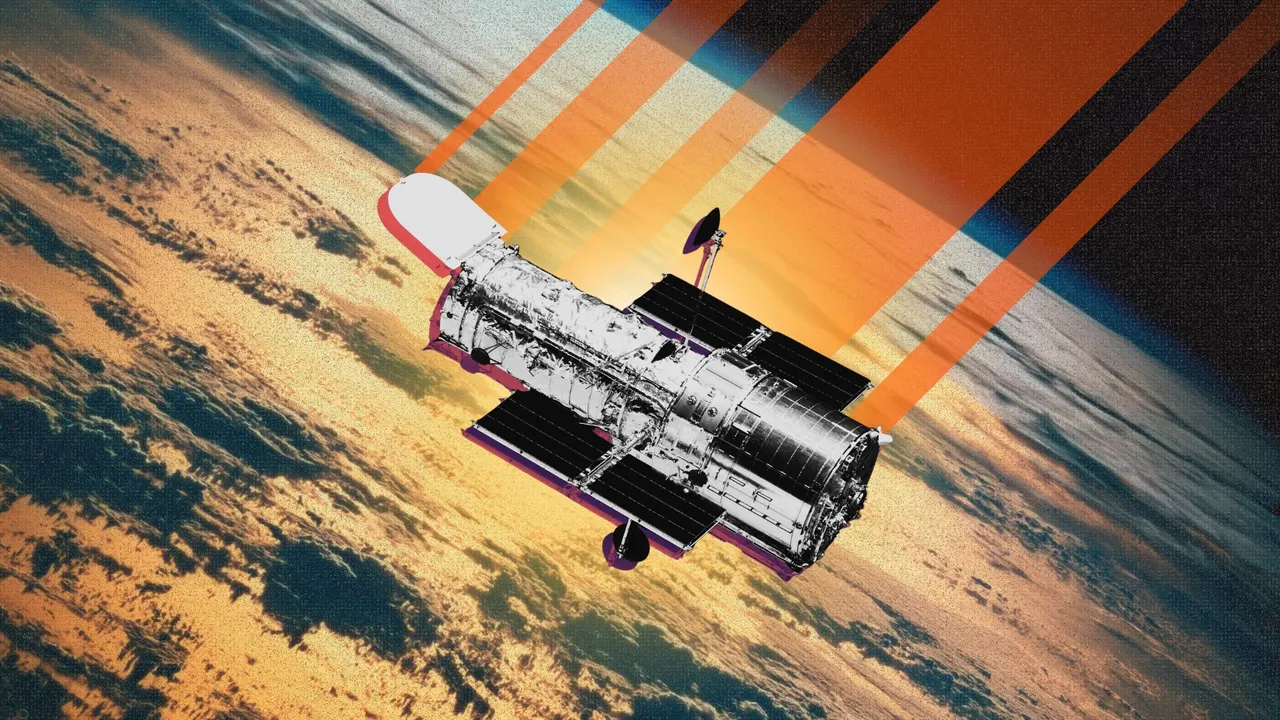
NASA has opened a call for ideas from private industry to rescue the Hubble Space Telescope, which is slowly losing altitude. The request for information, issued by the Goddard Space Flight Center, which manages the observatory, asks companies how they might boost Hubble's orbit, extend its life through servicing, or bring it down in a controlled atmospheric reentry. Any mission would need to launch by 2032.
A growing risk of reentry
Hubble is still working, and it is not in immediate danger. But an analysis dated July 2026 estimates a one-in-ten chance that the telescope falls to Earth in September 2032, rising to one in two before December 2033.
The stakes are high for science. Launched in 1990, Hubble, now more than 35 years old, receives seven times more observation requests than it can handle.
Three options on the table
The document outlines three paths. The first is to capture Hubble and lift it above 600 kilometers. The second is a servicing mission to prolong its operational life. The third is a controlled reentry, which would mean the end of the satellite.
For the first two scenarios, the telescope must not be damaged so it can keep operating. Goddard will provide technical data, while the launcher, spacecraft and any crew remain the responsibility of the contractor.
The challenge is real. The LINK mission, meant to help the Swift telescope, which is also sinking toward Earth, planned to send a small robot to grab it and raise its orbit. It did not go as planned, and Swift is now lost.
What comes next
The idea of a Hubble rescue is not new. In 2022, NASA and SpaceX studied a Crew Dragon mission, but the agency rejected it in June 2024, judging the risk to the telescope too high. On June 1, 2026, Shawn Domagal-Goldman, director of NASA's astrophysics division, told an advisory committee he was open to raising the orbit if Hubble's operating costs come down.
The request is not a purchase order. NASA plans to issue a formal solicitation once it has analyzed industry responses, and time is tight: setting up such a mission will take months.
More from this day
See all →
Russian Carriers Delay Blocking Unlabeled Bank Calls to Nov 13

Re:Build Raises $2.1B as Kalshi and Bedrock Lead Week's Rounds

YouTube Music and Premium Pass 150 Million Subscribers

Anthropic Launches Tools to Show Companies Claude's Cost and Return
More in: Space
See all →
Ukraine's OBRIA NANO Satellite Tests a Backup to Starlink
ESA's Hera Probe Splits Didymos and Dimorphos in First Image
Callisto Replica Rises at Kourou's Historic Diamant Launch Pad