Huawei Pura 90 Plus Launches With Kirin 9025 and 100W Charging
Huawei has launched the Pura 90 Plus with the new Kirin 9025 chip, a 6.8-inch LTPO OLED display and a 5,700 mAh battery. Sales start in China on October 31.

Huawei has officially added the Pura 90 Plus to its smartphone lineup, pairing the new Kirin 9025 processor with a 6.8-inch display, a triple rear camera and fast wired and wireless charging.
Display, design and performance
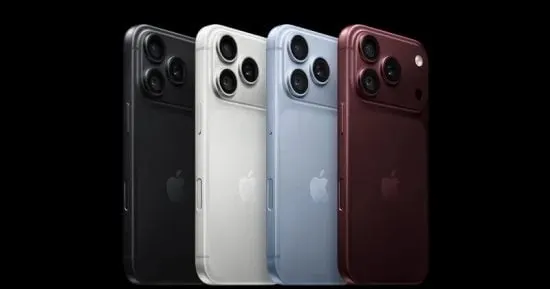
The phone has a curved frame that feels similar to the previous generation and comes in four colors: black, white, purple and dawn gold. The screen is a flat 6.8-inch OLED panel with a centered punch-hole selfie camera. It uses an adaptive LTPO refresh rate from 1 to 120 Hz.
The Kirin 9025 is a new chip. According to the company, it delivers up to 20% higher speed and efficiency than the Kirin 9020, which should help with demanding apps and games. The phone runs HarmonyOS 7, which brings 3D wallpapers and an upgraded Celia voice assistant built on large language models.
Cameras and battery
The rear system uses XMAGE imaging algorithms and Red Maple technology for color accuracy. The 50-megapixel main camera has a variable aperture from f/1.6 to f/4.0 and optical image stabilization. It is joined by a 40-megapixel ultra-wide lens at f/2.2 and a 48-megapixel telephoto macro lens at f/2.1. The telephoto offers 4x optical zoom and up to 100x digital zoom. The front camera is 13 megapixels at f/2.0 with AI features.
The 5,700 mAh battery supports 100W wired and 80W wireless charging.
Price and availability
The phone has 12 GB of RAM and comes in three storage options. Official sales begin on October 31, 2026, at 10 a.m. China time. A limited-time discount of 300 yuan runs until November 30. The 256 GB version costs 5,499 yuan, or 5,199 yuan during the discount period. Prices for the other storage tiers were not given.
More from this day
See all →
Russia's 2027 Income Rules for Foreign Workers: What Employers Must Check
How to block spam and sales calls on your Samsung Galaxy
Sheffield Researchers Recreate Roman Color-Changing Dichroic Glass