Ukraine War Drones Now Use Microphones to Find Soldiers
Russian and Ukrainian forces are fitting cheap microphones to ambush drones and ground robots, letting them detect enemies they cannot see on camera.
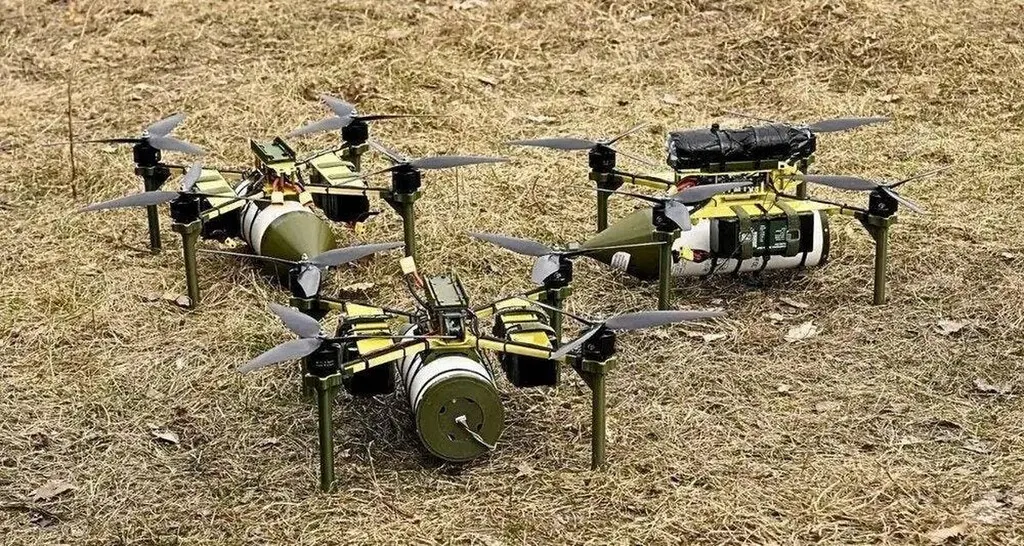
Russian and Ukrainian forces are adding microphones to attack drones and ground robots, allowing them to detect enemies outside the view of their cameras. The modification uses inexpensive electronics and lets a machine pick up engines, voices and nearby movement without ever seeing the source.
From waiting drones to listening drones
The trend grows out of the so-called Zhdun, or "waiters": FPV ambush drones used since late 2024. Instead of burning battery in flight, they land beside a road, switch off their motors and wait for hours, even overnight, before taking off to strike a target at short range. Their weakness was the need for visual surveillance of the spot, which also made them easier for other drones to find and destroy.
On 14 August, Ukrainian specialist Serhii Beskrestnov warned that Russia was using ambush drones with microphones. On 11 September, Russian maker Ushkuynik confirmed the technology on its fibre-optic Prince Vandal Novgorod (KVN) FPV drones, whose production analysts put at around 50,000 units a month. A drone hidden in grass hears a vehicle's engine and launches as it approaches.
Ukraine answered within weeks. On 17 October, Ukrainian company Ptashka said its fibre-optic FPV drones now carry microphones. By its own figures, they can detect loud speech at 20 to 30 metres, light vehicles at 50 to 100 metres and heavy machinery up to 200 metres. These are manufacturer claims and depend on terrain and ambient noise. Its Multi-Zhdun system lets one operator monitor several ambushing drones and flags which one hears something suspicious.
Ground robots listen and talk
Unmanned ground vehicles used to carry ammunition, evacuate the wounded, lay mines and attack positions are changing too. Companies such as DevDroid fit microphones that stream sound to the operator, and are now adding speakers that play recorded messages or relay the operator's voice. Robots can call on Russian soldiers to surrender, talk to isolated Ukrainian fighters and help reach casualties during evacuations. DevDroid says it can test and ship certain software updates in about a week.
What comes next
A possible next step is feeding audio from many FPV drones into military information platforms such as Delta, estimating the position of gunfire and engines and passing it to units that can respond. That is a technical possibility, not a demonstrated capability.
There are limits: a single microphone cannot always identify or precisely locate a source, and wind, explosions and background noise interfere. Still, for soldiers, avoiding a camera no longer means avoiding detection, and silence is becoming another form of camouflage.
More from this day
See all →


More in: Other
See all →
Kongsberg to Supply PROTECTOR RS4 Weapon Stations for Polish K2PL
Lenin's Rolls-Royce Held Up by a Moscow Gangster in 1919

Hope: Na Hong-jin's $74M Alien Thriller Opens in Spain