Huawei Magneto-Electric Disk puts an SSD and tape in one box
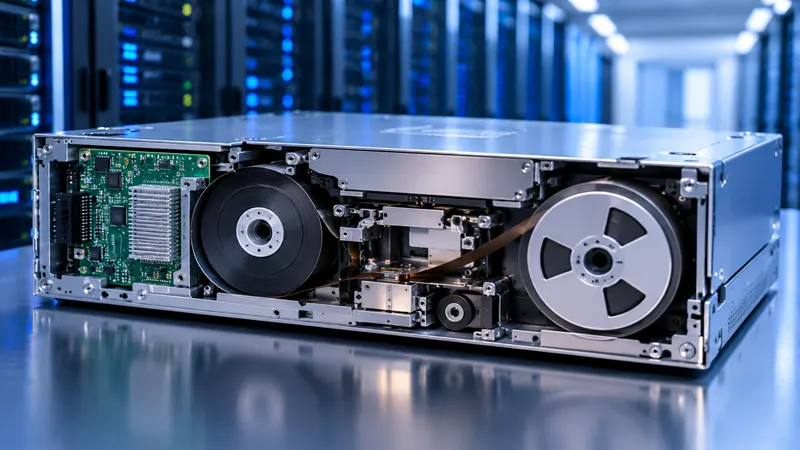
Huawei's Magneto-Electric Disk packs an SSD and a magnetic tape drive into one enclosure, and it is now being tested at a customer site in China.
 SUMO· the number puzzle
 Dialo· learn languages by speaking
 ediviewer· read EDI files like documents
 giftdetect· the right gift in minutes
Huawei has built a storage device that sounds like a joke from 1985: a tape recorder and an SSD sharing one case. It is called the Magneto-Electric Disk, or MED, and according to Chinese reports it has just left the lab for a real-world trial.
The test is running at a customer called Yunshangtun in Guian, in China's Guizhou province. The company first revealed the technology two years ago. Intended uses include storing datasets for large language models, media archives, backups, disaster recovery and scientific research.
What is the Huawei Magneto-Electric Disk?
Each MED unit holds an SSD plus magnetic tape with its own drive and read/write heads. The goal is to combine the cheap long-term storage of tape with retrieval that is fairly quick, closer to what a hard disk offers. The SSD holds metadata, essentially an index, so the system can find the right spot on the tape fast. Tape itself draws no power while it sits idle, unlike spinning hard drives.
The name comes from the magneto-electric effect, where an electric field can change a material's magnetic state. In a normal hard drive, a coil in the write head creates a magnetic field to flip bits. Here, voltage applied directly could do the job, which might cut power use and heat. Huawei has not disclosed the actual media design, the magnetic material or how reading works.
Why tape, and why now?
AI is producing more "warm" and "cold" data, meaning information that is rarely touched but may suddenly be needed by one of many AI agents running at once. Science is a typical case. There is also a political angle: Huawei could lose access to hard drives through sanctions, while China's flash memory production is in decent shape.
Tape demand is already rising. Fujifilm recently announced its largest expansion of LTO tape production in 20 years, and LTO shipments grew 57% year on year in the first quarter of 2026.
Whether MED proves its worth, the trial should show. Its position between hard-disk systems and tape libraries is the pitch, and real workloads will test it.
Apps worth a look
SUMO: the number puzzleTap the right tiles, add them up, hit the target. Easy to learn, hard to master. Free, for all ages.
Dialo: learn languages by speakingTalk to an AI conversation partner; every sentence comes back corrected and explained in your language. 9 languages, A1 to C2.
ediviewer: read EDI files like documentsOpen EDIFACT and X12 messages, see every segment explained, convert to JSON/XML, export PDF and Excel. Runs locally, no upload.
giftdetect: the right gift in minutesPick who it is for, the occasion and their personality. The search engine reads product descriptions from local shops and ranks what fits. Free, no sign-up.
More from this day
See all →
Florida sea turtle hatchlings: every one tested is female
Daiso password notebook sells out as Japan's data leaks pile up

Claude account bans: a 193-person survey tests the VPN advice

Jensen Huang scandal: a third Nvidia employee is now reported
More in: Hardware
See all →
Light Cavalry solar drone flies without a runway for 30 hours

AgiBot G2 robots run a Shanghai store for 24 hours, 1,730 tasks

AMD Adrenalin 26.11.1 fixes Radeon driver SSD write bug