Daiso password notebook sells out as Japan's data leaks pile up
Daiso's paper password notebook is running short in Japan after a wave of data breaches. Even the government's security agency says paper is fine, with caveats.
 SUMO· the number puzzle
 Dialo· learn languages by speaking
 ediviewer· read EDI files like documents
 giftdetect· the right gift in minutes
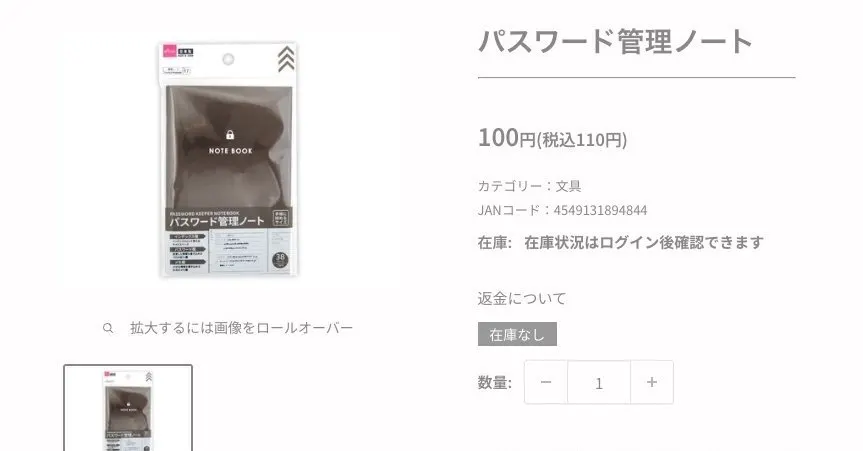
A paper notebook for writing down your passwords is suddenly hard to find in Japan. Daiso, the 100-yen store chain, says its "password management notebook" has been in short supply since late October, as breach after breach has people rethinking how they keep their logins.
The notebook is exactly what it sounds like: a book where you write the ID and password for each service. Daiso began rolling it out around autumn 2020, mainly for older people who dislike or struggle with digital tools. Sales have climbed week by week since the end of October, the company says, "to a degree that surprised even the developers". It gave no sales figures. A restock is planned for November, and Daiso is adjusting production. It has no plans for more password-related products for now.
The timing matches the news. According to MM Research Institute, cyberattack-related leak cases in Japan rose from 72 in August and 81 in September to 193 in October. Leaked credentials such as passwords and login IDs reached about 161 million by the end of October, roughly 31 times the 5.14 million for all of 2025. One of the biggest cases: Sourcenext said on October 15 that up to about 22.52 million member records, including passwords, may have leaked.
Is writing passwords on paper safe?
Japan's Information-technology Promotion Agency (IPA) says its view hasn't changed since 2022: it does not necessarily rule paper out. It recommends a different password for every service, around 15 characters mixing upper and lower case letters and numbers. Password manager apps are fine too, it says, if you pick a trustworthy service with proper support.
Paper has weak spots. Carry the notebook around and you risk losing it or having someone peek. And a notebook can't help when a service itself is breached. Attackers take the leaked ID and password pairs and try them on other sites, a method called credential stuffing. Muji confirmed this kind of attack on its online store in November, and it is suspected on the official lottery site.
IPA's advice is to switch on multi-factor authentication or passkeys wherever a service offers them, and to treat unexpected emails and text messages as fake rather than opening their links.
Apps worth a look
SUMO: the number puzzleTap the right tiles, add them up, hit the target. Easy to learn, hard to master. Free, for all ages.
Dialo: learn languages by speakingTalk to an AI conversation partner; every sentence comes back corrected and explained in your language. 9 languages, A1 to C2.
ediviewer: read EDI files like documentsOpen EDIFACT and X12 messages, see every segment explained, convert to JSON/XML, export PDF and Excel. Runs locally, no upload.
giftdetect: the right gift in minutesPick who it is for, the occasion and their personality. The search engine reads product descriptions from local shops and ranks what fits. Free, no sign-up.
More from this day
See all →
AI smart glasses with health tracking: heart rate and eye strain

Chinese medical drone fires emergency drugs into wounded soldiers

Florida sea turtle hatchlings: every one tested is female

Claude account bans: a 193-person survey tests the VPN advice
More in: Security
See all →
Tinder GDPR fine: Irish regulator hits Match Group's EU arm

Uber data breach: drivers' license data stolen via Fireworks AI

Pedro Sánchez on his hacked iPhone: "It's a UFO" on Jordi Wild's podcast