Hera spacecraft finds Dimorphos tumbling after NASA's DART hit
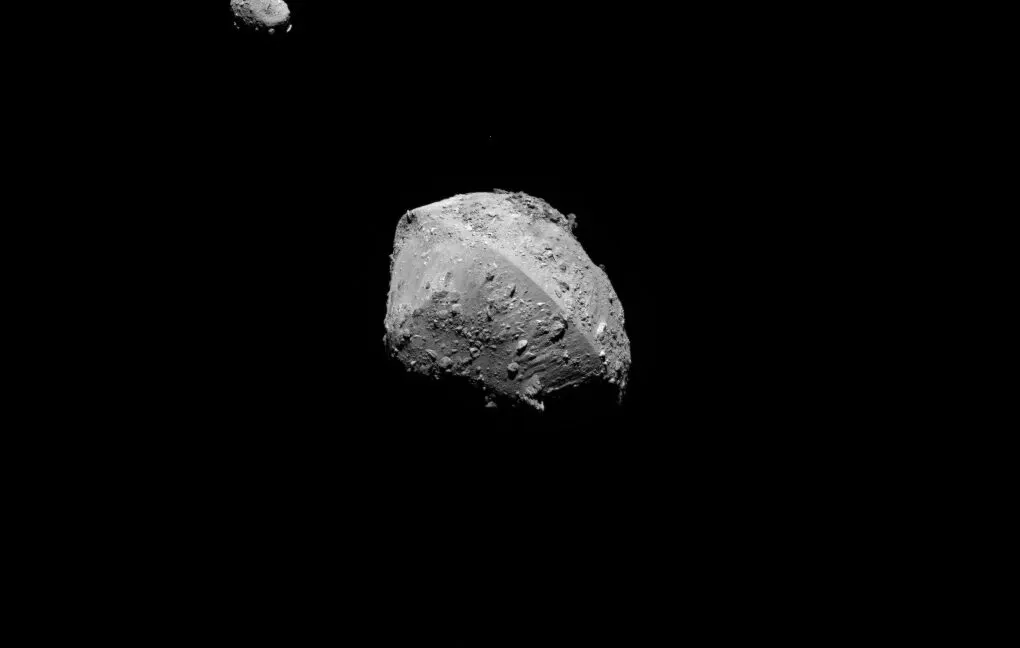
ESA's Hera probe reached the asteroid NASA smashed in 2022. DART left a stadium-sized crater, hundreds of boulders and a moon that now tumbles in its orbit.
 SUMO· the number puzzle
 Dialo· learn languages by speaking
 ediviewer· read EDI files like documents
 giftdetect· the right gift in minutes
NASA's DART spacecraft hit the asteroid Dimorphos four years ago, and now Europe's Hera spacecraft has gone back to look at the damage. It is messier than anyone pictured. Dimorphos has a crater nearly as big as the asteroid itself, hundreds of boulders drift around it, and the little moon is tumbling.
"We knew right away that the impact was successful, that DART made a really, really large mess," said Sabina Raducan, a planetary scientist at the International Space Science Institute in Bern. "However, we didn't really know what kind of mess."
DART, the Double Asteroid Redirection Test, struck Dimorphos in September 2022 at more than 6 kilometers per second. It shortened the moon's 12-hour orbit around the larger asteroid Didymos by about 33 minutes, 25 times the most conservative expectation. But the spacecraft was destroyed, so only distant telescopes and a small CubeSat saw the aftermath.
Hera arrived after a two-year trip from Florida. ESA's first images show that the car-sized impactor dug a crater the size of a stadium in a rock about 151 meters across. "We did both," said Patrick Michel, Hera's principal investigator: scientists had predicted either a crater or a reshaped asteroid, and the crater is so large that the shape changed. Didymos still spins as it did in 2022. Dimorphos does not.
What is the debris around Didymos and Dimorphos?
Hera's hyperspectral camera picked up hundreds of rock fragments, from football-sized to washing-machine-sized. They may have been thrown off by DART, but scientists say they need more data. The boulders could also be left over from the moon's formation long ago.
The field complicates navigation. Two CubeSats, Milani and Juventas, are due to be released in January. "There is a mix of excitement and panic," said Margherita Cardi of the Milani team. Juventas engineer Claudia Balossi said the planned path runs right through the boulders, and joked that a hit would at least let them switch on their gravimeter.
The danger is lower than it sounds. Gravity here is so weak that Hera moves at about 12 centimeters per second relative to the asteroids.
What happens next?
Over the next six months Hera will move closer and the CubeSats will try to land on Dimorphos, measuring its composition, internal structure and mass. That data should help models predict how to deflect different kinds of asteroids. Michel is optimistic: once scientists understand it, he said, "we have a breakthrough, which really solves planetary defense."
Apps worth a look
SUMO: the number puzzleTap the right tiles, add them up, hit the target. Easy to learn, hard to master. Free, for all ages.
Dialo: learn languages by speakingTalk to an AI conversation partner; every sentence comes back corrected and explained in your language. 9 languages, A1 to C2.
ediviewer: read EDI files like documentsOpen EDIFACT and X12 messages, see every segment explained, convert to JSON/XML, export PDF and Excel. Runs locally, no upload.
giftdetect: the right gift in minutesPick who it is for, the occasion and their personality. The search engine reads product descriptions from local shops and ranks what fits. Free, no sign-up.
More from this day
See all →
Tether reportedly asked for a 20% fee to return stolen USDT

Claude artifacts as desktop apps: how to install on Mac and Windows

Claude Duet reaches India: the AI agent that works while you sleep

Sarvam AI Dictate and 105B Update: What the Startup Is Building
More in: Space
See all →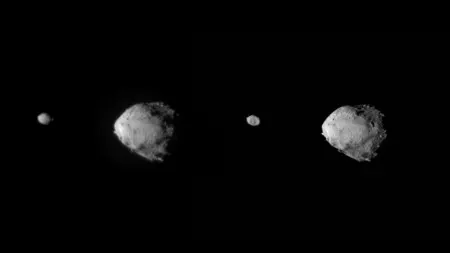
Hera probe finds Dart crater on asteroid Dimorphos and more
SpaceX Starmind: FCC OKs up to 1 million data-center satellites
Amazon Leo passes 400 satellites a week after losing 40