Fold2Unfold turns a foldable phone into its own privacy screen
Researchers found a way to hide PINs from shoulder surfers using the two halves of a foldable phone. Peekers guessed just 6.5% of keypad digits.
 SUMO· the number puzzle
 Dialo· learn languages by speaking
 ediviewer· read EDI files like documents
 giftdetect· the right gift in minutes
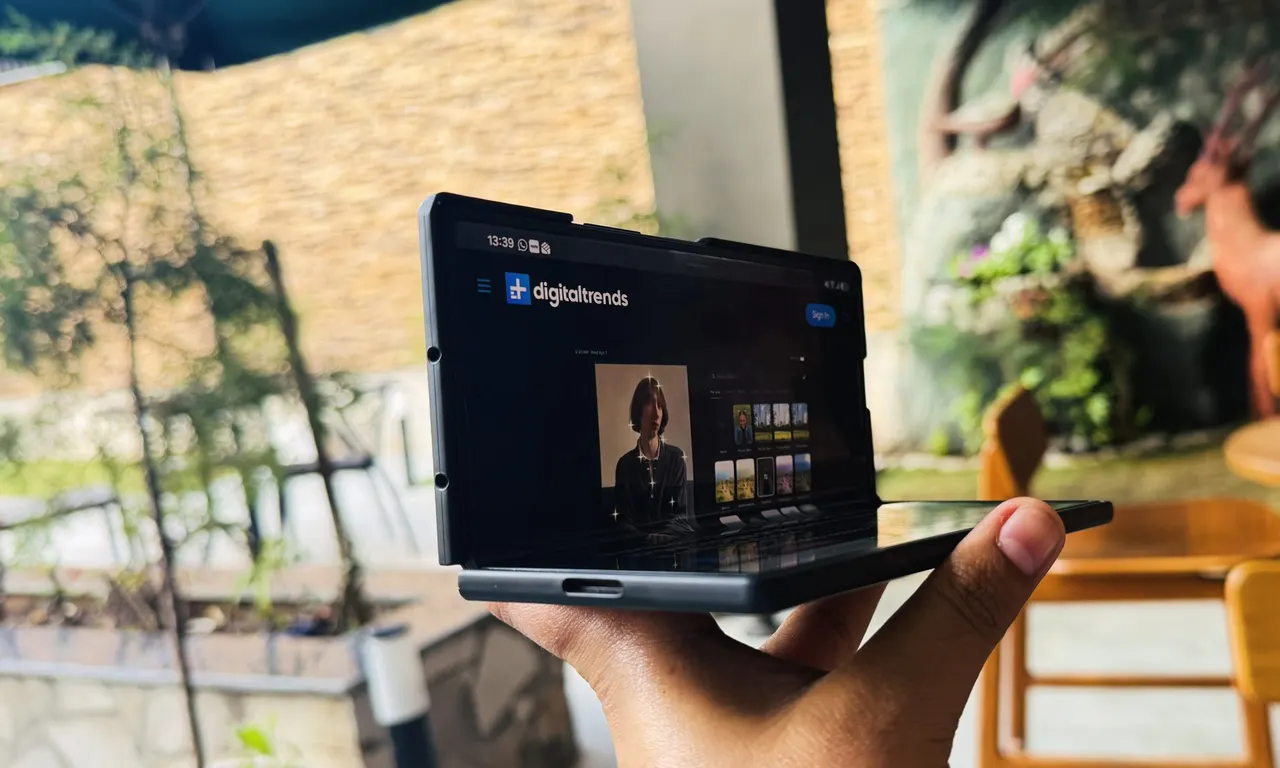
Fold2Unfold is a research technique that makes a foldable phone hide its own screen from people peeking over your shoulder. It needs no privacy film and no new hardware, just the fold itself acting as a mirror.
Researchers at KAIST and POSTECH built it because foldables are awkward to protect. You can't stick a privacy film on the inner flexible panel. Samsung, among others, discourages third-party films, and no film flexible enough has turned up so far.
So the team used the phone's two halves. One half is what you look at directly, the other works as a reflector. The software splits the image into two incomplete pieces that only combine into the real image when one is reflected onto the other at the right angle.
How does Fold2Unfold work?
The image is first pixelated, then broken into two complementary blocks, with extra "camouflage" blocks mixed in to confuse onlookers. The camera above the inner screen tracks your eyes and adjusts the pieces so they line up for you. Anyone off to the side sees a blocky mess.
In tests, a person standing about 40 centimeters away, roughly rush-hour subway distance, identified only 6.5% of keypad digits. Without the technique they got 99.9%. Even a 7.5 degree shift off-axis made text nearly unreadable.
What are the limits?
It is slower. People entered a PIN in 4.2 to 4.5 seconds on a normal keypad and 8.2 seconds with Fold2Unfold. A 20-trial check on a campus shuttle bus had an experienced user enter the PIN correctly every time, in about 6.58 seconds on average.
It has only been tested against human eyes, not cameras, recording devices or binoculars. It suits PINs, short codes and bank balances, not long messages or video, though POSTECH suggests private messages might come later. There are some color artifacts, and the always-on camera and high brightness use extra battery.
The test phone was a Galaxy Z Fold 7. It also worked on the Galaxy Z Fold 5, and the team says foldables from Motorola and Huawei meet the hardware requirements. The researchers see banking apps as a likely home. The work was presented at UIST '26.
Apps worth a look
SUMO: the number puzzleTap the right tiles, add them up, hit the target. Easy to learn, hard to master. Free, for all ages.
Dialo: learn languages by speakingTalk to an AI conversation partner; every sentence comes back corrected and explained in your language. 9 languages, A1 to C2.
ediviewer: read EDI files like documentsOpen EDIFACT and X12 messages, see every segment explained, convert to JSON/XML, export PDF and Excel. Runs locally, no upload.
giftdetect: the right gift in minutesPick who it is for, the occasion and their personality. The search engine reads product descriptions from local shops and ranks what fits. Free, no sign-up.
More from this day
See all →
Australia's digital duty of care law lets people sue big tech

Surveillance pricing: how your data can raise what you pay
OpenAI bug suspect Abdulrahman Alfozan and his $14 device