Euclid finds the most distant quasar known, from 630 million years after the Big Bang
Europe's Euclid telescope has spotted the oldest quasar ever found. Its black hole is 360 million Suns heavy, and it eats slowly, which puzzles astronomers.
 SUMO· the number puzzle
 Dialo· learn languages by speaking
 ediviewer· read EDI files like documents
 giftdetect· the right gift in minutes
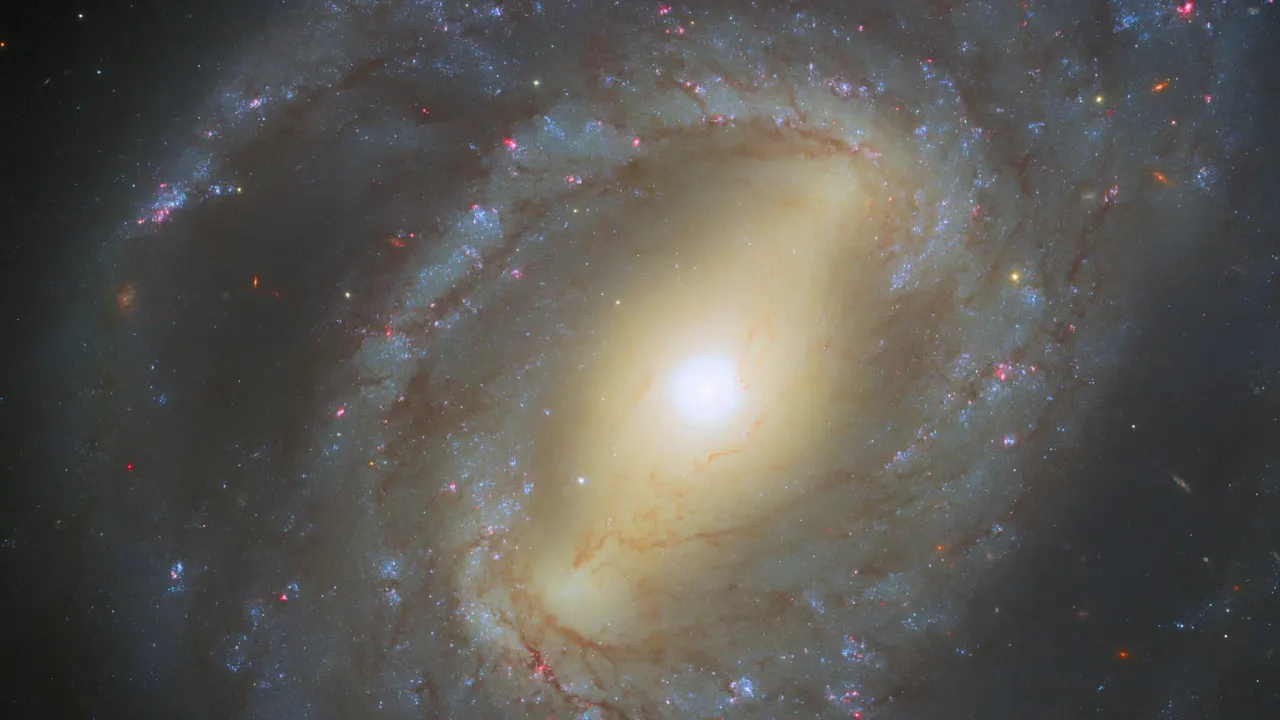
The most distant quasar ever found has just been spotted by Europe's Euclid space telescope, and its black hole is far too big for its age. We see it as it was only 630 million years after the Big Bang, when the universe was still a toddler.
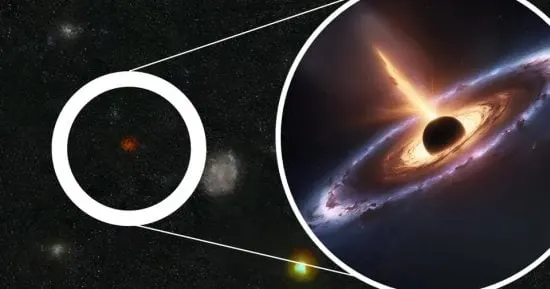
A quasar is an extremely bright object powered by a supermassive black hole. Gas and dust fall toward the black hole and swirl around it in a glowing disk, which can outshine all the stars in the galaxy around it.
This one is called Dún Aonghasa, or J1504+6252. Its black hole weighs about 360 million times the mass of the Sun. The find beats the previous record by roughly 40 million years of cosmic history.
Why is this quasar such a puzzle?
The black hole reached that mass very early, and that raises questions about how supermassive black holes form and grow so fast. It gets stranger: the black hole seems to be swallowing its surroundings at a relatively slow rate. So how it got so big in such a short time is not clear.
How was it found?
Euclid picked the quasar out while analysing millions of objects it recorded over 18 months. Follow-up observations came from the Keck Observatory, the Hubble Space Telescope and the Large Binocular Telescope. The James Webb Space Telescope then helped measure the black hole's mass.
The light we see left the quasar about 13.1 billion years ago. That was an era when the first stars and galaxies were forming and cosmic gas was clearing, letting light travel more freely after the universe's dark ages.
Euclid launched in 2023, and its main job is studying dark matter and dark energy, which together make up about 95% of the universe's content. This discovery suggests it can also contribute to the study of black holes and early galaxies. It has already seen several quasars dating back about 13 billion years. The results were published in the journal Astronomy & Astrophysics.
Apps worth a look
SUMO: the number puzzleTap the right tiles, add them up, hit the target. Easy to learn, hard to master. Free, for all ages.
Dialo: learn languages by speakingTalk to an AI conversation partner; every sentence comes back corrected and explained in your language. 9 languages, A1 to C2.
ediviewer: read EDI files like documentsOpen EDIFACT and X12 messages, see every segment explained, convert to JSON/XML, export PDF and Excel. Runs locally, no upload.
giftdetect: the right gift in minutesPick who it is for, the occasion and their personality. The search engine reads product descriptions from local shops and ranks what fits. Free, no sign-up.