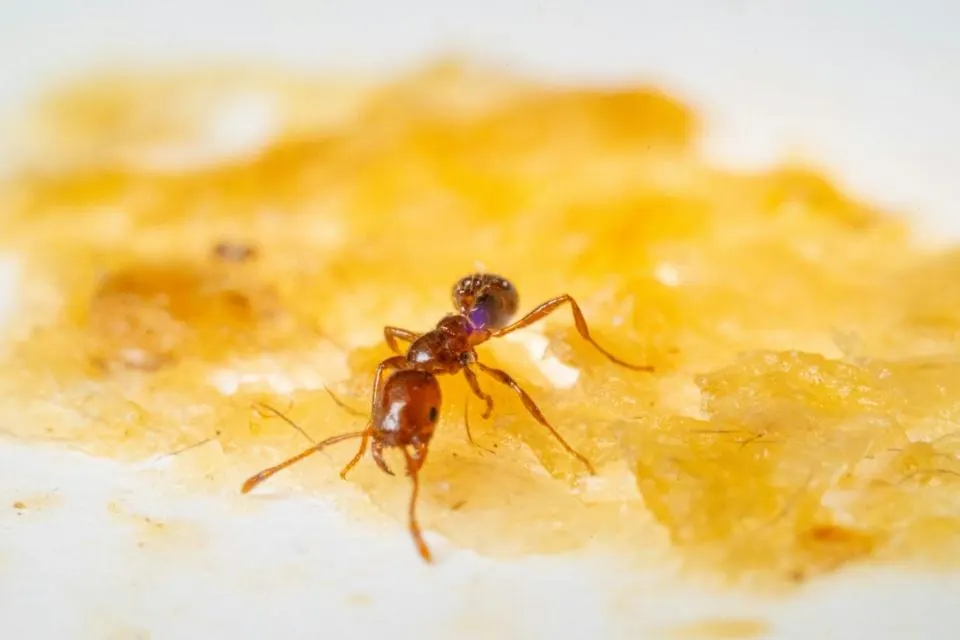
NGC 4394: Hubble's Photo of a Galaxy That Looks Like Ours
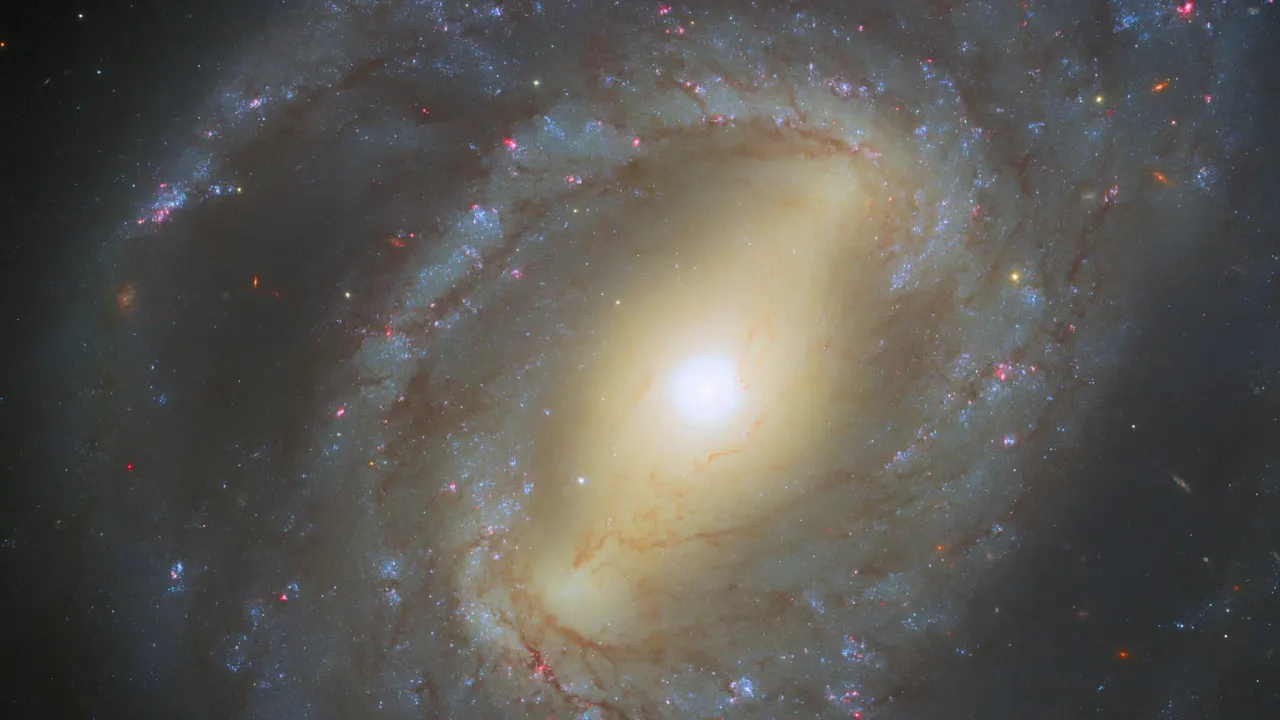
Hubble has photographed NGC 4394, a spiral galaxy 55 million light-years away with a straight bar of stars across its centre, just like the Milky Way.
 SUMO· the number puzzle
 Dialo· learn languages by speaking
 ediviewer· read EDI files like documents
 giftdetect· the right gift in minutes
If you could step outside the Milky Way and look back, you might see something like NGC 4394. Hubble's new picture of this galaxy shows a bright core, spiral arms full of stars, gas and dust, and a long straight band of stars cutting right through the middle.
That band is called a galactic bar, and it is the reason NGC 4394 is being compared to our home galaxy. The Milky Way has one too, but we sit inside its disc, so we cannot see the whole thing from outside.
NGC 4394 lies in the constellation Coma Berenices, about 55 million light-years from Earth. It belongs to the Virgo Cluster, a group of more than 1,000 galaxies and the closest large galaxy cluster to us. The Milky Way is estimated to be 100,000 to 120,000 light-years across and to hold hundreds of billions of stars.
How do galactic bars form?
Bars are common. Astronomers estimate that 65 percent of nearby spiral galaxies have one. The explanations centre on an unstable galactic disc, which can be set off by the gravitational tug of passing galaxies, interactions between stars or other forces. Once the disc is unstable, the circular orbits of stars stretch out and form a bar.
Observations show bars are more common today than a few billion years ago. Studies suggest this is a passing phase, though: as bars grow in mass, they can become unstable themselves.
A second thing the two galaxies share
NGC 4394 and the Milky Way may both contain a LINER, short for low-ionisation nuclear emission-line region. It is an area near a galaxy's centre where the light shows particular ionised or neutral elements. Scientists do not yet know exactly how LINERs form. Hungry supermassive black holes or intense star formation probably play a part.
This is not Hubble's first look at the galaxy. An earlier image was published about a decade ago, taken as a side effect of a programme aimed at the neighbouring galaxy Messier 85 and its unusual star clusters. While one instrument watched Messier 85, another recorded the adjacent patch of sky containing NGC 4394. The new image also uses data from a newer programme that asks why some galaxies stop forming new stars.
Apps worth a look
SUMO: the number puzzleTap the right tiles, add them up, hit the target. Easy to learn, hard to master. Free, for all ages.
Dialo: learn languages by speakingTalk to an AI conversation partner; every sentence comes back corrected and explained in your language. 9 languages, A1 to C2.
ediviewer: read EDI files like documentsOpen EDIFACT and X12 messages, see every segment explained, convert to JSON/XML, export PDF and Excel. Runs locally, no upload.
giftdetect: the right gift in minutesPick who it is for, the occasion and their personality. The search engine reads product descriptions from local shops and ranks what fits. Free, no sign-up.
More from this day
See all →
Euclid finds the most distant quasar known, from 630 million years after the Big Bang

Pakistani astronaut becomes first foreigner on Tiangong station
HPC Trailblazer Omega e-bike costs $33,000 and has gold in the paint

Samsung Galaxy A price increase: up to 19% from January 2027
More in: Science
See all →
Vaticinaria gulicola: a new clam found living in a sea urchin's throat
OUTSENSE origami engineering folds wood and metal to a tenth of the size

SWAIS2C Antarctica core: 228 m of mud and rock under the ice