Ericsson ISAC System Turns 5G Base Stations Into Drone Trackers
Ericsson has unveiled ISAC System, which uses 5G base stations to detect and track low-flying drones, even ones not connected to any network. Pilots start in 2027.
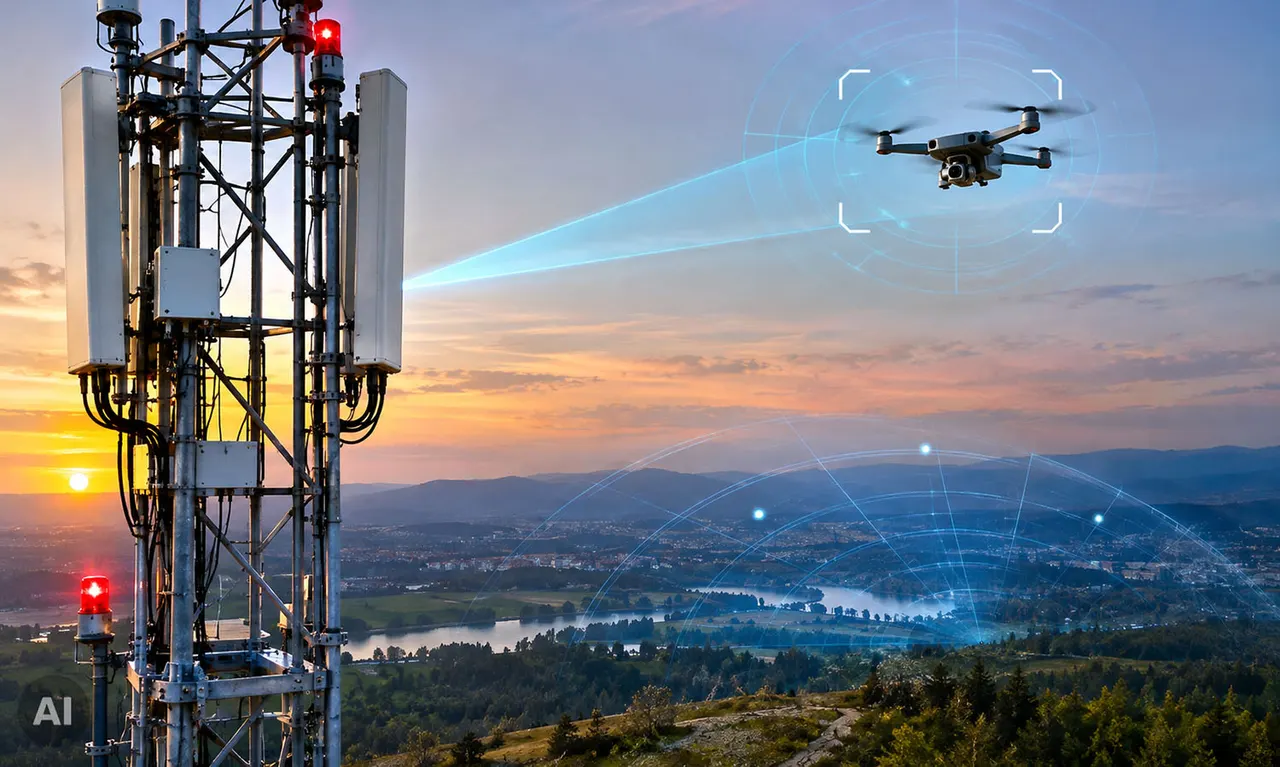
Ericsson has unveiled ISAC System, a solution that uses existing 5G networks to detect and track drones, including those that are not connected to any network. The technology builds on Integrated Sensing and Communication (ISAC) and targets small objects flying at low altitudes.
Such drones are increasingly seen as a threat to critical infrastructure, strategic sites and public safety. Their small size and flight patterns make them hard for traditional radar to spot across large areas. Ericsson wants to rely instead on infrastructure operators already have: base stations, towers, backhaul links and available spectrum.
How the system works
The system analyses reflections of radio signals from objects. Several base stations placed apart from each other transmit and receive at the same time, which lets them observe a drone from different directions, determine its position in three dimensions and keep tracking it as it moves. Artificial intelligence helps classify detected objects.
In tests, the system detected and tracked even small drones from distances of several kilometres, and Ericsson confirmed precise 3D positioning. Performance depends on factors such as object size, flight path, terrain and base station layout.
The technology was tested in live 5G networks: in Arlington, Texas, with AT&T, and in Helsinki with Finland's Erillisverkot. In Poland, Ericsson, Play and Asseco showed ISAC working with Play's mobile network and the PUSZCZYK acoustic detection system, a combination meant to improve the location of low-flying drones.
Rollout and limits
Ericsson sees uses in protecting borders, ports and power plants, and in supporting public safety, transport and industry. Later, it could help manage drone traffic over cities. The company stresses that mobile networks will not replace radars and dedicated sensors but complement them, with data passed to authorised security and management systems.
Commercial deployment is planned in stages. Small pilots with selected customers begin in 2027 and will cover detection only. Wider rollouts are due from 2028, while communication functions will follow as the industry moves towards 6G.
Apps worth a look
 SUMO: the number puzzle
Tap the right tiles, add them up, hit the target. Easy to learn, hard to master. Free, for all ages.
 Dialo: learn languages by speaking
Talk to an AI conversation partner; every sentence comes back corrected and explained in your language. 9 languages, A1 to C2.
 ediviewer: read EDI files like documents
Open EDIFACT and X12 messages, see every segment explained, convert to JSON/XML, export PDF and Excel. Runs locally, no upload.
More from this day
See all →
German data centers hit record investment in 2026 but fall further behind
Germany Ranks Last in the EU for Smart Meter Rollout

Soket Labs and ZenteiQ Launch Indigenous AI Models in India

OpenAI Launches Grid Protectors to Cut Data Center Power Use
More in: Mobile
See all →
Plus Brings Forward 3G Shutdown in Poland to November 2026
Motorola moto g06 RAM Boost Tested: Can Storage Stand In for Memory?

NetShort Tops South Korea's Entertainment App Installs in October