Soket Labs and ZenteiQ Launch Indigenous AI Models in India
Soket Labs unveiled the 26.3 billion-parameter EKA-1, while ZenteiQ launched the open-source Dhīr 2B and 5B, both built under the IndiaAI Mission.

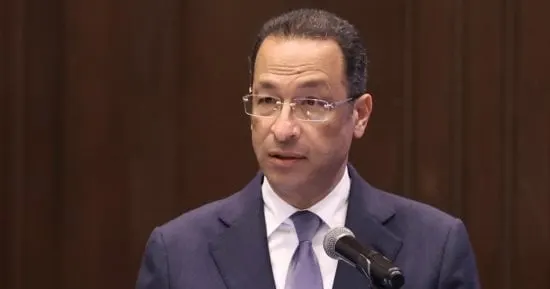
Indian startups Soket Labs and ZenteiQ AiTech Innovations have launched new homegrown large language models under the IndiaAI Mission. The models, Soket's EKA-1 and ZenteiQ's Dhīr 2B and Dhīr 5B, were unveiled at an event in New Delhi in the presence of IT secretary S Krishnan.
EKA-1 targets reasoning and code
According to the IT ministry, EKA-1 has 26.3 billion parameters and was trained on nearly 7.5 trillion tokens. It is described as an open, sparse hybrid language model that supports all 22 scheduled Indian languages plus English. It is designed for mathematics, code generation, reasoning and agentic applications.
Soket Labs cofounder and CEO Abhishek Upperwal said the company built a model tailored to India's banking, financial services and cybersecurity landscape, aimed at sector-specific needs.
Dhīr models aim at lightweight deployment
ZenteiQ's Dhīr 2B and Dhīr 5B are open-source multilingual models supporting English and 10 other Indian languages. The ministry said they allow on-premise deployment and suit document-grounded automation, knowledge retrieval, and government and education use cases.
ZenteiQ CEO Sashikumar said the models can run on GPUs and TPUs, and their lightweight architecture allows on-device use on mobile phones without cloud connectivity. That, he said, keeps data on the device and improves privacy and security.
The announcement did not include benchmark results, deployment details or pricing.
Government backing
Both companies were selected under the IndiaAI Innovation Centre pillar to build domestic foundation models. The government said subsidised AI compute and support for ancillary research costs helped make the work possible. Krishnan said indigenous models will strengthen India's technological and strategic autonomy and lift productivity across government, industry and research.
Separately, Sarvam AI announced Prism, an open-weight decision model built on its Sarvam 105B model for enterprise workflows such as customer-support routing, security checks and evaluation of AI-agent activity. The company claims an average score of 71.8 across three evaluation indices and a median response time of 44 milliseconds on an NVIDIA B200 GPU. Weights are available on Hugging Face and Sarvam's API, and local deployment needs a GPU with at least 120 GB of memory. India's enterprise AI ecosystem is projected to become a $71 billion market opportunity by 2030.
Apps worth a look
 SUMO: the number puzzle
Tap the right tiles, add them up, hit the target. Easy to learn, hard to master. Free, for all ages.
 Dialo: learn languages by speaking
Talk to an AI conversation partner; every sentence comes back corrected and explained in your language. 9 languages, A1 to C2.
 ediviewer: read EDI files like documents
Open EDIFACT and X12 messages, see every segment explained, convert to JSON/XML, export PDF and Excel. Runs locally, no upload.
More from this day
See all →
Fedora Linux 45 Released with GNOME 51, Kernel 7.2 and RPM 6.1

Windows 11 26H2 now available to most compatible PCs, Windows 10 included

GTA 6 Preload Starts November 10 on PS5 and Xbox, 212 GB