EchoMotion turns a Galaxy Watch into a full-body motion tracker
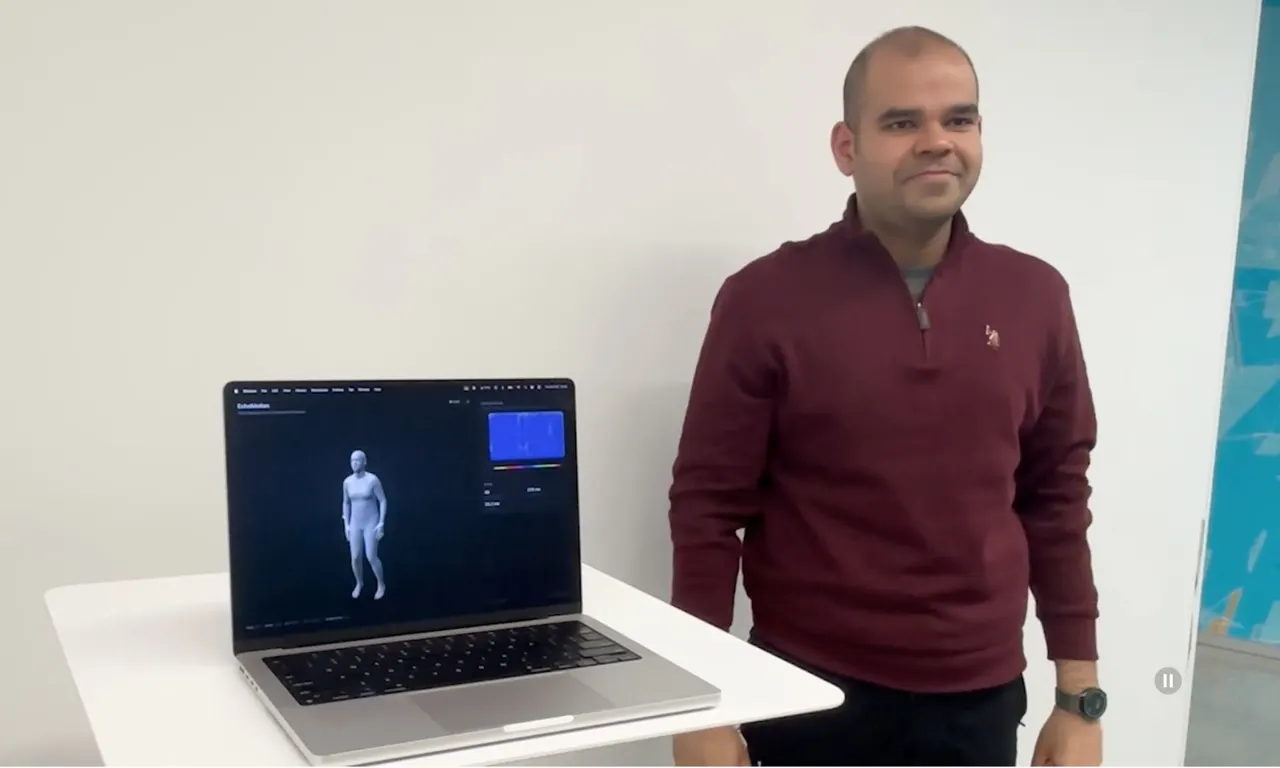
Cornell researchers made an ordinary Galaxy Watch 6 track 12 body joints using only its speaker and microphone. No new hardware, and it uses about 5 to 6% battery per half hour.
 SUMO· the number puzzle
 Dialo· learn languages by speaking
 ediviewer· read EDI files like documents
 giftdetect· the right gift in minutes
Your smartwatch has a speaker and a microphone. Researchers at Cornell University have now shown that those two parts alone can work out where your arms, legs and torso are. The system is called EchoMotion, and it needs no extra hardware.
How does EchoMotion work?
Think of sonar. The watch's speaker sends out ultrasonic sound, too high for people to hear, and the microphone picks up the echoes that bounce off the wearer's body. An AI model turns those echo patterns into a full-body pose. The whole thing is software, and the package is under 30MB, according to the team at Cornell's SciFi Lab.
Normal smartwatches, including the Apple Watch and models from Samsung and Google, rely on accelerometers and gyroscopes. Those are fine for counting steps or spotting movement in sleep, but they can't show how your whole body moves.
What did the tests show?
The team first had 10 people wear a prototype and do 18 kinds of movement, then trained the model to predict the position of 12 joints, from ankles to head. Then they put it on an unmodified Galaxy Watch 6 and tested 15 new people. Average error per joint was just under 4 inches without calibration. After 12 minutes of recording the wearer, it fell to about 2.4 inches.
The same model also ran on a Galaxy Watch 7 and a Pixel Watch 3 with no retraining, losing only a little accuracy. A gym demo on the Galaxy Watch 6 recognised 20 exercises, such as squats and leg presses, with 95.4% accuracy, even with music at around 76 dB.
Sensing draws about 12 milliwatts, roughly 40 times less than a wearable camera system. On the Galaxy Watch 6, a 30-minute session used about 5 to 6% of the battery.
Limits and what comes next
People are the weak spot. In a busy hallway, accuracy dropped because of others walking nearby. Cluttered furniture and road noise barely mattered.
The researchers see uses in workout form feedback, daily activity tracking and home rehab after injuries. They think yoga, Pilates and tai chi could follow, and they are exploring smart glasses too. "We have made significant efforts in making EchoMotion work on commercial devices, so that the adoption can be very easy," said lead author Saif Mahmud, a Cornell doctoral student.
Apps worth a look
SUMO: the number puzzleTap the right tiles, add them up, hit the target. Easy to learn, hard to master. Free, for all ages.
Dialo: learn languages by speakingTalk to an AI conversation partner; every sentence comes back corrected and explained in your language. 9 languages, A1 to C2.
ediviewer: read EDI files like documentsOpen EDIFACT and X12 messages, see every segment explained, convert to JSON/XML, export PDF and Excel. Runs locally, no upload.
giftdetect: the right gift in minutesPick who it is for, the occasion and their personality. The search engine reads product descriptions from local shops and ranks what fits. Free, no sign-up.
More from this day
See all →
Can you still refuse a Linky meter? What the EU ruling means

New peanut worm species found in Japan's deep sea has saw-toothed hooks

TikTok's For You feed breaks EU rules, Commission says

United Airlines bans outside AI agents from booking flights
More in: Hardware
See all →
Apple HomeView skips Face ID and recognizes you another way
Ring Drone Cam won't get manual controls after on-air crashes
Ring Robotics: Ring's new autonomous camera drone watches homes