ChatGPT in Spain: Information Search Overtakes Writing
OpenAI's usage data shows Spanish users increasingly treat ChatGPT as a search engine, with information queries rising from 19% to over 25% of activity in two years.
 SUMO· the number puzzle
 Dialo· learn languages by speaking
 ediviewer· read EDI files like documents
 giftdetect· the right gift in minutes
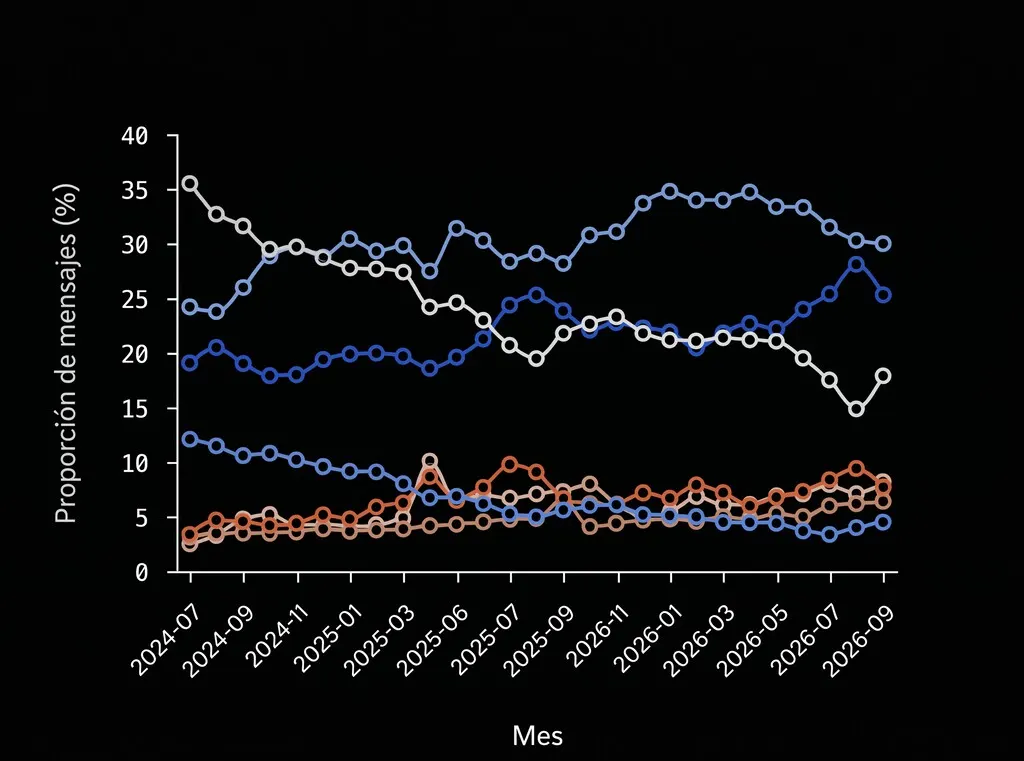
Spanish users are turning ChatGPT into a search engine. According to a new OpenAI report, the share of messages devoted to information search in Spain has grown from 19% in July 2024 to more than 25% today, while writing has shrunk.
How the data was gathered
The report covers two years of usage and includes only messages from individual Free, Go, Plus and Pro accounts, not business ones. An automated system reads each anonymized message and assigns it to one of seven topics: practical guidance, writing, information search, personal expression, technical help, multimedia and other. OpenAI only shows a country when it has at least 1,000 effective messages in the quarter. The company says more than a billion people use ChatGPT.
Writing falls, guidance and search rise
In July 2024, writing was the dominant category in Spain at roughly 35% of activity, followed by practical guidance (24%) and information search (19%). Writing has declined almost continuously since, with exceptions in late 2025 and a rebound in August 2026. It hit a record low of 15% and now sits around 18%. Since percentages always add up to 100%, other categories gain what writing loses.
Information search covers personal questions, current events, products or recipes, in effect using ChatGPT the way people use Google. The report hints at possible reasons beyond summer holidays, which depressed writing in both summers: adoption has grown among people over 35, especially in Europe.
Practical guidance, such as personalized tutorials, advice on tasks and creative ideas, rose from 25% to 30% in Spain. Globally it has been the top category since March this year. The remaining categories are small, apart from spikes such as multimedia in March 2025, probably driven by the Ghibli-style image craze.
Work versus leisure
Individual accounts are also used at work, and the pattern differs. Outside work, about 50% of use is asking questions, followed by self-expression and getting ChatGPT to do things. During working hours, nearly half of use is delegating tasks to ChatGPT, followed by questions and then self-expression.
The data matters because it shows real usage at scale rather than survey answers, and it underlines ChatGPT's growing rivalry with Google search, though it comes from an interested party.
Apps worth a look
SUMO: the number puzzleTap the right tiles, add them up, hit the target. Easy to learn, hard to master. Free, for all ages.
Dialo: learn languages by speakingTalk to an AI conversation partner; every sentence comes back corrected and explained in your language. 9 languages, A1 to C2.
ediviewer: read EDI files like documentsOpen EDIFACT and X12 messages, see every segment explained, convert to JSON/XML, export PDF and Excel. Runs locally, no upload.
giftdetect: the right gift in minutesPick who it is for, the occasion and their personality. The search engine reads product descriptions from local shops and ranks what fits. Free, no sign-up.
More from this day
See all →
Citus Demonstrates GPS-Free Firefighter Tracking, Eyes Military Use

Google Cloud expands CodeMender and AI agent security tools

Operation Ghostbusters: 830,840 Suspected Ghost Students Found