Cerdolí: the Vietnamese pig hybrid now roaming Spain's countryside
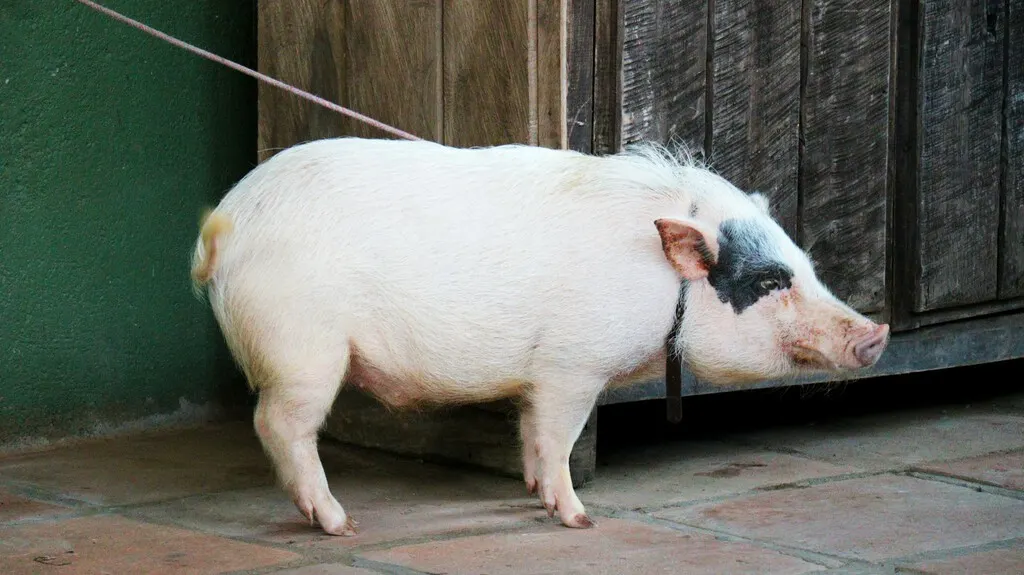
Spain banned Vietnamese pigs as pets in 2019, but abandoned animals were already breeding with wild boar. The offspring are called cerdolíes.
 SUMO· the number puzzle
 Dialo· learn languages by speaking
 ediviewer· read EDI files like documents
 giftdetect· the right gift in minutes
Someone buys a cute pot-bellied pet pig for around 20 euros, it grows to 100 kilos, and one day it ends up in the woods. That is how Spain got the cerdolí, the popular name for a cross between wild boar and a domestic pig, usually the Vietnamese pig.
Its presence has been recorded in Aragón, Asturias, Catalonia, Castilla y León, the Valencian Community, Madrid, Extremadura and Murcia. In Cieza, in Murcia, hunters shot a hybrid weighing 197 kg. Like the wild boar, it causes trouble wherever it meets people: damaged crops, road accidents and collisions.
Why is the cerdolí a problem?
Besides the usual boar headaches, hybridisation damages the genetic heritage of the Spanish wild boar. The pigs also breed faster. A study from Fukushima University shows domestic pigs have a quicker, continuous reproductive cycle, while boar breed once a year. Spain's Ministry for Ecological Transition (MITECO) says Vietnamese pigs and their hybrids have larger, more frequent litters and are less wary of people, so they come closer to towns.
Where did they come from?
Until 2019, when the species was listed as invasive, Vietnamese pigs were sold as mildly exotic pets. Some owners tired of them, and an adult can reach 100 kilos, though 60 is more typical. Poor knowledge of their needs, and sometimes aggressive behaviour in unsuitable housing, did not help. So they were released.
Nobody knows how many there are, because there is no census. The first possible hybrid was identified in 2010. A 2013 study found 42 cases of feral Vietnamese pigs in Spain, of which roughly 25% could be hybrids. MITECO says the pigs may have established wild populations.
What is being done?
Since the listing in the Spanish Catalogue of Invasive Alien Species, owning, transporting, trading or selling the animals alive is banned. Regional authorities can demand sterilisation, marking or a declaration that the animal will not be released. Escapes must be reported, and giving away or breeding them is prohibited. Managing animals already in the wild is up to each region. Extremadura, for example, allows hunting Vietnamese pigs and hybrids in hunting estates.
There is also African swine fever, active in Catalonia since November 2025. A year on, the Agriculture Ministry counts 424 positive wild boar and 79 outbreaks, with no positive domestic pigs. It does not affect people. There is no evidence cerdolíes are linked to the outbreak, but more boar-like animals make disease control harder.
Apps worth a look
SUMO: the number puzzleTap the right tiles, add them up, hit the target. Easy to learn, hard to master. Free, for all ages.
Dialo: learn languages by speakingTalk to an AI conversation partner; every sentence comes back corrected and explained in your language. 9 languages, A1 to C2.
ediviewer: read EDI files like documentsOpen EDIFACT and X12 messages, see every segment explained, convert to JSON/XML, export PDF and Excel. Runs locally, no upload.
giftdetect: the right gift in minutesPick who it is for, the occasion and their personality. The search engine reads product descriptions from local shops and ranks what fits. Free, no sign-up.
More from this day
See all →
Russia's electronics tech fee: 746 rubles per laptop from December

XNU Linux runs the macOS kernel as a Linux module, no VM

Bleem!, the PlayStation emulator sold in shops that Sony sued

Google Play developer address: public from March 2027
More in: Science
See all →
Rice University heat Q-switching gives 5x thermal power burst

Fugaku supercomputer stays 9th as China's LineShine takes No. 1

Dark matter periodic table: physicists imagine dark atoms