Bomb pulse: Canada's sugar maples held Cold War carbon for 60 years
Sugar maples near Ottawa kept carbon-14 from Cold War nuclear tests about two years longer than the air did. Researchers now know why the leaves lagged behind.
 SUMO· the number puzzle
 Dialo· learn languages by speaking
 ediviewer· read EDI files like documents
 giftdetect· the right gift in minutes
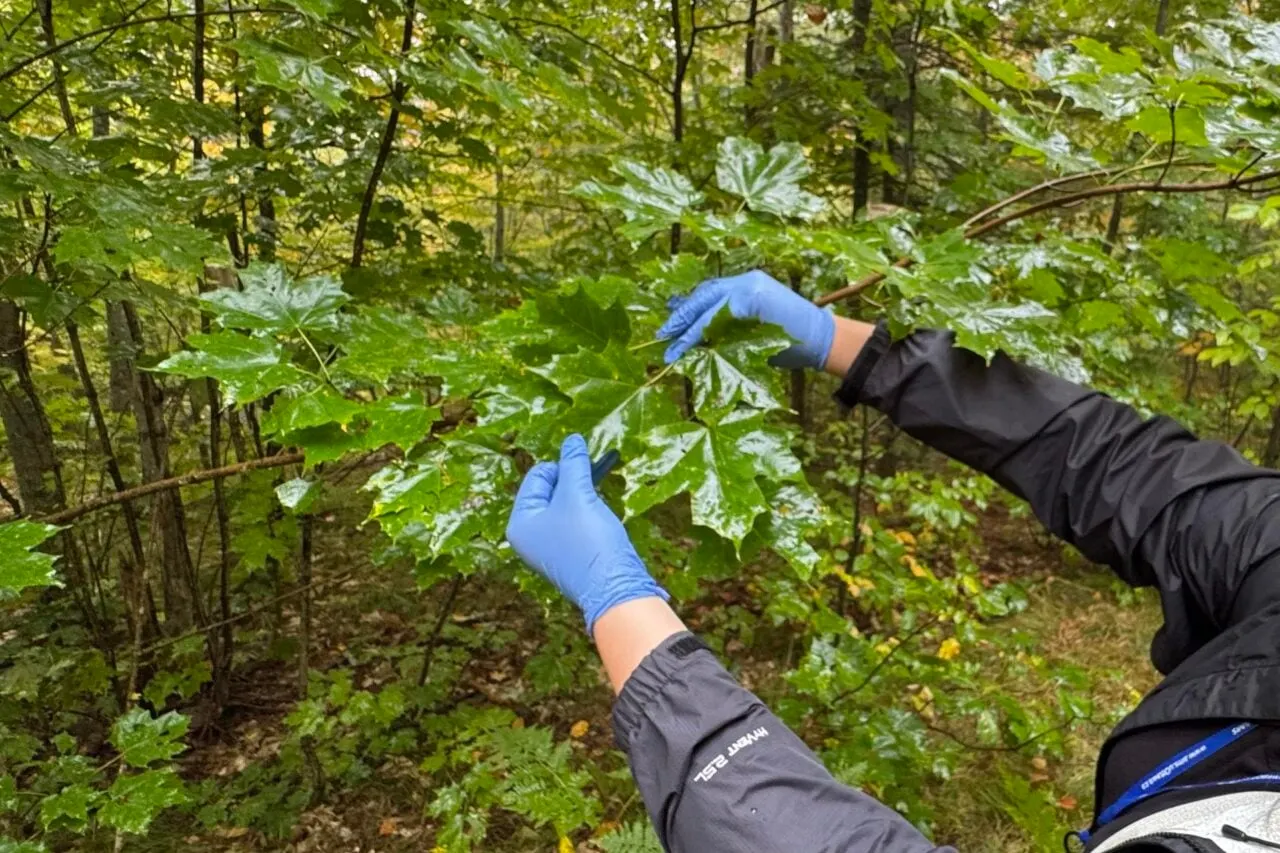
Cold War nuclear bombs left a fingerprint in the leaves of Canada's sugar maples, and the trees held on to it longer than the atmosphere did. Researchers at the University of Ottawa now say they know why.
The fingerprint is called the bomb pulse. Above-ground nuclear tests by the Soviet Union, the U.S. and their allies sent neutrons into the air, where they hit nitrogen and turned some of it into carbon-14, a radioactive form of carbon. At the peak, global levels of it had nearly doubled.
In Gatineau Park in Quebec, across the river from Ottawa, sugar maple (Acer saccharum) leaves hit their highest level in 1964: 842 parts per thousand above the reference level, according to the Geological Survey of Canada. That was about a year after the Limited Test Ban Treaty of 1963 ended atmospheric tests. By 2025 the figure had fallen to an estimated -13.9.
Why did the maples lag behind the atmosphere?
Earth's atmospheric carbon-14 returned to its pre-bomb baseline between 2021 and 2022. The maples only got there around 2024, a lag of roughly 2.2 years, give or take three to four months.
The reason is that trees recycle. "Plants often use older carbon, stored from previous years, to grow new leaves," said geoscientist Leonard Wassenaar. Small but steady offsets, averaging about 7.4 parts per thousand above reference between 1990 and 2019, showed the signal came from this biological recycling rather than from the air itself. The team published the work in Scientific Reports.
What does it change for climate research?
Studies that reconstruct past air from carbon-14 in leaves and tree rings have often assumed the plant matches the atmosphere of the year it grew. The researchers say that now has to be "corrected explicitly" for each species.
Fossil fuels also helped clear the bomb pulse. Burning coal, oil and gas releases carbon dioxide with almost no carbon-14, because it has decayed away over eons, and that diluted the nuclear leftovers. The oceans absorbed some too. The 2025 leaf samples confirmed that fossil-fuel dilution has now overwhelmed the bomb-pulse residue in the Ottawa-area maples.
Wassenaar, who runs the university's accelerator mass spectrometry facility, calls the leaves "a 65-year diary of the atmosphere."
Apps worth a look
SUMO: the number puzzleTap the right tiles, add them up, hit the target. Easy to learn, hard to master. Free, for all ages.
Dialo: learn languages by speakingTalk to an AI conversation partner; every sentence comes back corrected and explained in your language. 9 languages, A1 to C2.
ediviewer: read EDI files like documentsOpen EDIFACT and X12 messages, see every segment explained, convert to JSON/XML, export PDF and Excel. Runs locally, no upload.
giftdetect: the right gift in minutesPick who it is for, the occasion and their personality. The search engine reads product descriptions from local shops and ranks what fits. Free, no sign-up.
More from this day
See all →
Apple HomeView reviews: Siri says it has no camera

Meta Takes app: a prediction market that pays in 'cred', not cash

Android Auto skips two songs per press, and there's no fix yet

Pixel Magic Cue may be replaced by Proactive Assistance in 2027
More in: Science
See all →
Covadonga shark tooth: a 331-million-year-old giant found in Asturias

Nāpōwawāʻenakaulua: two giant quasars that formed too early

Linky smart meter ruling and Starship flight 15 explained