1960 doomsday study set the end of the world for 13 November 2026
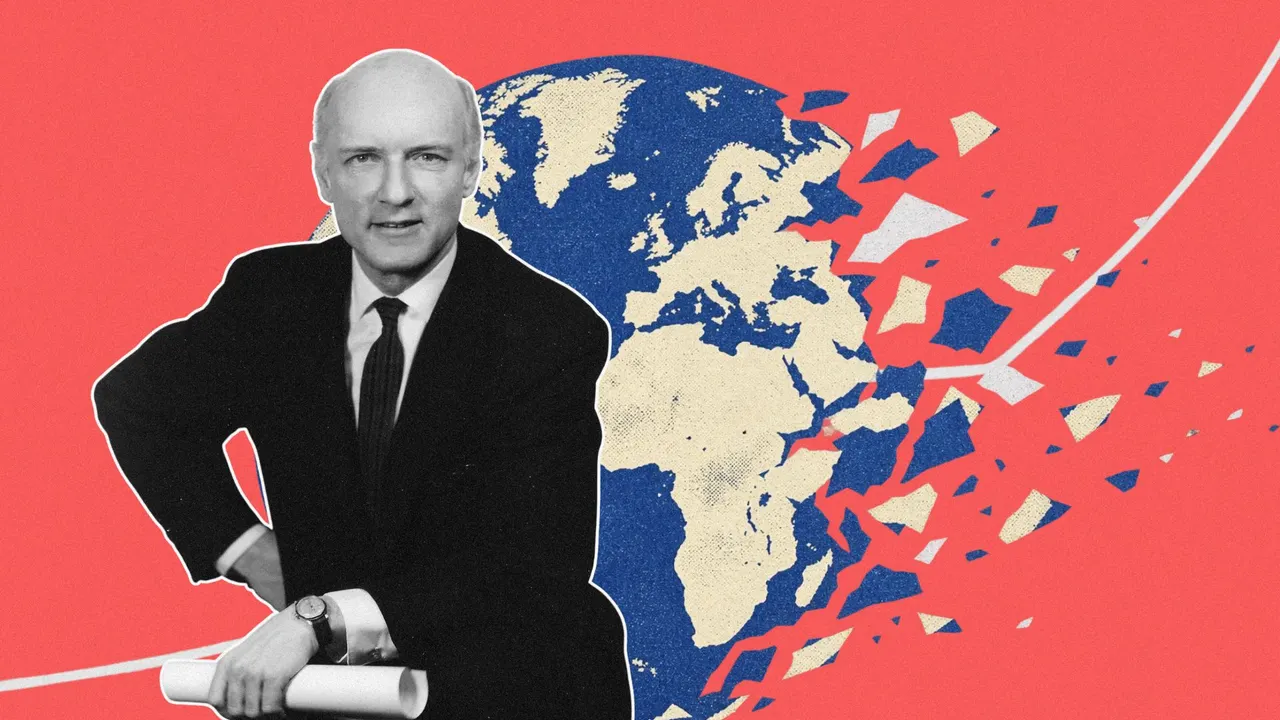
A 1960 paper in Science said world population would go infinite on Friday 13 November 2026, the birthday of its lead author, a former stage magician.
 SUMO· the number puzzle
 Dialo· learn languages by speaking
 ediviewer· read EDI files like documents
 giftdetect· the right gift in minutes
Today is the day. According to a study published in the journal Science on 4 November 1960, the human population was supposed to become infinite on Friday 13 November 2026. The date was no accident: it was the birthday of the lead author, Heinz von Foerster.
Von Foerster, an Austrian physicist, worked with two students at the University of Illinois, Patricia Mora and Lawrence Amiot. They gathered estimates of world population from the year 1 to 1958 and noticed something odd. Growth was faster than exponential, where numbers double at regular intervals. Here the doubling time kept shrinking.
Their explanation was cooperation. The more of us there are, the better we organise ourselves to produce food, which speeds growth up further. A curve like that is called hyperbolic, and it hits infinity on a specific date. Their equation put it at the end of 2026. The paper's famous line: "Our great-great-grandchildren will not starve. They will be squashed."
Did the 2026 doomsday prediction come true?
No, but the numbers held for a surprisingly long time. Historian Alan MacEachern of Western University in Canada notes that real population figures followed the 1960 curve until around 1993. Then growth slowed, as birth rates fell. Today's global birth rate is a little under half of the 1960 level. A commentary published this autumn in Science calls the model mathematically correct, but valid only for a particular period of history.
Did von Foerster believe it?
Apparently not. Time magazine reported in November 1960 that the then 48-year-old wanted mainly to grab attention. He even floated a "peoplo-stat", a sort of population thermostat, for instance by heavily taxing families with more than two children. Time added that he had three children himself. Before becoming a founder of second-order cybernetics, he had been a stage magician, and MacEachern calls the paper a good trick that drew attention to a serious subject through absurdity.
The joke has a darker footnote. Another piece in The Conversation points to what mass birth control became in later decades, from forced sterilisations in South Asia to China's one-child policy, ended in 2015.
The planet now has about 8 billion people, still growing, but more slowly each year. Von Foerster died in 2002. He would have turned 115 today.
Apps worth a look
SUMO: the number puzzleTap the right tiles, add them up, hit the target. Easy to learn, hard to master. Free, for all ages.
Dialo: learn languages by speakingTalk to an AI conversation partner; every sentence comes back corrected and explained in your language. 9 languages, A1 to C2.
ediviewer: read EDI files like documentsOpen EDIFACT and X12 messages, see every segment explained, convert to JSON/XML, export PDF and Excel. Runs locally, no upload.
giftdetect: the right gift in minutesPick who it is for, the occasion and their personality. The search engine reads product descriptions from local shops and ranks what fits. Free, no sign-up.
More from this day
See all →Microsoft outage: Outlook, Teams and Office down for 11 hours

Anduril-216 satellite spots other satellites in Earth's shadow

AMD Adrenalin 26.11.1 fixes Radeon driver SSD write bug

Apple Support Community is closing after 28 years
More in: Science
See all →
Nāpōwawāʻenakaulua: two giant quasars that formed too early

Linky smart meter ruling and Starship flight 15 explained
Kuiper Belt water: 12 dust grains point to a hidden ice reservoir