Audi Tests Agile Robots Humanoids for Parts Sequencing
Audi is piloting Agile Robots' wheeled humanoids at its Ingolstadt plant to pick parts from bins and sort them into assembly order, with Nvidia and Dassault Systèmes.
 SUMO· the number puzzle
 Dialo· learn languages by speaking
 ediviewer· read EDI files like documents
 giftdetect· the right gift in minutes
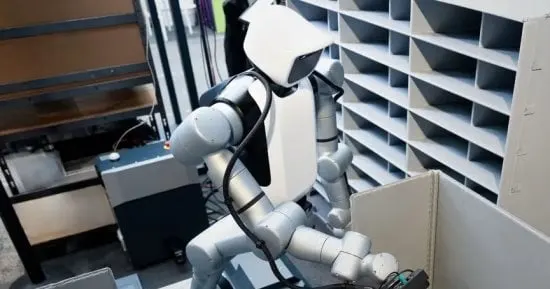
Audi is testing humanoid mobile robots developed by Agile Robots to automate parts sequencing at its plant in Ingolstadt, Germany. The pilot focuses on picking components from bins and arranging them in the exact order needed at later assembly stages, combining robotics, artificial intelligence and virtual simulation.
Audi, Agile Robots, Dassault Systèmes and Nvidia are taking part. The initiative was announced on 21 October at NVIDIA GTC Berlin. So far it comes without quantitative performance results or a timeline for wider deployment in factories.
Why sequencing is hard
The tests run in Audi's production lab in Ingolstadt. The robots must pick parts from containers and place them in a predefined sequence so they reach assembly stations at the right time and in the right order. Traditional industrial robots struggle with this because components differ in shape, packaging material and position.
Audi's material supply involves around one million picking operations a day. That figure shows the scale of the work in the plant, not what the new robots have achieved. The trial uses Agile One humanoids, which combine human-like reach and two-arm manipulation with a wheeled base. The design lets them work in existing industrial environments without necessarily redesigning the factory around fixed robotic workstations.
Gerd Walker, the Audi board member for production and logistics, said that picking parts in production sequence has been one of the hardest automation challenges in automotive logistics for decades. Audi is exploring with its partners whether AI-powered robots can address it and raise productivity.
Simulation before the shop floor
The robot must identify each part, choose a grip that avoids damage and place it correctly. That is harder with flexible or semi-rigid components that can deform when moved. AI-based perception and coordination between both arms are meant to help.
Dassault Systèmes is building a virtual twin of the logistics environment using DELMIA and the 3DEXPERIENCE platform. Engineers can assess task feasibility, cycle times, working conditions and safety, while Nvidia Omniverse libraries simulate physical environments and robot interactions. The partners also plan to use AI-based virtual assistants to support engineering workflows.
The project remains at the proof-of-concept stage. Its success will depend on handling varied components consistently, working at production speeds and adapting to existing plant infrastructure. Audi has not announced a firm timeline for a plant-wide rollout.
Apps worth a look
SUMO: the number puzzleTap the right tiles, add them up, hit the target. Easy to learn, hard to master. Free, for all ages.
Dialo: learn languages by speakingTalk to an AI conversation partner; every sentence comes back corrected and explained in your language. 9 languages, A1 to C2.
ediviewer: read EDI files like documentsOpen EDIFACT and X12 messages, see every segment explained, convert to JSON/XML, export PDF and Excel. Runs locally, no upload.
giftdetect: the right gift in minutesPick who it is for, the occasion and their personality. The search engine reads product descriptions from local shops and ranks what fits. Free, no sign-up.
More from this day
See all →
Citus Demonstrates GPS-Free Firefighter Tracking, Eyes Military Use

Google Cloud expands CodeMender and AI agent security tools

Operation Ghostbusters: 830,840 Suspected Ghost Students Found

JNSA Security Quiz Service Hit by Breach, 15,128 Records at Risk
More in: Automotive
See all →
ADAC Test: Emergency Braking Systems Miss People in Hi-Vis Clothing

Changan Uni-V Recall in Russia Covers 1,905 Cars Over Infotainment

Tesla to End Cybertruck Production in 2027, Musk Says