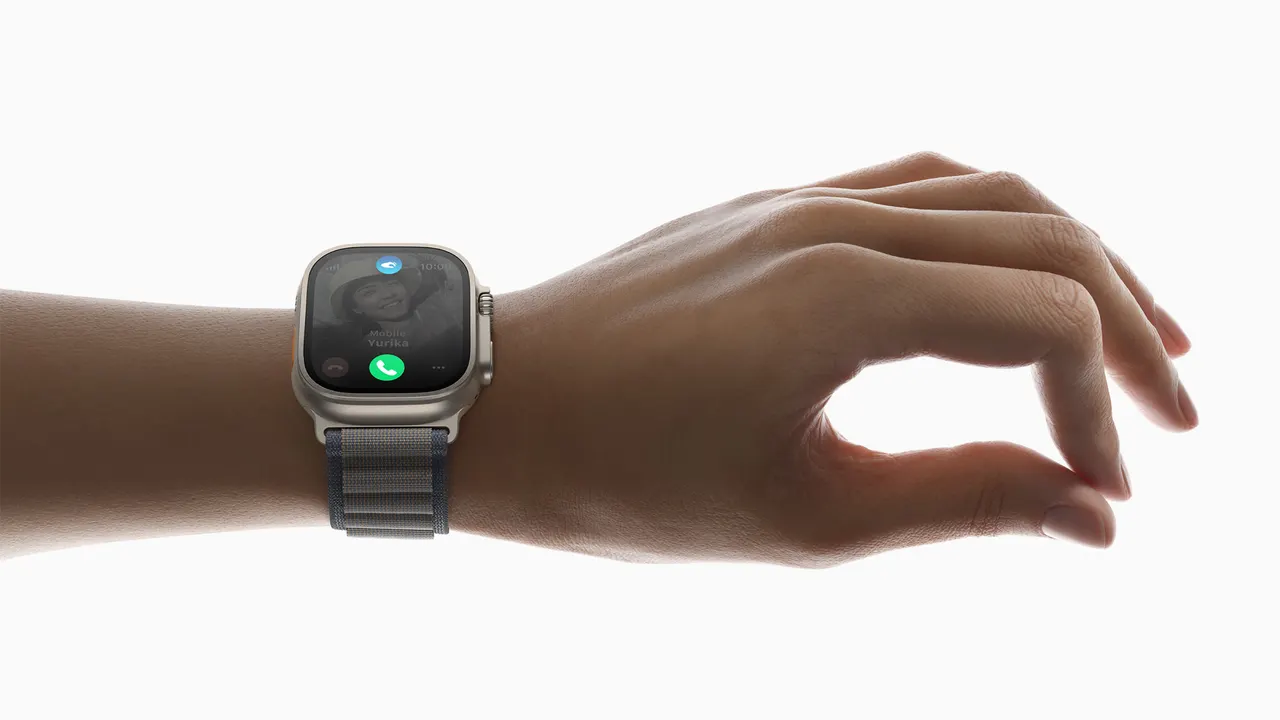
Apple Watch learns new hand gestures in a minute, study finds
Researchers say their TransfHAR system lets an Apple Watch learn new hand activities from about a minute of motion data, with over 90% accuracy and fully on-device.
 SUMO· the number puzzle
 Dialo· learn languages by speaking
 ediviewer· read EDI files like documents
 giftdetect· the right gift in minutes
Researchers from Northwestern University and Carnegie Mellon University have shown that an Apple Watch can learn new hand and wrist gestures from roughly one minute of recorded motion. Their system, called TransfHAR, recognized seven new activities with 90% accuracy using only the watch's built-in accelerometer and gyroscope.
Today the Apple Watch recognizes just two gestures, a two-finger tap and a wrist flick. TransfHAR suggests the existing sensors could support far more.
How the test worked
The team first trained a model on about 2,760 hours of public wrist-movement data from 381 people, mostly broad activities such as sitting, walking and exercising. Ten participants then wore an Apple Watch Series 10 and each picked seven everyday activities, including stirring coffee, drawing a heart in the air, applying hand sanitizer, opening a bottle, tying a shoelace and filing nails.
With the 6-axis encoder, a single 2.56-second clip per activity gave a balanced accuracy of 75.2%. Five clips, about 13 seconds, raised it to 86.7%, and 20 clips, about 51 seconds, to 89.3%. A full minute pushed accuracy past 90%.
Everything runs on the watch. Training on a new set of activities takes less than a second, and a prediction takes about 24 milliseconds, with no phone or server needed. In one test pooling 70 activities in a single model, accuracy stayed above 82%. The core model is adapted from LSM-2, a wearable sensor model from Google researchers, and one team member is a Google research scientist, so the approach could also reach Wear OS watches.
Possible uses and limits
The researchers see gestures triggering apps or shortcuts, such as starting music when you stir coffee or logging a workout when you do bicep curls. They also point to passive tracking of symptoms like tremors and to factory systems that follow assembly steps.
The system struggles with small, sustained movements that look alike to the sensors, such as writing, scrolling on a phone or applying lotion, and with multi-step routines like making a latte. The study was short and controlled, and battery impact was not measured. Training tools are not yet publicly available.
Apps worth a look
SUMO: the number puzzleTap the right tiles, add them up, hit the target. Easy to learn, hard to master. Free, for all ages.
Dialo: learn languages by speakingTalk to an AI conversation partner; every sentence comes back corrected and explained in your language. 9 languages, A1 to C2.
ediviewer: read EDI files like documentsOpen EDIFACT and X12 messages, see every segment explained, convert to JSON/XML, export PDF and Excel. Runs locally, no upload.
giftdetect: the right gift in minutesPick who it is for, the occasion and their personality. The search engine reads product descriptions from local shops and ranks what fits. Free, no sign-up.
More from this day
See all →
Apple opens Siri AI to all developers through App Intents

Japan's e-Tax Goes Into Emergency Maintenance After Suspicious Traffic

MUJI Breach Widens: Full Card Numbers of 1.09M Members at Risk

Gosuslugi Adds Mobile Operator Switching via Personal Account
More in: Hardware
See all →
Raven Prism: Linux-Based AI Glasses Head to Market at a Luxury Price
Fritzbox update list: Fritz shows which routers lose support
Russia's New Laptop Sales Fall 19% as Refurbished Demand Soars