Xin game revival: rebuilding a dead Russian MUD from Wayback Machine
Xin was a text-only Russian browser game that vanished with its server. A team is rebuilding it formula by formula from archive pages and old forum threads.
 SUMO· the number puzzle
 Dialo· learn languages by speaking
 ediviewer· read EDI files like documents
 giftdetect· the right gift in minutes
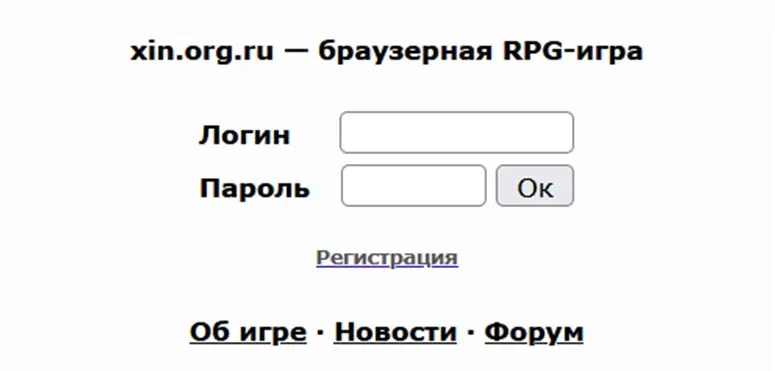
Xin was a Russian browser game from the mid-2000s with no pictures at all, just text, HTML forms and stat tables. Its server was switched off, the source code got lost, and a small team is now rebuilding it from scraps. Not a game "inspired by" Xin, they say, but a close reconstruction with the same formulas, monsters and items.
Where the data for the Xin reconstruction comes from
Xin was a MUD, a text-based multiplayer world. What survives is thin: pages cached in the Wayback Machine, fragments of the old forum in mirrors run by fan communities, and, oddly, the original xin.css style file, which reveals things nobody documented. The Wayback Machine's CDX API lists every captured URL, but world pages are missing, so the team leans on forum posts where players worked out damage from combat logs. Their rule: every number needs two independent confirmations, otherwise it stays a hypothesis.
Some mechanics are confirmed. A character's HP is Endurance × 5, dying in a fight costs 2.5% of experience, and both sides' combat rounds are resolved simultaneously, not in turns, which changes the balance completely. Others stay marked as disputed, such as the exact divisor for the "charge power" of magic wands. One archived item page mentions a 1/2/4/8 scale, but in nearly a thousand forum posts nobody ever discussed it.
When two archives disagree
The monster data comes from a hand-built text bestiary and a separate zone table someone kept back then. They often clash: the same monster lives near the Apiary in one and in the Fortress in the other, with different experience rewards. The team writes down each conflict and which source won, so nobody re-argues it six months later. So far about 40 monsters in eight zones are checked line by line. The rest still carry placeholder numbers, flagged in the documentation.
The day they broke production
The team once reworked the weapon and magic damage formula and rebalanced monsters in eleven zones at the same time. Tests passed and the maths looked fine on paper. Within an hour, live players saw fights going wrong, with monsters crushing characters in some places and folding in others. The new formula and the new monster numbers had never been run together through the real combat engine. They rolled everything back the same day. Now every formula change is first tested against several thousand simulated battles on a copy of the production database.
The stack is Python 3.11, FastAPI, SQLAlchemy and PostgreSQL, with server-rendered Jinja2 pages and no JavaScript framework, which suits a game that was always just HTML forms. The game is playable now at xin.org.ru. Some content is still provisional, and some finished zones are not yet connected to the map.
Apps worth a look
SUMO: the number puzzleTap the right tiles, add them up, hit the target. Easy to learn, hard to master. Free, for all ages.
Dialo: learn languages by speakingTalk to an AI conversation partner; every sentence comes back corrected and explained in your language. 9 languages, A1 to C2.
ediviewer: read EDI files like documentsOpen EDIFACT and X12 messages, see every segment explained, convert to JSON/XML, export PDF and Excel. Runs locally, no upload.
giftdetect: the right gift in minutesPick who it is for, the occasion and their personality. The search engine reads product descriptions from local shops and ranks what fits. Free, no sign-up.
More from this day
See all →



More in: Software
See all →
Windows 11 on 8GB RAM: a 9-year-old Let's note gets a new job

Word Compatibility Mode is losing options, and old layouts may shift

Google Maps in South Korea: Google removes coordinates from Maps and Earth