Vilanova de Arousa Police Use Drones to Track Illegal Dumping
Local police in Vilanova de Arousa, Pontevedra, are flying drones to find who dumps furniture and rubble. Warnings cite fines up to 45,000 euros, but that is not the rule for a misplaced bin bag.
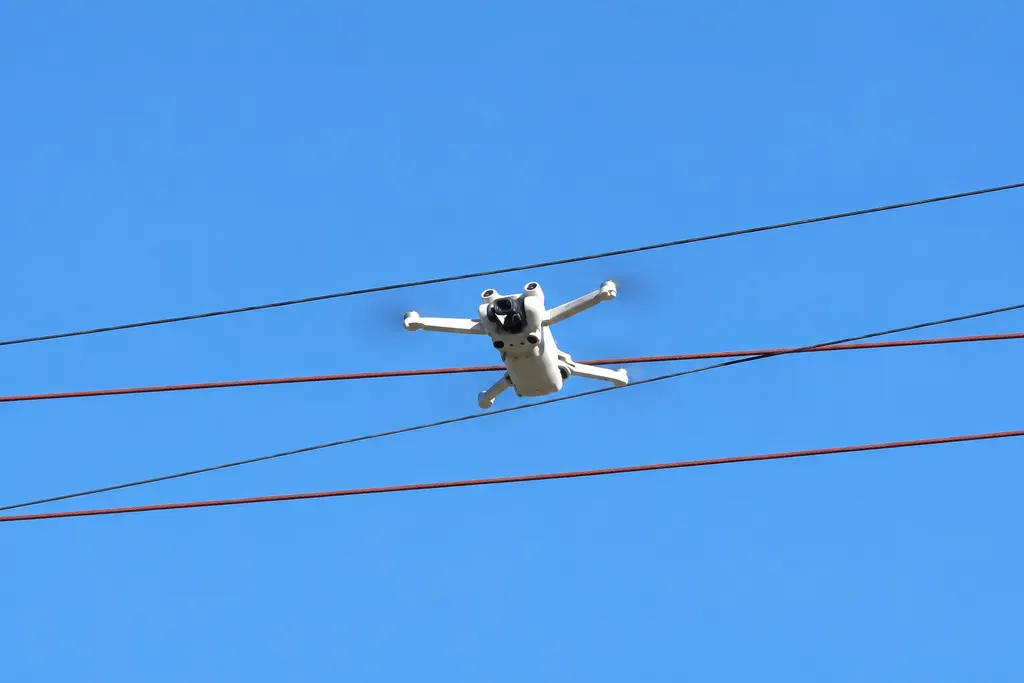
Local police in Vilanova de Arousa, in Spain's Pontevedra province, are using drones to monitor illegal waste dumping. Officers pursue people who leave furniture or rubble on public roads and warn them of penalties that can reach 45,000 euros.
That figure, however, does not apply to a simple container mistake. The drones are mainly a tool for tracing the likely source of waste. When officers find debris, they fly a drone over the surrounding area to look for a nearby building site. According to one officer, “the offender is usually closer than it seems”. Behaviours detected so far include leaving bed bases on the pavement and pouring paint on green areas. Signs have been put up to warn residents of the surveillance.
What the fines really look like
Aerial monitoring in the town has been on record since August 2025, when a police protocol combined it with recording logs and citizen alerts to identify those responsible. Officers mention penalties of 200 or 500 euros, rising to 45,000 depending on how hazardous the waste is. The more serious cases involve renovation debris or dangerous substances.
Nor is 45,000 euros the legal ceiling. Article 84 of Galicia's waste law sets 901 to 45,000 euros for serious infractions, with a separate scale for hazardous waste. Under the Spanish national waste law, serious infractions carry fines from 2,001 to 100,000 euros, with higher limits for hazardous waste or contaminated soil. Leaving household or commercial non-hazardous waste outside what local ordinances allow counts as a minor offence. Whatever the case, the authorities must identify the specific infraction and the rule applied, and resolve it with a reasoned decision after opening a formal file.
The data protection angle
The Spanish data protection agency (AEPD) distinguishes in its drone guidance between flights that process no personal data and those that capture it accidentally or on purpose, as in video surveillance. Identifiable people in the footage carry different implications than a pile of rubble. The agency recommends capturing only what is strictly necessary, for example by limiting resolution or switching recording on and off during the flight.
A 2021 ruling on Fuenlabrada examined police drones used for traffic control. It found the duty to inform was met through signs, social media and the municipal website, and that a prior impact assessment was required. The case was closed after the documentation was reviewed. That outcome concerns the traffic system and cannot automatically be applied to Vilanova's waste monitoring.
Apps worth a look
 SUMO: the number puzzle
Tap the right tiles, add them up, hit the target. Easy to learn, hard to master. Free, for all ages.
 Dialo: learn languages by speaking
Talk to an AI conversation partner; every sentence comes back corrected and explained in your language. 9 languages, A1 to C2.
 ediviewer: read EDI files like documents
Open EDIFACT and X12 messages, see every segment explained, convert to JSON/XML, export PDF and Excel. Runs locally, no upload.
More from this day
See all →
YouTube Tests 30-Day Grace Period Before Banning Channels

Microsoft AI chief Mustafa Suleyman: AI has no rights or feelings

Thara Connect Forum in Ajman Sets Five-Year Startup Targets

BLIK Code Scam: Police Warn of Hijacked Friend Accounts
More in: Software
See all →
Cozystack Wins TOC Votes to Move to CNCF Incubation

South Korea Adds AI Web Search to Civil Servants' On-AI Platform
Roadside Litter: A Developer Turns a Phone Into a Litter Dashcam