US explores a Find My-style tracker for Nvidia AI chips
US policymakers are weighing a Find My-style system that would check where advanced AI chips really are, to catch Nvidia GPUs smuggled into China.
 SUMO· the number puzzle
 Dialo· learn languages by speaking
 ediviewer· read EDI files like documents
 giftdetect· the right gift in minutes
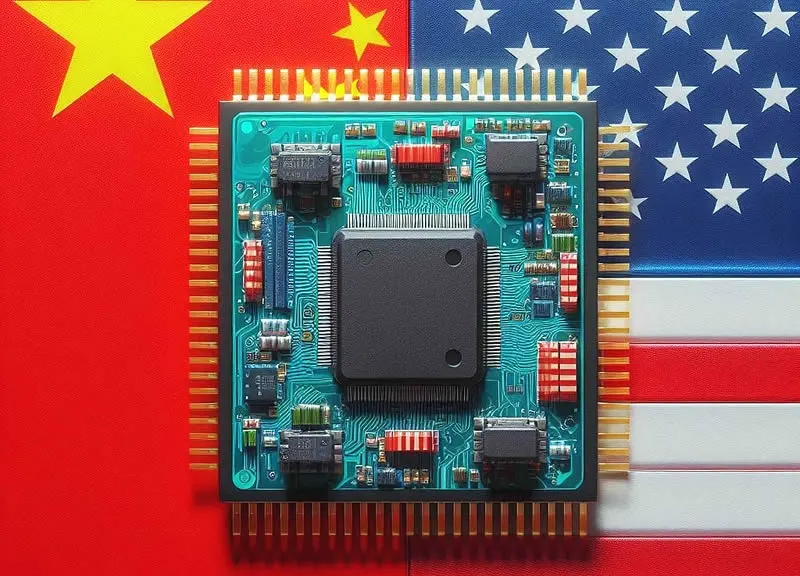
Apple lets you find a lost AirTag. Washington would like something similar for AI chips. The US is considering a tracking system, often compared to Apple's Find My, that would verify where advanced AI accelerators physically sit and flag ones that have slipped into China or other sanctioned countries.
The idea relies on geolocation and unique hardware identifiers for each GPU. One leading approach is Ping-Based Location Verification, or PLV. The chip sends requests to several trusted servers in different parts of the world and measures how long the signals take to make the round trip. Compare those times and you get a rough idea of where the chip is.
Kyle Miller and Jacob Feldgoise, senior researchers at Georgetown University's Center for Security and Emerging Technology (CSET), argue the focus should be on the most powerful data-center GPUs. Manufacturers could build PLV into new chips, while chips already shipped could get it through a firmware update. Encrypted certificates could also confirm a device's location at a given moment.
Can AI chip tracking actually work?
Not perfectly. IEEE Spectrum notes that signal checks cannot follow chips that are switched off, sitting in a warehouse or in transit. And if a chip stops answering, nobody can tell whether it is a technical fault or an attempt to hide. People with physical access could also block the signals or pull out cryptographic keys. So experts suggest pairing digital checks with physical inspections of data centers.
Hardware fingerprinting is another route. Researchers have already shown they can create unique fingerprints for Nvidia H200 GPUs from manufacturing quirks and random numbers.
Why now?
US export limits introduced in 2022 did not stop advanced accelerators from reaching China. In March 2026 the House Foreign Affairs Committee approved a bill requiring location checks on advanced AI chips, and in September lawmakers urged a floor vote. Experts also warn that enforcement would be expensive and that buyers could still get around it through foreign cloud services.
Apps worth a look
SUMO: the number puzzleTap the right tiles, add them up, hit the target. Easy to learn, hard to master. Free, for all ages.
Dialo: learn languages by speakingTalk to an AI conversation partner; every sentence comes back corrected and explained in your language. 9 languages, A1 to C2.
ediviewer: read EDI files like documentsOpen EDIFACT and X12 messages, see every segment explained, convert to JSON/XML, export PDF and Excel. Runs locally, no upload.
giftdetect: the right gift in minutesPick who it is for, the occasion and their personality. The search engine reads product descriptions from local shops and ranks what fits. Free, no sign-up.
More from this day
See all →
Nāpōwawāʻenakaulua: Webb Finds Earliest Quasar Pair Ever

United Airlines AI agent ban: bots can't tick the check-in box
Jensen Huang resigns as Nvidia CEO; Colette Kress steps in as interim

Windows WinSxS folder: the DISM command that frees up to 10 GB
More in: Hardware
See all →
Magnetic tape is back: Fujifilm to make 5x more LTO tape for AI

AMD Adrenalin driver bug is wearing out SSDs with heavy writes

Apple HomeView skips Face ID and recognizes you another way