Tsinghua Turns Old Wind Turbine Blades Into Graphene in 0.5 Seconds
Tsinghua University researchers use a half-second electric pulse at about 2,000 °C to turn scrapped wind turbine blades into graphene and silicon carbide.
 SUMO· the number puzzle
 Dialo· learn languages by speaking
 ediviewer· read EDI files like documents
 giftdetect· the right gift in minutes
A team at Tsinghua University, led by Bing Deng, has developed a way to recycle decommissioned wind turbine blades with a half-second electric discharge. The pulse heats the shredded material to about 2,000 °C and converts it into graphene and silicon carbide.
Why blades are hard to recycle
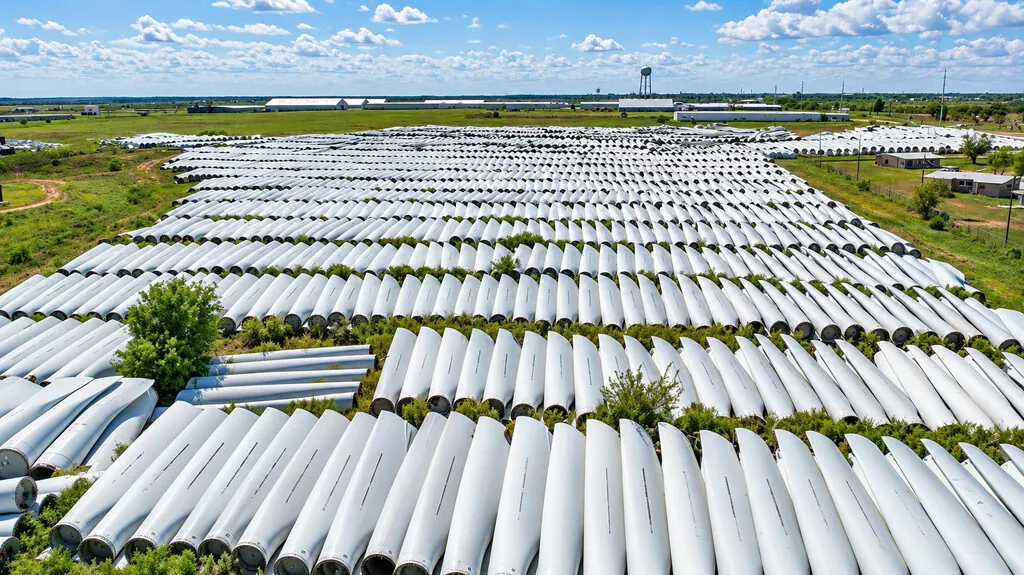
Turbine blades are made of glass fibre and thermoset resins, built to withstand decades of wind and mechanical stress. Those resins cannot be melted and reshaped like ordinary plastics, so blades are usually buried, shredded or treated with costly thermal and chemical processes that can degrade the materials. Millions of tonnes of blade waste are expected in the coming decades.
The researchers first grind the blades into powder and mix it with carbon black to make it conductive. An ultrafast Joule heating pulse then takes it to roughly 2,000 °C in 0.5 seconds. The silica in the glass fibre becomes silicon carbide, while carbon compounds from the resin form graphene. The glass and resin do not need to be separated first, and no solvents or catalysts are required.
Results and economics
Added to new epoxy resin at just 0.3% by weight, the recovered material raised tensile stiffness by 27% and flexural stiffness by 9%. At 0.1%, thermal diffusivity improved by 41%. The team says this could yield stronger, longer-lasting blades and even help with ice build-up.
By the team's calculations, processing a tonne of waste could earn about $80, against estimated losses of $460 for pyrolysis and $1,800 for certain chemical treatments. Emissions would fall 83% compared with pyrolysis and 92% compared with chemical dissolution. These estimates exclude shredding, equipment and other operating costs.
The scale problem
Most experiments used only 0.3 grams of material. Batches have reached 10 grams, and a reactor for 200 grams has been designed but not yet proven. Blades from a single turbine can weigh tens of tonnes. Deng aims to build a pilot plant handling 100 tonnes. No full blades have been built yet, and the results come from laboratory resins.
James Tour of Rice University, a pioneer of flash Joule heating, says the work shows how hard-to-recycle waste can become valuable material, but notes that industrial effectiveness remains to be shown. Energy use and long-term durability also need testing.
Apps worth a look
SUMO: the number puzzleTap the right tiles, add them up, hit the target. Easy to learn, hard to master. Free, for all ages.
Dialo: learn languages by speakingTalk to an AI conversation partner; every sentence comes back corrected and explained in your language. 9 languages, A1 to C2.
ediviewer: read EDI files like documentsOpen EDIFACT and X12 messages, see every segment explained, convert to JSON/XML, export PDF and Excel. Runs locally, no upload.
giftdetect: the right gift in minutesPick who it is for, the occasion and their personality. The search engine reads product descriptions from local shops and ranks what fits. Free, no sign-up.
More from this day
See all →
Yandex Cloud Restores 97.16% of Customer Data After Attacks
EIB Group and Investors Pledge Over €10bn for European Scaleups

Google Ends Support for Third-Party Fitbit Apps and Clock Faces

NEAR AI says SGLang flaw exposed user account details
More in: Science
See all →
Haloferax volcanii Grows Under Mars-Like Conditions in Lab Test
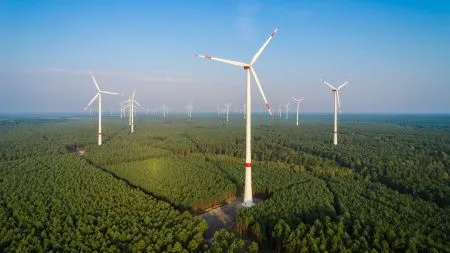
Researchers develop heat-based recycling method for wind turbine blades
TU Dresden Plans Molten Salt Reactor to Recycle Nuclear Waste