Taung Child skull redated to 3 million years, and it upends the family tree
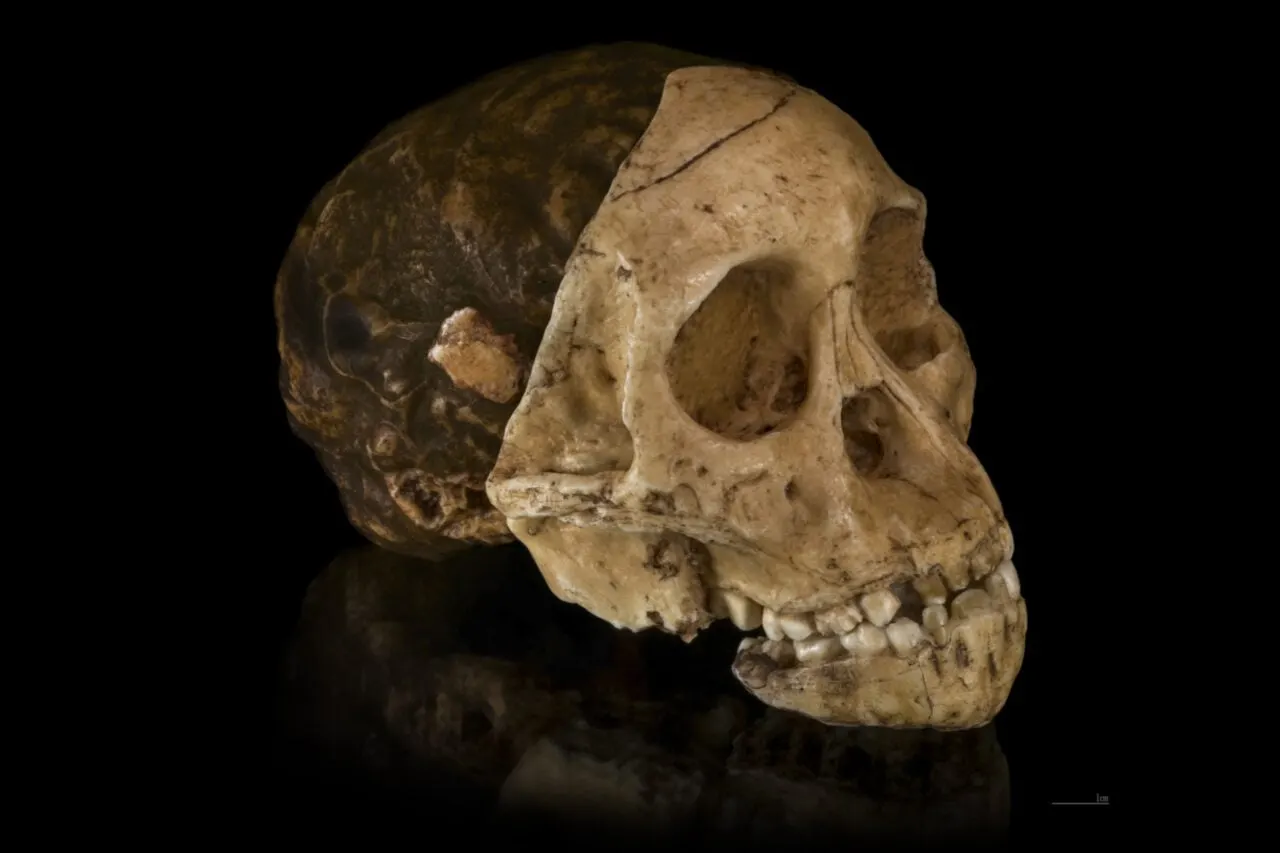
The Taung Child, a toddler's skull found in 1924, is the only certain Australopithecus africanus fossil. A new study says the human family tree was a tangled bush.
 SUMO· the number puzzle
 Dialo· learn languages by speaking
 ediviewer· read EDI files like documents
 giftdetect· the right gift in minutes
For a century, the Taung Child has been the star of early human fossils. Now a new study says we may have been reading the rest of the fossil record through it all wrong.
The skull belonged to a 3-year-old Australopithecus africanus and turned up in Taung, South Africa, in 1924. It was the first solid proof that humans originated in Africa. The species lived in what is now South Africa from roughly 3.3 to 2.1 million years ago, had a mix of human and ape features, and may have been a direct ancestor of the Homo genus, which includes us.
There is a catch. The Taung Child is the only unequivocal A. africanus specimen in the entire known fossil record. After its discovery, nobody set firm criteria for classifying later finds, so paleontologists tentatively labelled similar fossils as the same species. Call it classification by vibes.
What did the new Taung Child study find?
In a paper published this month in npj Palaeoecosystems, researchers led by Gabriele Macho of the Free University of Brussels compared other early human fossils with the Taung Child. They redated the skull to between 2.96 and 3.03 million years old. They also looked at tooth structure and at how brain and teeth develop during growth.
Several adult fossils long counted as Australopithecus africanus don't match the Taung Child's developmental path. Differences in brain development point to multiple hominin species living in the Sterkfontein region, northeast of Taung, either at the same time or one after another.
Why was the human family tree so tangled?
The team blames climate. Southern Africa swung between wet and dry cycles, so hominin habitats expanded and shrank. Isolated populations split apart, interbred and adapted to new threats. Sterkfontein was a place where species met and hybridized again and again over millennia. Fossilized pollen suggests the Taung Child's world was much wetter and more forested than South Africa is today.
«For over 100 years, we assumed the Taung Child was just one of many similar fossils from the era,» Macho said in a statement. «Our findings turn that on its head. The human family tree wasn't a neat, straight trunk, it was a chaotic, tangled bush driven by climate shifts.»
The idea cuts against tidy, linear models of human evolution, which will not please everyone in the field.
Apps worth a look
SUMO: the number puzzleTap the right tiles, add them up, hit the target. Easy to learn, hard to master. Free, for all ages.
Dialo: learn languages by speakingTalk to an AI conversation partner; every sentence comes back corrected and explained in your language. 9 languages, A1 to C2.
ediviewer: read EDI files like documentsOpen EDIFACT and X12 messages, see every segment explained, convert to JSON/XML, export PDF and Excel. Runs locally, no upload.
giftdetect: the right gift in minutesPick who it is for, the occasion and their personality. The search engine reads product descriptions from local shops and ranks what fits. Free, no sign-up.
More from this day
See all →
Also TM-B e-bike deliveries paused over battery drain bugs

Pixel lock screen animation missing after November update

US tech outages: White House says no attack behind them

Recovery scam: 15 arrested for fleecing fraud victims twice
More in: Science
See all →
2.8 million basketwork eels packed onto a Tasmanian seamount

Milky Way weighed at 1.19 trillion suns, with 11% uncertainty

VCN-01: a modified cold virus against pancreatic cancer