Superhabitable planets: why scientists want a better Earth
Earth may be a borderline case for life. Researchers now hunt for superhabitable worlds around orange K dwarf stars, and ESA's Plato telescope starts the search in 2027.
 SUMO· the number puzzle
 Dialo· learn languages by speaking
 ediviewer· read EDI files like documents
 giftdetect· the right gift in minutes
For decades the dream was a second Earth. Some astronomers now ask a rude question: why would Earth be the best a planet can do? Their answer is the superhabitable planet, a world that could be friendlier to life than ours.
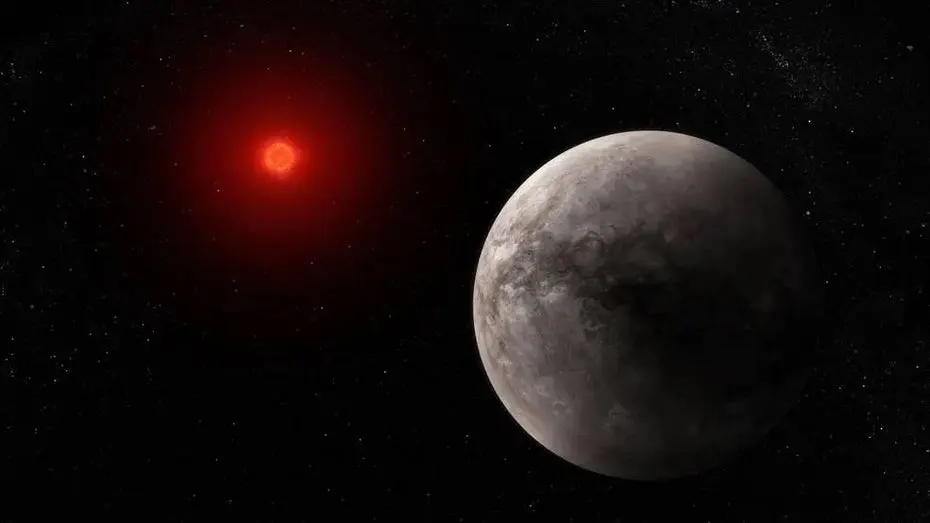
The timing matters. ESA plans to launch its Plato space telescope in early 2027 to hunt for rocky planets around other stars, and superhabitable candidates are getting more attention alongside classic Earth twins. Part of the shift is disappointment. James Webb observations of rocky planets around small, cool red dwarfs, such as Trappist-1b, showed that flares from those stars often stripped the atmospheres of planets orbiting close in, according to a Nature study led by Thomas Greene of NASA's Ames Research Center.
What is a superhabitable planet?
The 2014 model by René Heller (Max Planck Institute for Solar System Research, Göttingen) and John Armstrong describes a super-Earth with about twice Earth's mass and a diameter 20 to 30 percent larger. Gravity roughly 30 percent higher would flatten mountains and ocean trenches, leaving shallow seas and island chains. A bigger iron core would give a stronger magnetic field against cosmic radiation. A 2020 study with Dirk Schulze-Makuch put the best average temperature around 5 degrees Celsius above Earth's, so roughly 25 degrees by the headline figure.
The star matters too. K dwarfs, orange stars slightly cooler than the Sun, burn for tens of billions of years. The Sun lasts about ten billion, and Earth will be too hot for complex plants and animals in roughly 500 million years. Earth also sits near the inner edge of the habitable zone, where liquid water can exist.
What are the catches?
None of the 24 candidates from the 2020 study is confirmed, and all lie more than 100 light-years away. Too much mass brings crushing air pressure or a gassy mini-Neptune. In a 2024 lab study, garden cress under simulated K dwarf light sprouted faster and grew taller, but ended up with more water and less dry mass.
Heller expects Plato to find perhaps a dozen such worlds, but not to tell us much about them, since it measures size and orbit, not atmospheres. Looking for oxygen or methane will have to wait for ESO's Extremely Large Telescope or NASA's Habitable Worlds Observatory, planned for the 2040s.
Apps worth a look
SUMO: the number puzzleTap the right tiles, add them up, hit the target. Easy to learn, hard to master. Free, for all ages.
Dialo: learn languages by speakingTalk to an AI conversation partner; every sentence comes back corrected and explained in your language. 9 languages, A1 to C2.
ediviewer: read EDI files like documentsOpen EDIFACT and X12 messages, see every segment explained, convert to JSON/XML, export PDF and Excel. Runs locally, no upload.
giftdetect: the right gift in minutesPick who it is for, the occasion and their personality. The search engine reads product descriptions from local shops and ranks what fits. Free, no sign-up.
More from this day
See all →
Kh-101 missiles found at three crash sites in Poland, prosecutors say

mBank warns of card scams after the Autopay data leak

Google homepage drops the Search button for AI tools

iOS 27 Connectivity Assist: Your iPhone Can Now Pair Wi-Fi With Mobile Data
More in: Science
See all →
Brain implant users write first guidelines for BCI trials

Teen screen time and the brain: what a Finnish MRI study found

Iwo Jima volcano pushes up new land the size of 10 Tokyo Domes