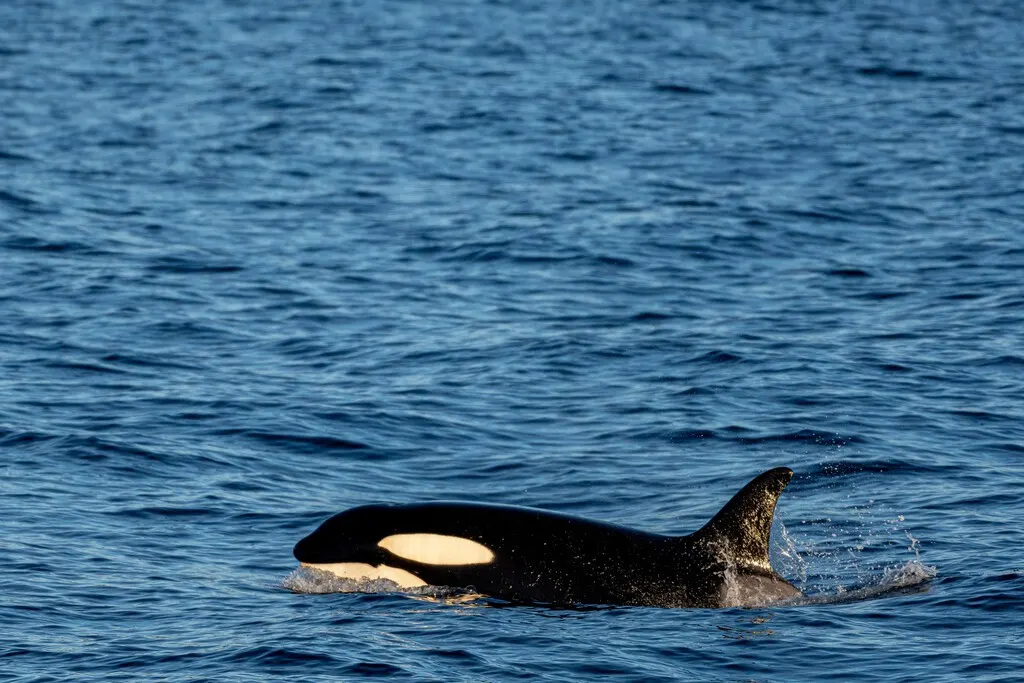
Stranded orca in Scotland was 15 years older than its teeth said
Its teeth showed 50 to 52 growth bands. Cold War bomb radiation in the dentin revealed a male orca stranded in Scotland was actually 65.
 SUMO· the number puzzle
 Dialo· learn languages by speaking
 ediviewer· read EDI files like documents
 giftdetect· the right gift in minutes
A male orca stranded on the Scottish coast looked about 50 years old when researchers counted the rings in its teeth. Then the fallout from Cold War nuclear tests told them they were 15 years short.
The animal has no popular name, only the reference number it got when it was found. What interested scientists were its teeth, which ended up in scientific collections. Routine analysis counted 50 to 52 visible bands, which would put its birth in the early 1960s. For decades, marine biologists have read cetacean teeth like tree trunks: count the growth layers and you have an age.
The chemistry disagreed. Using a mass spectrometer, the team measured the carbon-14 trapped in each layer. The innermost layers, formed in the whale's first years of life, held radiocarbon levels from before atmospheric nuclear testing began. The orca was really 65.
How do nuclear bombs help date an orca?
Atmospheric detonations in the 1950s and 1960s temporarily doubled the radiocarbon in the air. The excess dissolved into the oceans and entered the marine food chain, then began to fall after atmospheric tests were banned. Dentin barely remodels once it forms, so each layer keeps the chemical signature of the year it was laid down. It works like a time capsule.
Lulu and the Sellafield signal
The method turned up another story. Lulu, a well-known female of the West Coast Community, died entangled off the island of Tiree in 2016. Her dentin did not show the classic bomb curve. It showed persistently high radiocarbon from historic discharges by the Sellafield nuclear reprocessing plant into the Irish Sea, carried by currents to western Scotland.
So the same tooth chemistry that corrected one whale's age also traced a different kind of nuclear pollution in another.
Apps worth a look
SUMO: the number puzzleTap the right tiles, add them up, hit the target. Easy to learn, hard to master. Free, for all ages.
Dialo: learn languages by speakingTalk to an AI conversation partner; every sentence comes back corrected and explained in your language. 9 languages, A1 to C2.
ediviewer: read EDI files like documentsOpen EDIFACT and X12 messages, see every segment explained, convert to JSON/XML, export PDF and Excel. Runs locally, no upload.
giftdetect: the right gift in minutesPick who it is for, the occasion and their personality. The search engine reads product descriptions from local shops and ranks what fits. Free, no sign-up.
More from this day
See all →Will AI replace lawyers and accountants? Korean firms say no
NASA's green laser under the aurora in Svalbard, explained

MXOS turns a Sega Mega Drive into a PC with Python built in

Sanitas MiSanitas app breach exposes ID numbers and health reports
More in: Science
See all →
The Sun's heliotail: 14 years of NASA IBEX data show it changes

Wildlife trafficking app spots ivory and pangolin scales in photos

Cyborg pigeons for hire: Russian firm takes orders for brain-implanted birds