Beyond Aero One: the hydrogen jet with no batteries and no fuel
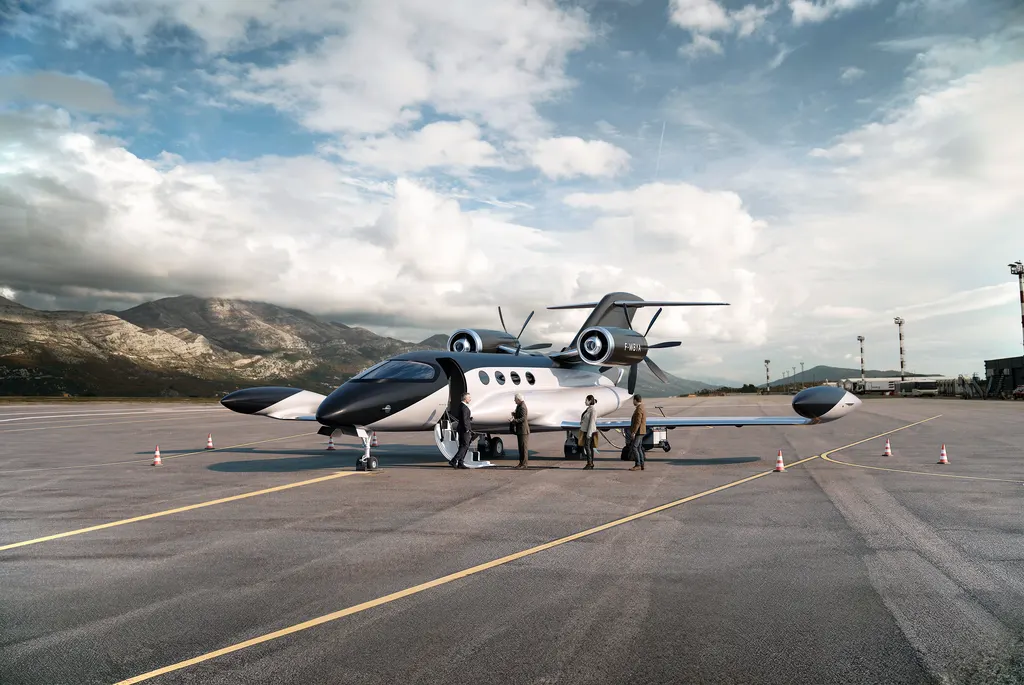
Beyond Aero, a French startup in Toulouse, is designing an 8-seat business plane that flies on hydrogen fuel cells alone, with no batteries and no kerosene.
 SUMO· the number puzzle
 Dialo· learn languages by speaking
 ediviewer· read EDI files like documents
 giftdetect· the right gift in minutes
Toulouse is where Clément Ader glided about 50 metres in 1890, copying the flight of bats. Now a startup a few kilometres from Airbus country wants to fly a business plane on hydrogen alone, with no kerosene and no batteries. It is called Beyond Aero, and its next aircraft is the Beyond Aero One.
The French company was founded in 2020. In 2024 it flew an experimental prototype named Blériot, the first crewed flight in France of an aircraft powered only by hydrogen. It completed two full flights. One is the follow-up, and it has just reached Preliminary Design Review. That means the concept, the specifications, the motors and the tank positions are frozen. Detailed design comes next, and the company is already sounding out suppliers.
How does a hydrogen plane work?
The hydrogen feeds fuel cells, which turn it into electricity through a chemical reaction. That electricity drives electric motors that spin the propellers. In flight, the only emission is water vapour. There are no batteries in normal operation, which sidesteps the big problem of electric flight: weight.
One will seat 8 passengers. It stores gaseous hydrogen at 700 bar in six 800-litre tanks, two at the wingtips and four above the wing around the fuselage. That is roughly 185 to 193 kg of usable hydrogen for a 800 nautical mile mission, about 1,500 km. Irwin Kerboriou, the company's Airport Operations Manager, says more than 85% of business aviation routes are shorter than 1,500 km. He also claims up to 60% lower maintenance costs, since there is no heat engine.
How would it refuel at airports?
The plan is to reuse existing technology. Gaseous hydrogen follows standards already used for trucks and trains, which Kerboriou says makes airports more comfortable with it. Hydrogen made off-site would arrive in tube-trailer trucks to fill fixed tanks at bigger airports. Smaller ones could get mobile tankers that fill the plane where it is parked. The most common setup today is an all-in-one truck with storage, compression and dispenser built in.
Beyond Aero is already working with Aéroports de la Côte d'Azur, which would bring hydrogen to Cannes, a business aviation airport, and within reach of Nice and Saint-Tropez.
The pressure is real. Aviation keeps growing, and according to the International Civil Aviation Organization, its emissions could triple by 2050.
Apps worth a look
SUMO: the number puzzleTap the right tiles, add them up, hit the target. Easy to learn, hard to master. Free, for all ages.
Dialo: learn languages by speakingTalk to an AI conversation partner; every sentence comes back corrected and explained in your language. 9 languages, A1 to C2.
ediviewer: read EDI files like documentsOpen EDIFACT and X12 messages, see every segment explained, convert to JSON/XML, export PDF and Excel. Runs locally, no upload.
giftdetect: the right gift in minutesPick who it is for, the occasion and their personality. The search engine reads product descriptions from local shops and ranks what fits. Free, no sign-up.
More from this day
See all →
Cyborg pigeons for hire: Russian firm takes orders for brain-implanted birds

MP3 history: how an ice hockey league saved the format

AtlasOS: the free Windows 11 mod that strips out what you don't use