NASA Terra satellite shuts down after 27 years of a 6-year mission
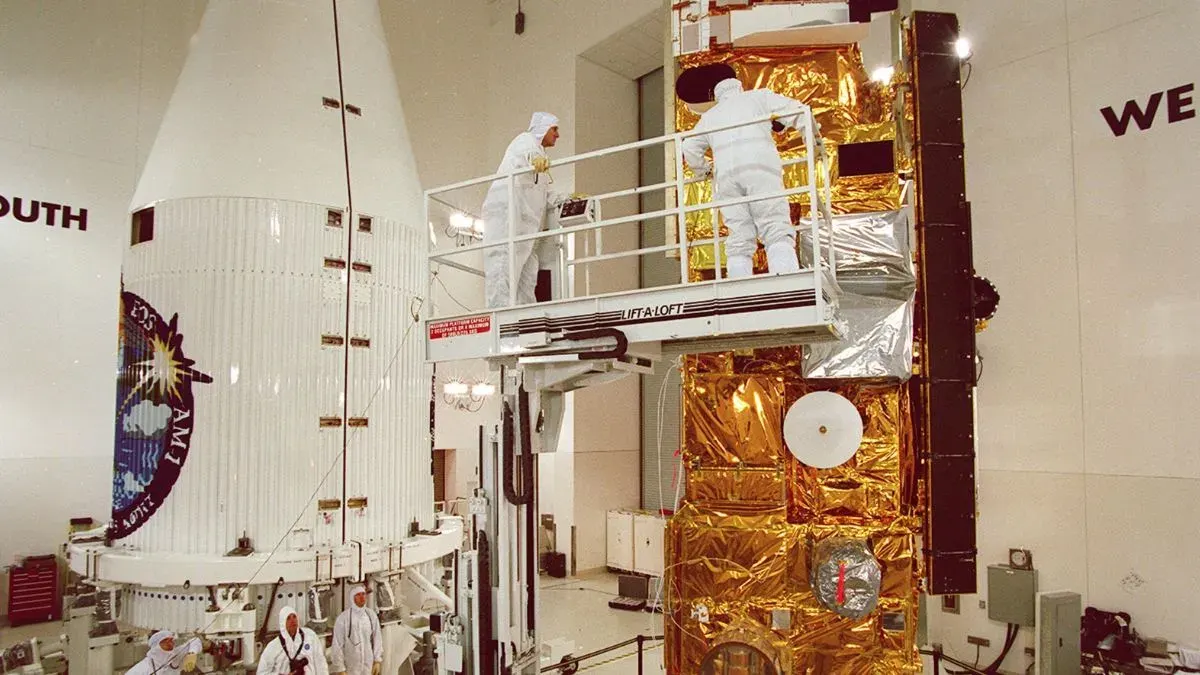
NASA's Terra satellite was built to last six years. It watched Earth for almost 27, and its science operations end on 1 December.
 SUMO· the number puzzle
 Dialo· learn languages by speaking
 ediviewer· read EDI files like documents
 giftdetect· the right gift in minutes
The NASA Terra satellite was meant to work for about six years. It lasted nearly 27, and now the agency is switching it off.
Terra launched on 18 December 1999 as part of the Earth Observing System, a programme to study the planet as one connected system: air, land and oceans together. It carried five instruments. MODIS watched the surface, clouds, fires and ice cover. ASTER took detailed images used for elevation maps. MISR viewed Earth from several angles to study clouds and aerosols (tiny particles in the air). CERES measured the planet's radiation balance, and MOPITT tracked carbon monoxide.
The satellite outlived its plan more than four times over, thanks to tough hardware and careful juggling of power and fuel. But ageing batteries and a drifting orbit took their toll. MOPITT was switched off in April 2025, ASTER's thermal subsystem stopped in January 2026, and one CERES instrument had been shut down earlier. On 17 November NASA announced the shutdown schedule.
What happens to Terra now?
Science data collection ends on 1 December. Engineers will then use the remaining fuel to lower the orbit, and all systems are due to be switched off in January 2027. Terra will stay in space for a while, sinking gradually because of atmospheric drag. Back in 2020 NASA had already stopped the manoeuvres that held its orbit, to save fuel for this retirement. As a result, its altitude and the time it passes over the equator have both drifted, so its images are taken under different lighting than before.
What did Terra see?
MODIS tracked huge fires in Australia and California and the smoke drifting over continents. Terra and Aqua also recorded steam plumes from an undersea volcano in the Bismarck Sea, and this year it spotted turquoise water off Florida, where strong winds stirred carbonate sediment from the seabed. MODIS data from Terra and Aqua also helped follow the giant iceberg A-84 after it broke off Antarctica.
The real value, though, is the long, comparable record. Terra's data appears in more than 27,000 scientific papers.
Is the data lost?
No. Everything stays free in NASA's archives, and NASA and the archive institutions are preparing tools to help researchers move to other satellite sources. Newer instruments will take over, but rebuilding a series this consistent is hard, because every new device measures a little differently. Data since December 1999 will remain a reference point for climate research.
Apps worth a look
SUMO: the number puzzleTap the right tiles, add them up, hit the target. Easy to learn, hard to master. Free, for all ages.
Dialo: learn languages by speakingTalk to an AI conversation partner; every sentence comes back corrected and explained in your language. 9 languages, A1 to C2.
ediviewer: read EDI files like documentsOpen EDIFACT and X12 messages, see every segment explained, convert to JSON/XML, export PDF and Excel. Runs locally, no upload.
giftdetect: the right gift in minutesPick who it is for, the occasion and their personality. The search engine reads product descriptions from local shops and ranks what fits. Free, no sign-up.
More from this day
See all →
WhatsApp Web safety: India warns about forgotten sessions

Google may delete inactive accounts after two years, even without a plan

Kuiper Belt dust grains caught in the stratosphere carry heavy-oxygen water