Kuiper Belt dust grains caught in the stratosphere carry heavy-oxygen water
Twelve tiny dust grains scooped up by a NASA research aircraft come from beyond Neptune, and they show signs of contact with unusual water.

 SUMO· the number puzzle
 Dialo· learn languages by speaking
 ediviewer· read EDI files like documents
 giftdetect· the right gift in minutes
NASA didn't need a spacecraft to get samples from the Kuiper Belt dust. It flew a research aircraft into the stratosphere and let the dust come to it. Twelve grains collected there carry traces of an unusual kind of water.
The grains are smaller than a millimetre. The team, led by Lindsay Keller of NASA's Johnson Space Center, studied them with an electron microscope and then with an ion microprobe at the University of California, Los Angeles, an instrument that measures isotopes. Tracks left by particles from the Sun pointed to the Kuiper Belt as their origin. The work was published on 11 November in Science Advances.
Inside the grains the researchers found clay minerals with water in their structure. These formed at low temperature when water rich in heavy oxygen met iron-, nickel- and sulphur-rich rock, back when planets were still growing from gas and dust around the young Sun. The ratio of oxygen-18 to oxygen-16 is at most 15 percent higher than in Earth's oceans.
What is heavy-oxygen water?
Most people know heavy water as water with heavy hydrogen. Here it is the oxygen that is heavy. Ordinary oxygen-16 has 8 neutrons in its nucleus. The heavier versions, oxygen-17 and oxygen-18, have 9 or 10. Such variants of an element are called isotopes.
Similar hints turned up before, in one meteorite and on comet 67P/Churyumov-Gerasimenko, but it was unclear whether those were one-offs. NASA's Genesis mission, which returned solar wind particles in 2001, suggested the Sun has more ordinary oxygen than Earth or most meteorites. That points to heavy oxygen becoming more common farther from the Sun.
How did the dust reach Earth?
Kuiper Belt dust absorbs sunlight and radiates the heat in all directions. That slows it down and nudges it toward the Sun, an effect called Poynting-Robertson drag. Twelve grains survived entry into the atmosphere.
There is also a puzzle. Material in the young solar system was well mixed, yet most meteorites contain little heavy oxygen. Something blocked its way inward. The authors think the barrier was most likely Saturn, possibly helped by Uranus and Neptune. Understanding how planets formed, they say, means counting the planets themselves as part of the chemistry.
Apps worth a look
SUMO: the number puzzleTap the right tiles, add them up, hit the target. Easy to learn, hard to master. Free, for all ages.
Dialo: learn languages by speakingTalk to an AI conversation partner; every sentence comes back corrected and explained in your language. 9 languages, A1 to C2.
ediviewer: read EDI files like documentsOpen EDIFACT and X12 messages, see every segment explained, convert to JSON/XML, export PDF and Excel. Runs locally, no upload.
giftdetect: the right gift in minutesPick who it is for, the occasion and their personality. The search engine reads product descriptions from local shops and ranks what fits. Free, no sign-up.
More from this day
See all →
WhatsApp Web safety: India warns about forgotten sessions

Google may delete inactive accounts after two years, even without a plan
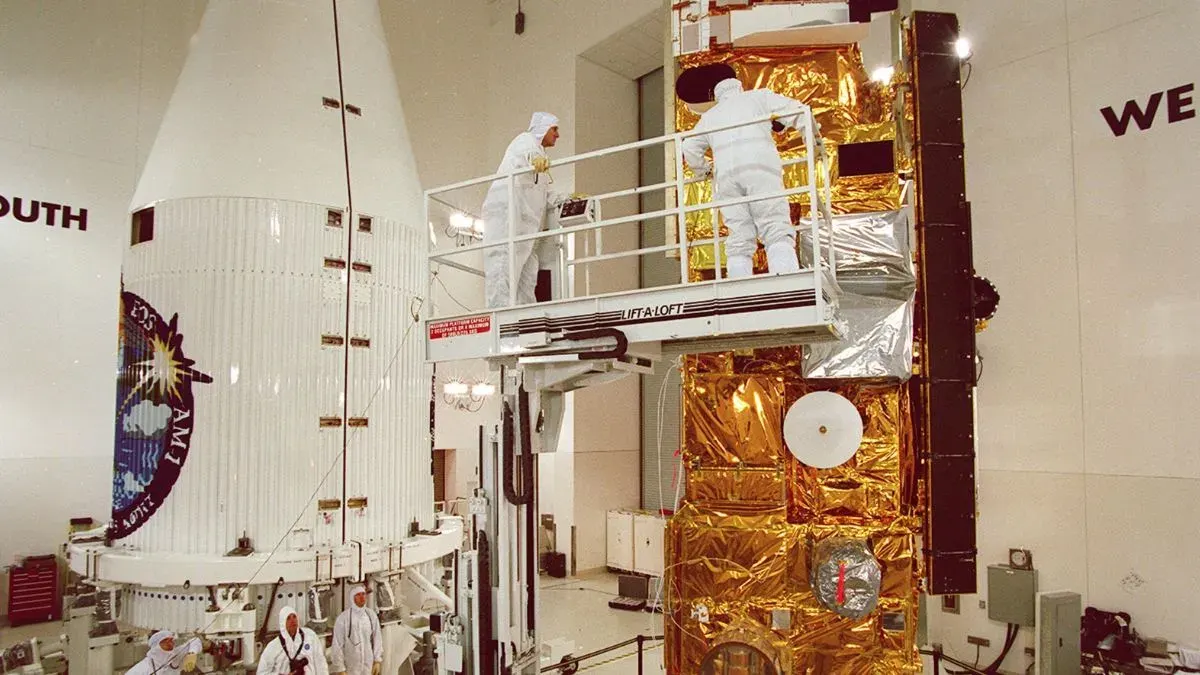
NASA Terra satellite shuts down after 27 years of a 6-year mission