Hawking stars: atom-sized black holes could blow stars apart
A MIT-led team calculated that atom-sized black holes from the Big Bang could eat stars from the inside and set off a one-day blue flash telescopes might catch.
 SUMO· the number puzzle
 Dialo· learn languages by speaking
 ediviewer· read EDI files like documents
 giftdetect· the right gift in minutes
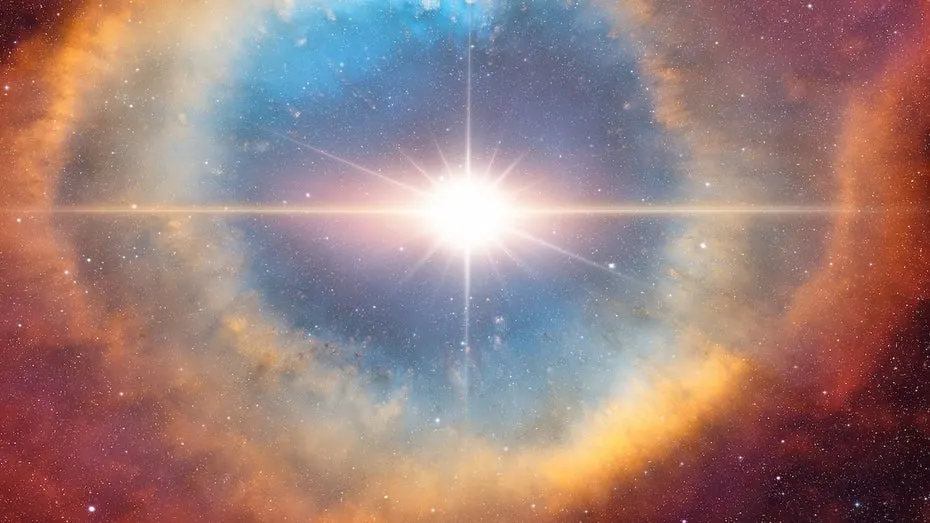
A black hole the size of an atom, but as heavy as an asteroid, could sit inside a star and slowly eat it from within. Then, in the right conditions, the star blows up. That is the scenario a team around MIT physicist Ore Gottlieb has now worked through, in a study published in The Astrophysical Journal.
The objects in question are primordial black holes. In theory they formed in the first fraction of a second after the Big Bang. Lighter ones would have evaporated long ago through Hawking radiation, a quantum effect that makes black holes leak particles. But between 100 billion and 100 quadrillion tonnes there is a gap in the observations, and objects in that range could make up dark matter, the invisible stuff that makes up most of the matter in the cosmos.
How does a Hawking star form?
A tiny black hole flying through a star barely slows down, so it just passes through. It only gets captured if a heavy planet like Jupiter or a companion star bends its path into an orbit. After that it crosses the star again and again, loses energy to friction and sinks into the core over millions to billions of years. A star with a black hole at its centre is called a Hawking star, and its core is thirteen times denser than lead.
Older models assumed that glowing infalling gas would create radiation pressure and stop the black hole from growing. Matteo Cantiello of the Flatiron Institute argues in a companion study that this brake does not work, because the gas swallows almost all the light and at most one percent of the energy escapes.
Explosion or silent end
In fast-spinning stars, gas gathers in a disk once the black hole has swallowed roughly two to eight percent of a solar mass. "Once the disk forms, it's basically a death sentence for the star," Gottlieb says. Twisted magnetic fields of around 100 tesla launch particle jets from the poles that tear the star apart within half a minute to an hour. In up to 76 percent of the calculated cases, older stars spin too slowly, and the black hole simply swallows its host without a flash.
An explosion would send out X-rays and gamma rays, then glow blue and ultraviolet for about a day. Unlike a normal supernova, there is no weeks-long afterglow from radioactive nickel. Observatories such as Vera Rubin could spot it out to three billion light-years.
All of this is still maths. There is no observational evidence, estimates of how often it happens differ by a factor of 1,000 to 10,000, and the 3D simulation covers only 0.78 seconds. Even if no such flash turns up, the search would limit how much dark matter such relics can account for.
Apps worth a look
SUMO: the number puzzleTap the right tiles, add them up, hit the target. Easy to learn, hard to master. Free, for all ages.
Dialo: learn languages by speakingTalk to an AI conversation partner; every sentence comes back corrected and explained in your language. 9 languages, A1 to C2.
ediviewer: read EDI files like documentsOpen EDIFACT and X12 messages, see every segment explained, convert to JSON/XML, export PDF and Excel. Runs locally, no upload.
giftdetect: the right gift in minutesPick who it is for, the occasion and their personality. The search engine reads product descriptions from local shops and ranks what fits. Free, no sign-up.
More from this day
See all →
AtlasOS: the free Windows 11 mod that strips out what you don't use
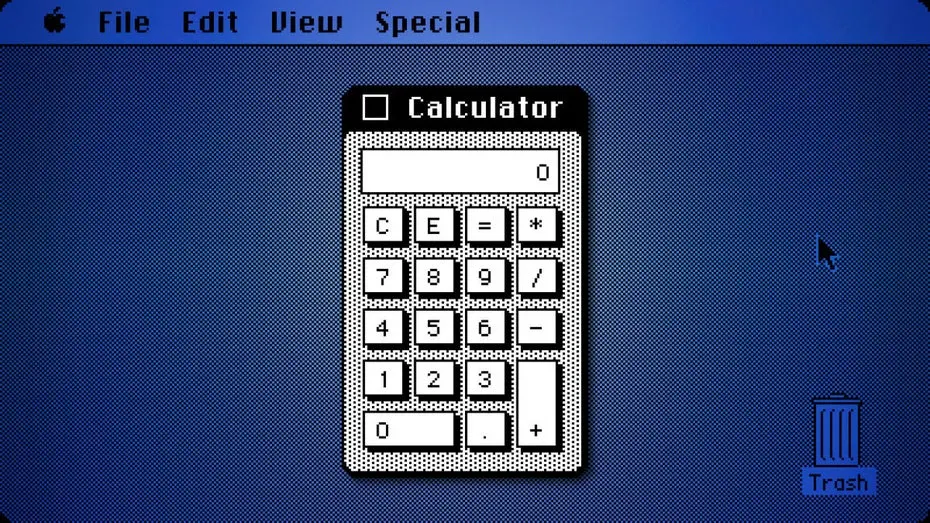
Mac Calculator design: how Steve Jobs built it himself in 10 minutes

Quam: Germany's first virtual mobile carrier and its failure

Samay Raina is first YouTuber to pass 1 million paid memberships
More in: Science
See all →
Kuiper Belt dust grains caught in the stratosphere carry heavy-oxygen water
NASA Terra satellite shuts down after 27 years of a 6-year mission
V1294 Aql: TESS eclipse reveals a star telescopes couldn't see