Starship chopsticks catch: tower cameras show Ship in slo-mo
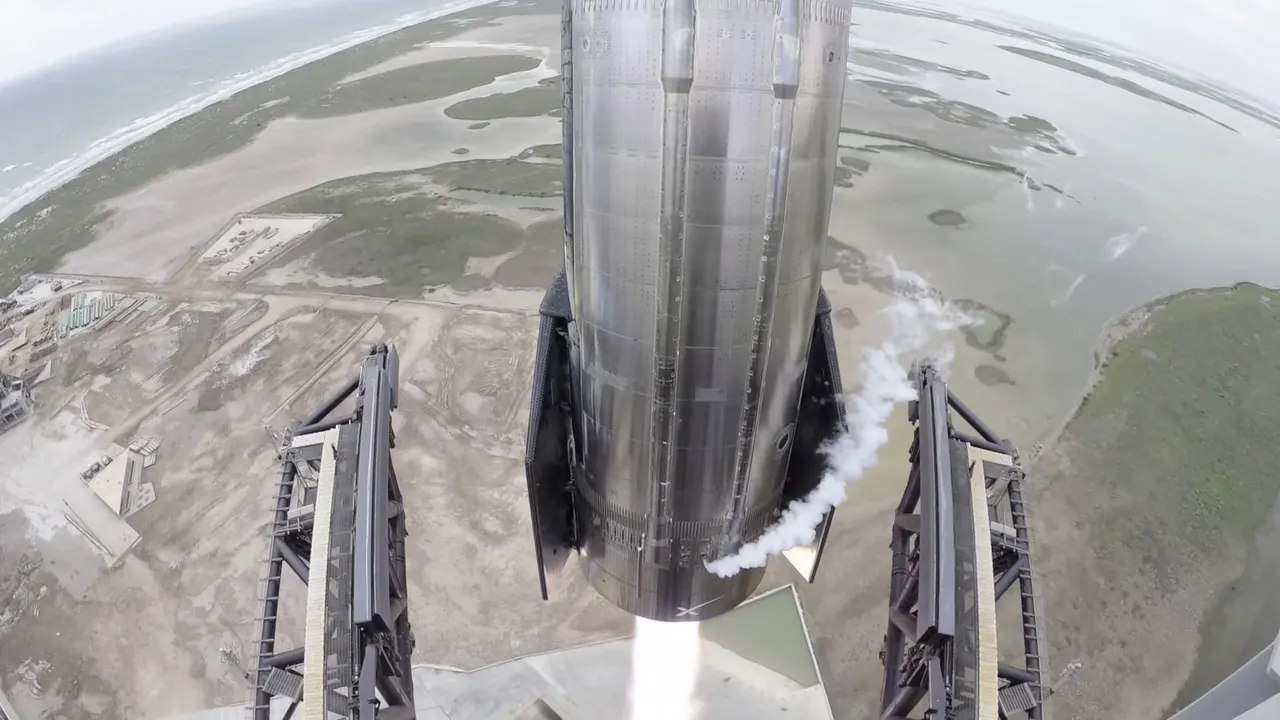
SpaceX has released four slow-motion videos filmed from the top of its 480-foot tower, showing the first-ever catch of a Starship upper stage.
 SUMO· the number puzzle
 Dialo· learn languages by speaking
 ediviewer· read EDI files like documents
 giftdetect· the right gift in minutes
The Starship chopsticks catch looks different from the top of the tower. SpaceX has released four slow-motion videos filmed by cameras near the summit of its Starbase launch tower, showing the moment the giant arms grabbed a returning Starship upper stage for the first time.
The catch happened on Saturday, Nov. 14, in South Texas. The tower is 480 feet (146 meters) tall, and the two "chopstick" arms closed around the Ship spacecraft as it came back. SpaceX posted the new footage on Tuesday, Nov. 17, saying the design was built for "full and rapid reusability, enabling repeat launches and landings from the same pad."
Why is SpaceX catching Starship with chopsticks?
Starship is the biggest and most powerful rocket ever built. The current V3 version stands about 408 feet (124 m) tall. SpaceX wants it to be fully and rapidly reusable, which no orbital launch system has managed. Catching both stages at the tower is meant to make inspection, refurbishment and reflight quicker.
What happened on Flight 15?
The rocket's 15th test flight launched on Friday evening, Nov. 13. The plan was to catch both stages. But the Super Heavy booster got a low-fuel warning on its way back, about 6.5 minutes after liftoff, and diverted on its own to a splashdown in the Gulf of Mexico.
That was not a big setback. SpaceX had already caught Super Heavy on three earlier flights. The Ship is the harder job, because it returns from orbit faster and hotter than the booster. The company had never tried a Ship catch before Flight 15, and got it on the first attempt.
Ship also had work to do before coming home. It deployed 26 next-generation Starlink V3 broadband satellites into low Earth orbit. That is the second batch of V3 satellites, after the first went up on Flight 14 on Sept. 28.
Apps worth a look
SUMO: the number puzzleTap the right tiles, add them up, hit the target. Easy to learn, hard to master. Free, for all ages.
Dialo: learn languages by speakingTalk to an AI conversation partner; every sentence comes back corrected and explained in your language. 9 languages, A1 to C2.
ediviewer: read EDI files like documentsOpen EDIFACT and X12 messages, see every segment explained, convert to JSON/XML, export PDF and Excel. Runs locally, no upload.
giftdetect: the right gift in minutesPick who it is for, the occasion and their personality. The search engine reads product descriptions from local shops and ranks what fits. Free, no sign-up.
More from this day
See all →
Nvidia data breach probe: The Gentlemen set Nov 28 deadline

Google homepage now has an AI Mode chat sidebar on desktop

GTA 6 launch day for the Rockstar workers fired last year

GTA 6 on Xbox Series X/S: settings to change before launch
More in: Space
See all →
Common Space satellite: a nonprofit's Earth-imaging craft launches 2027
Satellites over your city now outnumber the stars you can see
Starshield Ukraine speed limit: Musk says Zelenskyy 'not truthful'