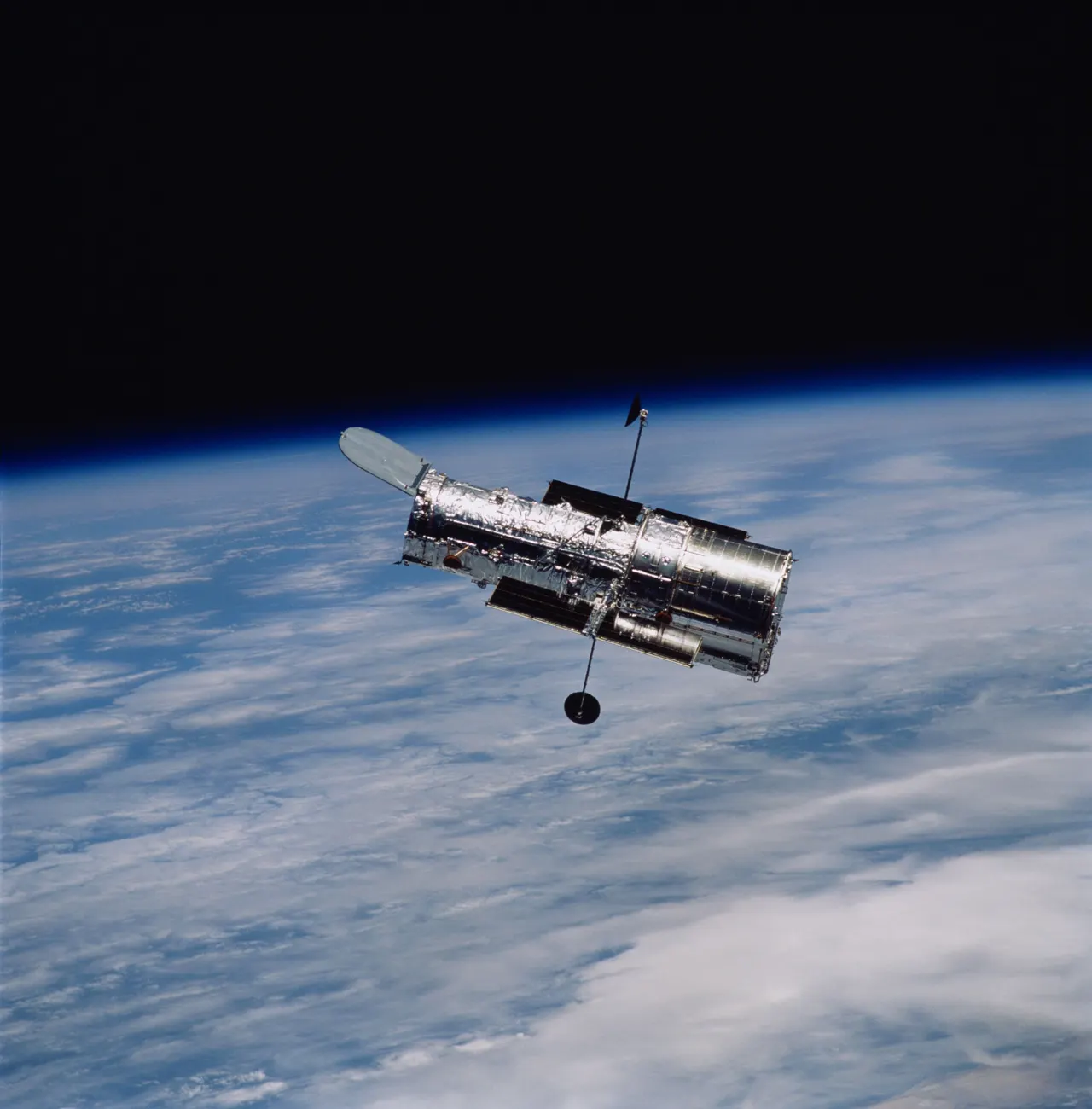
Starlink vs. a nuclear blast in space: 98% of satellites lost in a week
A US simulation says one megaton nuclear blast 500 km above the South Atlantic would knock out nearly every low-orbit satellite, Starlink included, within two weeks.
 SUMO· the number puzzle
 Dialo· learn languages by speaking
 ediviewer· read EDI files like documents
 giftdetect· the right gift in minutes
One nuclear bomb detonated in space could disable about 98 percent of all satellites in low Earth orbit within a week, and Starlink would be hit hardest. That is the result of a simulation from the University of Wisconsin–Madison, published as a preprint, so it has not been peer reviewed yet.
What the Starlink nuclear simulation assumed
The team around physics student Zachary Petersen modelled more than 13,000 active satellites in low Earth orbit (LEO), the band a few hundred kilometres above the ground. The scenario: a one-megaton bomb exploding 500 kilometres above the South Atlantic.
They chose that spot on purpose. The South Atlantic Anomaly is a region with elevated radiation. Electrons released there would spread along compact magnetic shells that overlap with orbits satellites use heavily.
The blast itself is only part of the damage. Radiation, collisions between debris and atmospheric drag all add to it.
How fast would satellites fail?
According to the analysis, 25 percent of satellites would be out after 24 hours and half after 1.9 days. After 4.1 days, 90 percent would be gone, and after 15 days 99.4 percent. Dead satellites cannot dodge anything, so the team expects around 20 collisions within two years. Replacement satellites would face radiation and debris for years. The lowest-flying dead satellites would be dragged down by the atmosphere and fall.
The assumed yield is roughly two thirds of Starfish Prime, the US hydrogen bomb test of 1962. That 1.4 megaton blast, fired at 400 kilometres altitude, remains the strongest in the upper atmosphere or beyond. Seven satellites failed in the following months, and the radiation dose was a hundred times higher than expected. Far fewer satellites were up there back then.
Why this matters now
The 1967 Outer Space Treaty bans stationing nuclear weapons in orbit. Still, signs are piling up that states are working on it. In early 2024 the US government briefed Congress and European allies on Russian progress toward a space-based nuclear weapon. In September this year it emerged that the US has also placed weapons in space, though nuclear ones were not mentioned, and the treaty does not explicitly ban conventional arms.
Starlink has made the scenario more relevant. The satellite internet has proved a strategic advantage for Ukraine against Russia, and it is hard to attack because it has no single point of failure. A blast in orbit would not need one.
Apps worth a look
SUMO: the number puzzleTap the right tiles, add them up, hit the target. Easy to learn, hard to master. Free, for all ages.
Dialo: learn languages by speakingTalk to an AI conversation partner; every sentence comes back corrected and explained in your language. 9 languages, A1 to C2.
ediviewer: read EDI files like documentsOpen EDIFACT and X12 messages, see every segment explained, convert to JSON/XML, export PDF and Excel. Runs locally, no upload.
giftdetect: the right gift in minutesPick who it is for, the occasion and their personality. The search engine reads product descriptions from local shops and ranks what fits. Free, no sign-up.
More from this day
See all →


More in: Space
See all →
ASTRA robot builds a structure in orbit with no human at the controls
Starship Flight 15: SpaceX Will Try to Catch Both Stages

Perseverance Mars spaghetti: the strange strand NASA's rover spotted