Hubble Space Telescope reentry: NASA wants a private rescue
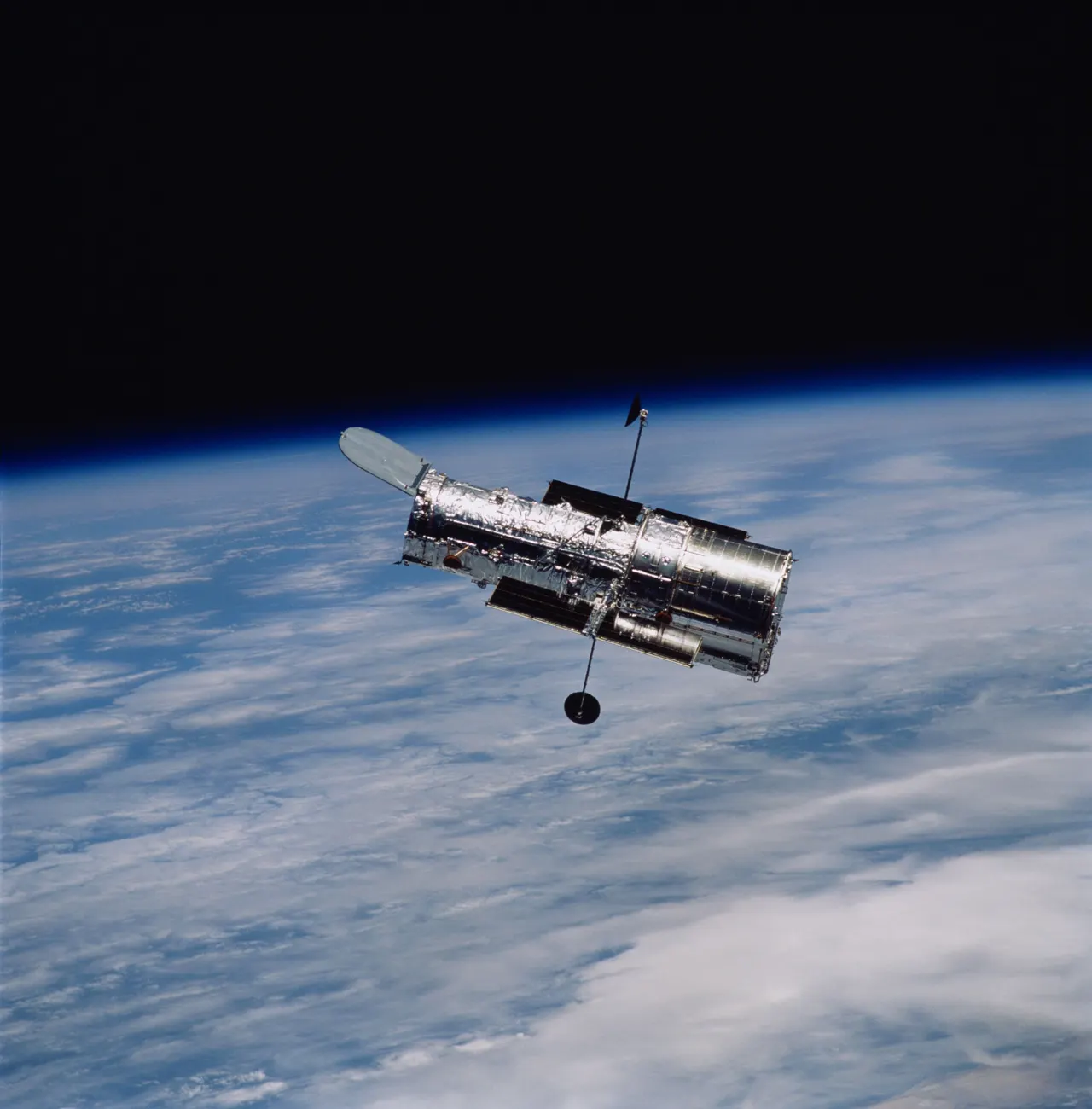
Hubble is slowly falling toward Earth and could reenter by 2033 or 2034. NASA is now asking private companies how to lift it to a safer orbit.
 SUMO· the number puzzle
 Dialo· learn languages by speaking
 ediviewer· read EDI files like documents
 giftdetect· the right gift in minutes
The Hubble Space Telescope is slowly falling out of the sky, and NASA is asking private companies to help stop it.
The agency has issued a formal Request for Information, a call for ideas from industry, on "in-space servicing" of Hubble. The most likely approach is a boost to a higher orbit. But NASA is also open to proposals for a safe, controlled reentry or disposal, and for upgrades that would make the telescope more capable in its remaining years.
Why is Hubble falling?
Like every satellite in low Earth orbit, Hubble is dragged down a little by the thin upper atmosphere. It has no propulsion system of its own to correct that. NASA's analysis says that if nothing is done, it will likely reenter in 2033 or 2034. The agency estimates a mission to raise its orbit would need to happen by 2032.
"Hubble is a national icon," said Nicky Fox, associate administrator of NASA's Science Mission Directorate. NASA administrator Jared Isaacman said that if there are innovative, cost-effective ways to extend the life of an asset already in orbit, the agency owes it to taxpayers and scientists to explore them.
Has this been tried before?
Hubble was built to be repaired by astronauts, and five servicing missions flew after its 1990 launch. The last one, in 2009, replaced the battery among other fixes, after a planned mission was cancelled following the 2003 Columbia disaster.
In September 2022, NASA signed a nonfunding agreement with SpaceX to study whether a Dragon spacecraft could push Hubble to a more stable orbit. That was only a feasibility study, and NASA had no plans to fund the mission itself.
Private rescues have not had an easy run. NASA hired Katalyst Space Technologies in September 2025 to raise the orbit of the Swift Observatory. Katalyst's spacecraft launched in July 2026 but suffered an attitude control malfunction, and the mission was abandoned. Swift reentered over Indonesia on November 4.
Hubble has its own troubles. Only three of its six gyros, the sensors that tell it which way it is pointing, still worked after more than three decades, and one was giving abnormal readings. Since June 2024 it has run on a single gyro, with another kept ready for later. A higher orbit could let it keep observing for several more years.
Apps worth a look
SUMO: the number puzzleTap the right tiles, add them up, hit the target. Easy to learn, hard to master. Free, for all ages.
Dialo: learn languages by speakingTalk to an AI conversation partner; every sentence comes back corrected and explained in your language. 9 languages, A1 to C2.
ediviewer: read EDI files like documentsOpen EDIFACT and X12 messages, see every segment explained, convert to JSON/XML, export PDF and Excel. Runs locally, no upload.
giftdetect: the right gift in minutesPick who it is for, the occasion and their personality. The search engine reads product descriptions from local shops and ranks what fits. Free, no sign-up.
More from this day
See all →



More in: Space
See all →
Starshield throttled again in Ukraine, hurting drone defence
AT 2016blu: the fake supernova that flares every 113 days

ICEYE satellite spots Krasukha-2 jammer in Kaliningrad at night