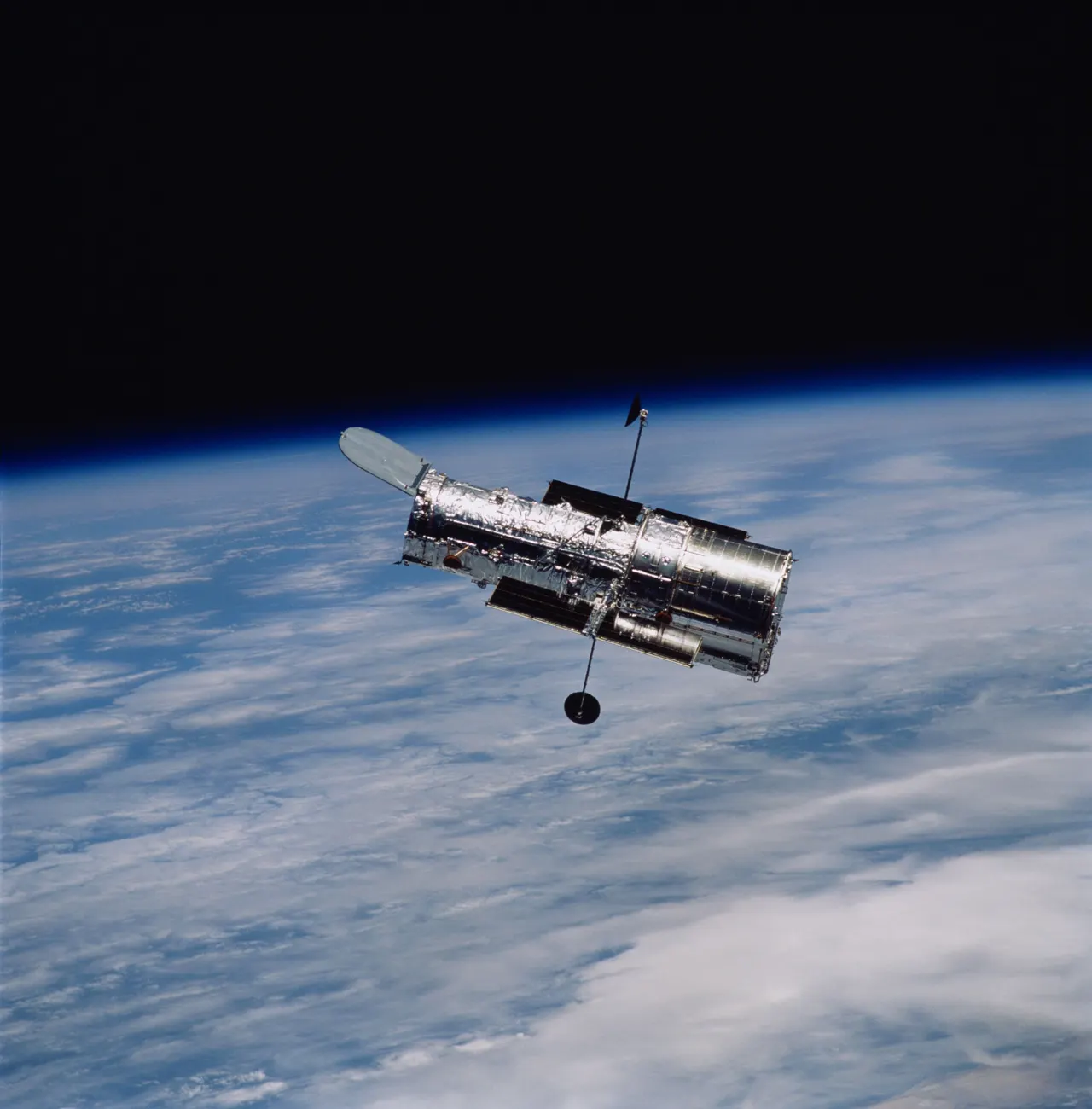
ASTRA robot builds a structure in orbit with no human at the controls
A robot arm has assembled a 1.4-metre antenna structure in orbit on its own, a first for spaceflight. Engineers talked to it for about 15 minutes a day.
 SUMO· the number puzzle
 Dialo· learn languages by speaking
 ediviewer· read EDI files like documents
 giftdetect· the right gift in minutes
For the first time, a robot has built a structure in space without a person steering it. The project is called ASTRA, and it could change how satellites and other space hardware get made.
ASTRA was developed at Caltech with funding from DARPA, the US military's advanced research agency. A specialised assembly robot built a reflector antenna in orbit from Kapton film, composite-fibre tubes and aluminium joints. The finished structure was about 1.4 metres wide. The robot picked up the pieces, placed them where they belonged and fixed them onto an assembly platform. Sergio Pellegrino, a Caltech professor of aerospace and civil engineering, said it is the first time a robot has autonomously built a structure in space.
How did the ASTRA robot get to orbit?
The team first developed the mission and tested the hardware on the ground. The equipment was then handed to Momentus and integrated into its Vigoride 7 space transport vehicle. It launched on 30 March on SpaceX's Transporter-16 rideshare mission, carrying pre-prepared structure parts, a robotic arm and extra components.
Engineers were in contact with the robot for only about 15 minutes a day. They used that time to send commands and check progress while it grabbed parts and put them in place. Time ran short, so not every planned piece of the antenna was finished. The researchers still count the mission a success, because it proved that autonomous construction in space works.
Why build things in space at all?
Anything launched on a rocket has to fit inside the fairing, the shell that protects the payload on the way up. Building after arrival removes that limit. Pellegrino says the approach could help astronomy, communications and giant solar arrays for space-based solar power. It also fits the growing demand for huge satellites, communication networks and AI computing projects in orbit.
The test belongs to DARPA's NOM4D programme, which develops ways to make materials and structures in orbit and on the Moon while using less mass. Its long-term aim is structures hundreds of metres or even kilometres across. Programme manager Andrew Detor says the goal is large space structures built efficiently and at scale.
Next, the researchers want robots to assemble larger telescope mirrors and more complex radio telescope structures. NOM4D also backs a University of Illinois Urbana-Champaign project on strengthening carbon-fibre tubes in orbit, planned for the International Space Station.
Apps worth a look
SUMO: the number puzzleTap the right tiles, add them up, hit the target. Easy to learn, hard to master. Free, for all ages.
Dialo: learn languages by speakingTalk to an AI conversation partner; every sentence comes back corrected and explained in your language. 9 languages, A1 to C2.
ediviewer: read EDI files like documentsOpen EDIFACT and X12 messages, see every segment explained, convert to JSON/XML, export PDF and Excel. Runs locally, no upload.
giftdetect: the right gift in minutesPick who it is for, the occasion and their personality. The search engine reads product descriptions from local shops and ranks what fits. Free, no sign-up.
More from this day
See all →


More in: Space
See all →
Starlink vs. a nuclear blast in space: 98% of satellites lost in a week
Starship Flight 15: SpaceX Will Try to Catch Both Stages
Perseverance Mars spaghetti: the strange strand NASA's rover spotted