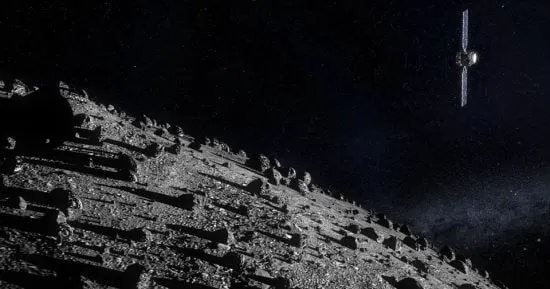
SpaceX Starmind: FCC Approves 1 Million Data Center Satellites
The FCC has approved SpaceX's Starmind plan for one million orbital data center satellites. Astronomers and physicists say it won't work, and may wreck the night sky.

 SUMO· the number puzzle
 Dialo· learn languages by speaking
 ediviewer· read EDI files like documents
 giftdetect· the right gift in minutes
The US Federal Communications Commission has authorized SpaceX to launch up to one million satellites to act as data centers in orbit. The project is called Starmind, and at least one astrophysicist calls it "a fantasy."
The approval came on Wednesday. The FCC describes the satellites as "orbital compute modules" that would process huge amounts of data for use back on Earth. FCC Chairman Brendan Carr said America is "leading the world into the era of super intelligence." Elon Musk welcomed the decision on social media.
The longer authorization order sets deadlines. SpaceX must put at least one authorized space station in orbit by 2033, then keep adding more through 2040.
Can data centers in space actually work?
Supporters say solar power in orbit would ease the strain on power grids and cut the water that Earth-based data centers need for cooling. Space is cold, which sounds helpful. But it is also a vacuum, and a vacuum traps heat inside objects much like a thermos does.
Astrophysicist and author Adam Becker says there are "basic physical limits" on getting that heat out. Launching many smaller satellites could carry the necessary hardware, he says, but it would be expensive and difficult. "It's not going to happen," he said.
What are the objections to Starmind?
Becker also warns of a cascade of collisions in low Earth orbit, where many weather and communications satellites already sit. Launches and reentries add atmospheric pollution too.
The American Astronomical Society, Viasat and Amazon's Kuiper Systems all asked the FCC to deny the request. The AAS said it was "disheartened and dismayed," arguing that the satellites would be larger, brighter and far more numerous, and so visible for longer in the night sky.
The FCC said Starmind is consistent with its orbital debris rules and "serves the public interest." It acknowledged a "substantial number" of public comments, but dismissed topics outside its authority, such as environmental concerns. SpaceX, Viasat, Amazon and the FCC did not immediately respond to requests for comment.
Apps worth a look
SUMO: the number puzzleTap the right tiles, add them up, hit the target. Easy to learn, hard to master. Free, for all ages.
Dialo: learn languages by speakingTalk to an AI conversation partner; every sentence comes back corrected and explained in your language. 9 languages, A1 to C2.
ediviewer: read EDI files like documentsOpen EDIFACT and X12 messages, see every segment explained, convert to JSON/XML, export PDF and Excel. Runs locally, no upload.
giftdetect: the right gift in minutesPick who it is for, the occasion and their personality. The search engine reads product descriptions from local shops and ranks what fits. Free, no sign-up.
More from this day
See all →
Singapore robots: a district where AI sends cleaners to spills

Claude rewrote Anthropic's own API code in Rust, cutting CPU use 70%

Epic Games v Apple: 32 states back Fortnite maker at Supreme Court

How to spot a fake AI voice: signs of voice cloning scams
More in: Space
See all →
Euclid finds the most distant quasar known, from 630 million years after the Big Bang

Pakistani astronaut becomes first foreigner on Tiangong station
Hera mission photos show DART's stadium-sized crater on Dimorphos