South Korea's PIPC to Overhaul Privacy Rules for AI by Year-End
After a public forum in which about 90% of participants backed change, South Korea's privacy regulator plans to unveil a privacy framework overhaul for the AI era this year.
 SUMO· the number puzzle
 Dialo· learn languages by speaking
 ediviewer· read EDI files like documents
 giftdetect· the right gift in minutes
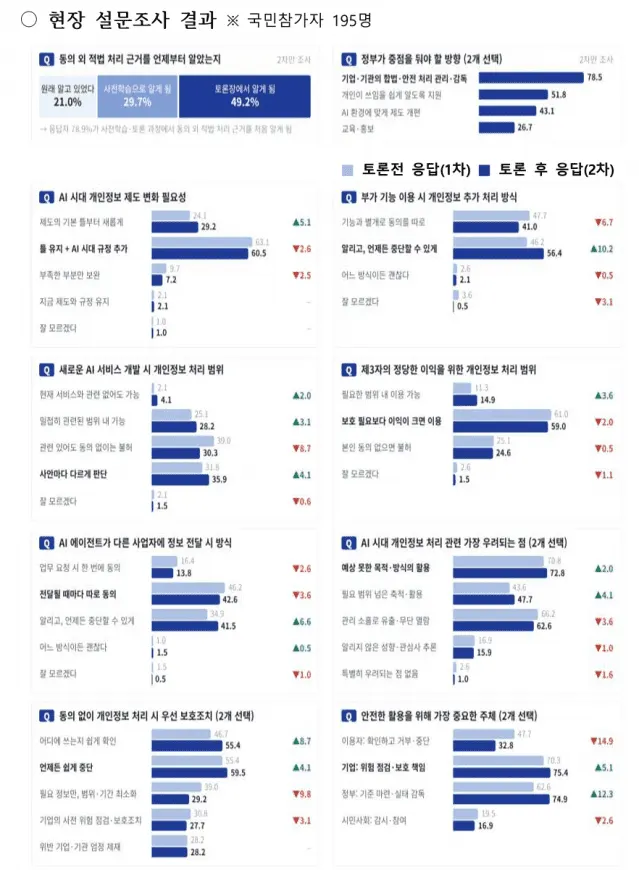
South Korea's Personal Information Protection Commission (PIPC) will draw up a plan to overhaul the country's personal data system by the end of the year. The decision follows a public forum on November 1 at Yonsei University, where 89.7% of participants said the system needs to change for the AI era.
The event was the third "Everyone's Forum" and was co-hosted with the Ministry of the Interior and Safety. The commission selected 195 participants from the applicants, taking age, gender and region into account, from teenagers to people over 60 and from Seoul to Jeju. The program included expert presentations, two rounds of group discussion, a panel and floor debate, and an on-site survey.
What participants said
In the survey, 29.2% wanted the system rebuilt from its basic framework, while 60.5% preferred keeping the framework and adding rules suited to AI. Experts argued that simply increasing the number of consent requests does not strengthen protection. They also pointed to the limits of today's consent model in AI agent settings, where services combine conversation history with information from outside services.
An online pre-discussion held from October 15 to 29 drew 1,333 people. Of them, 88% said they had clicked through repeated consent requests as a formality, and 94% said clear notice and the ability to refuse at any time matter more than prior consent. Some 90% also backed stricter handling of data that would cause serious harm if leaked and more flexibility for other data.
In the group discussions, 20 of 25 groups (80%) preferred a "notify in advance and stop at any time" approach, provided the right to refuse is firmly guaranteed. The other four groups (16%) favored prior consent each time, citing fears of leaks and misuse and a lack of trust in AI and companies.
Responsibility and next steps
Survey respondents named corporate risk checks and protection duties (75.4%) and government standard-setting and oversight (74.9%) as the most important roles for safe use of data. Questions from the public touched on whether personal data used in AI can be deleted and on how Korean law compares with foreign rules.
The PIPC says it will reflect these views in its reform plan, aiming to protect privacy rights in practice while letting companies and institutions use data responsibly. The ministry will hold a fourth forum on the 26th, on building a society where no one is isolated.
Apps worth a look
SUMO: the number puzzleTap the right tiles, add them up, hit the target. Easy to learn, hard to master. Free, for all ages.
Dialo: learn languages by speakingTalk to an AI conversation partner; every sentence comes back corrected and explained in your language. 9 languages, A1 to C2.
ediviewer: read EDI files like documentsOpen EDIFACT and X12 messages, see every segment explained, convert to JSON/XML, export PDF and Excel. Runs locally, no upload.
giftdetect: the right gift in minutesPick who it is for, the occasion and their personality. The search engine reads product descriptions from local shops and ranks what fits. Free, no sign-up.
More from this day
See all →
Heidi Health to cut 18% of staff after US$140 million round
Early Revolut employees launch AI wealthtech Haido from stealth
Kabilio raises €10 million for its AI accounting agent in Barcelona

Foodsi Teams Up With Green Caffè Nero in 95 Polish Cafés
More in: Security
See all →
Apple to Scan Public iCloud Links for Harmful Content in iOS 27.3

NIKKE PC Launcher Hit by Tampered CDN Scripts, Malware Risk