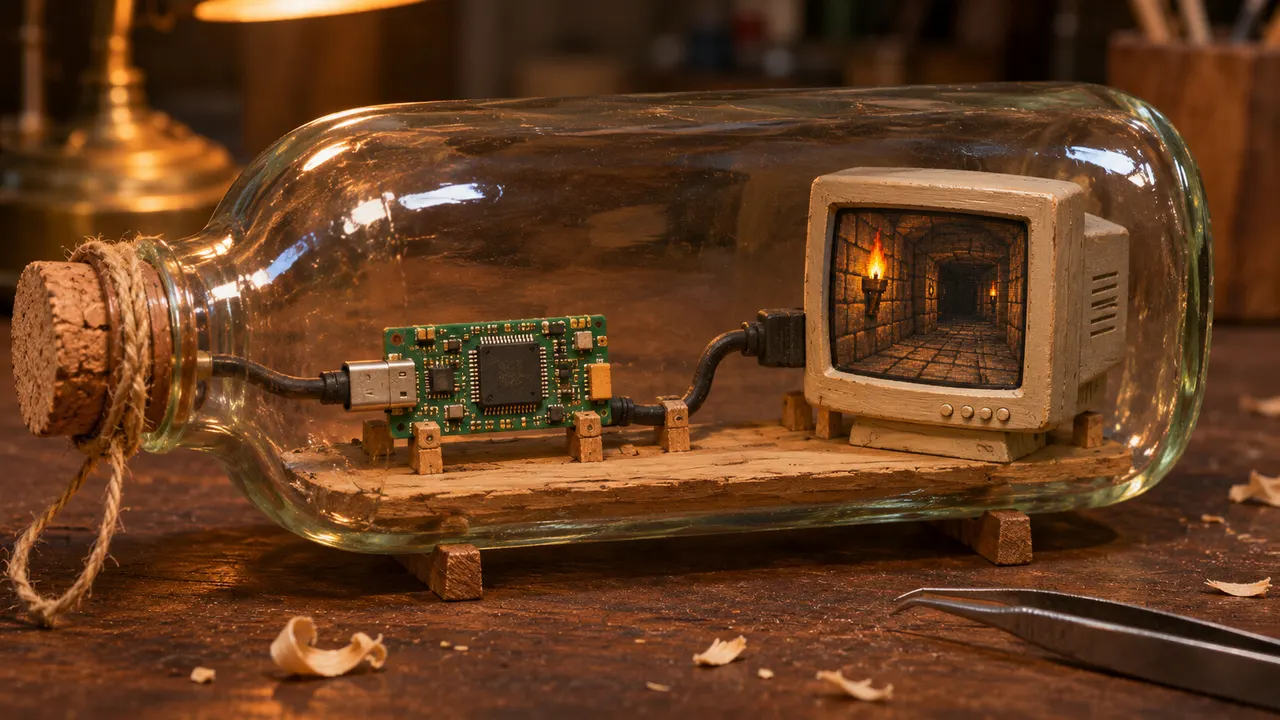
SNET puts a Super Nintendo on Wi-Fi through its controller port
The Super Network Adapter plugs into a SNES joypad port, syncs saves with RetroArch on your phone and lets an LLM rewrite Zelda villagers' lines.
 SUMO· the number puzzle
 Dialo· learn languages by speaking
 ediviewer· read EDI files like documents
 giftdetect· the right gift in minutes
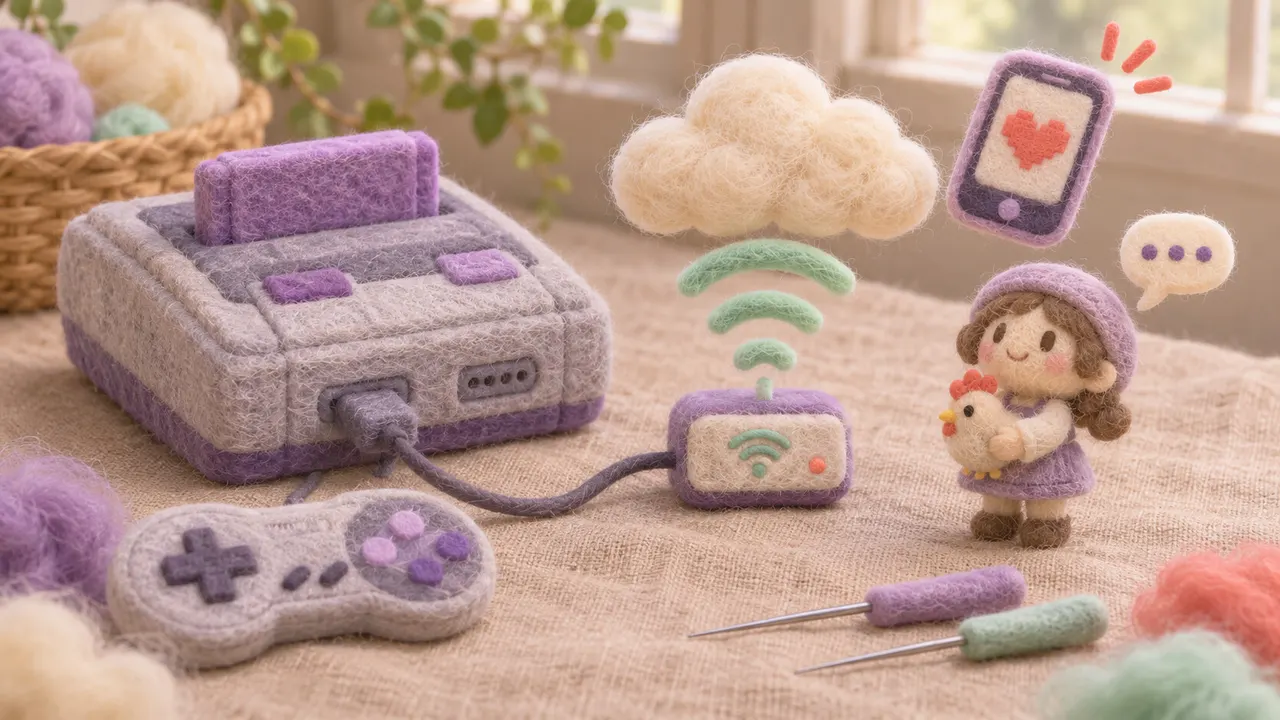
The Super Nintendo never had a network port, so Danny Boland plugged one into the only place that was free: the controller port. His homemade Super Network Adapter, or SNET, gives the console Wi-Fi, cloud save sync and villagers in A Link to the Past who answer back using a language model.
How does the SNET adapter work?
The SNES controller port is a small synchronous serial bus that the game itself drives. The console toggles the lines in software (bit-banging) and the adapter answers one bit at a time on the D0 line. Even with unrolled loops and other tricks, Boland estimates this tops out around 30 KB/s. Enough for the nineties, as he puts it.
The first prototype ran on a Pico 2 W board. Its RP2350A chip tolerates the console's 5 V logic directly, and its two cores split the work: one talks to the SNES, the other to Wi-Fi. The only extra parts are pull-up resistors on the CLK and Latch lines. A later custom circuit board can run from either power source.
Save sync with RetroArch
Saves live in battery-backed SRAM, so the console has to run Boland's own code to send them out. He wrote a tool that patches a game ROM and injects sync code through the reset vector. On every power-on or reset, the save goes to a WebDAV server as saves/<core>/<name>.srm, the same path RetroArch uses. Continue on your phone, then come back to the SNES.
RetroArch keeps a manifest with a hash of each save, and the adapter uses those hashes to decide which copy is newer. If both sides changed, nothing is overwritten and the cartridge save goes into a conflicts folder. Saves are split into blocks with checksums, so only changed blocks cross the port. The delay is unnoticeable, apart from a 1 to 2 second loading screen the first time the console pulls an existing save.
Setup comes in two flavours. One is a period-style ROM where you pick a network and type the password letter by letter. The other shows a QR code on the TV, and your phone joins a temporary network and opens a setup page.
Zelda villagers with an LLM
The adapter can also intercept dialogue text in A Link to the Past and swap it for a line generated by a language model, in character. Because the game is fully disassembled, Boland patched it to track recent events in RAM and send them along. In his demo, villagers complain that Link keeps bothering their chickens. The source code is on GitHub.
Apps worth a look
SUMO: the number puzzleTap the right tiles, add them up, hit the target. Easy to learn, hard to master. Free, for all ages.
Dialo: learn languages by speakingTalk to an AI conversation partner; every sentence comes back corrected and explained in your language. 9 languages, A1 to C2.
ediviewer: read EDI files like documentsOpen EDIFACT and X12 messages, see every segment explained, convert to JSON/XML, export PDF and Excel. Runs locally, no upload.
giftdetect: the right gift in minutesPick who it is for, the occasion and their personality. The search engine reads product descriptions from local shops and ranks what fits. Free, no sign-up.
More from this day
See all →
iOS 27 Notification Center: the swipe moves to the top-left
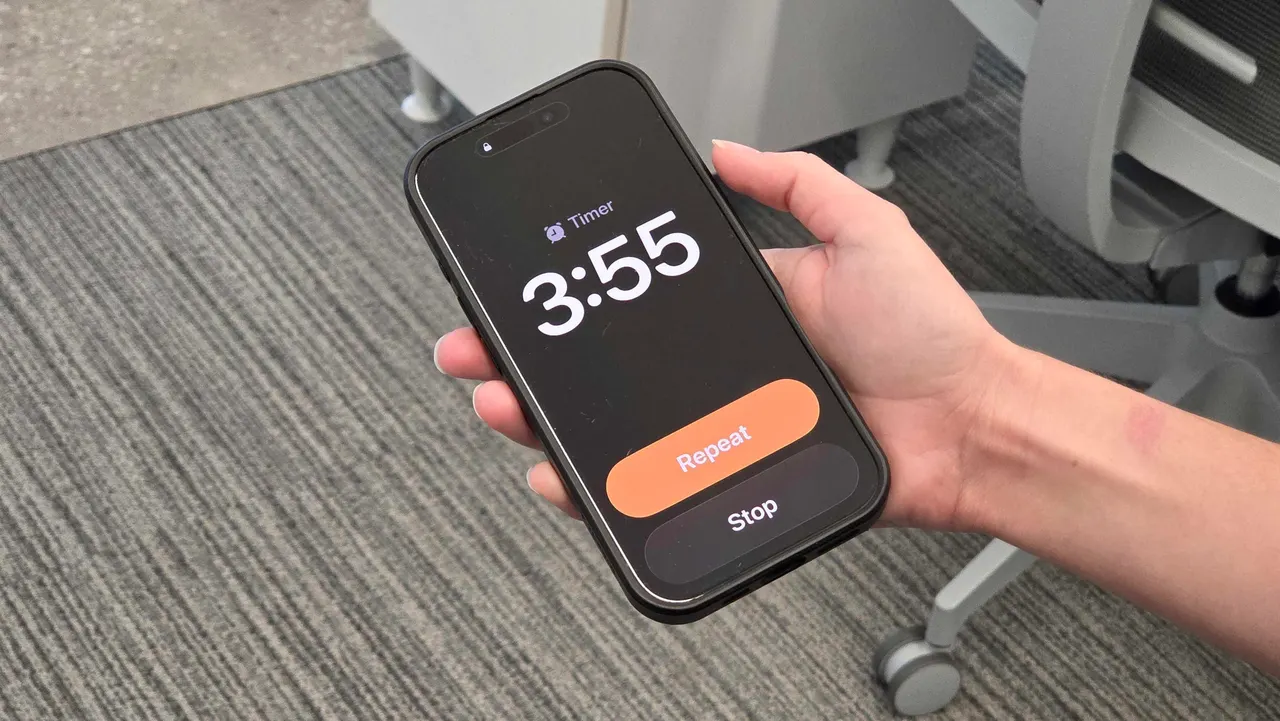
iOS 27 alarm volume setting splits it from your ringtone
No Humans Allowed: a browser game where you pretend to be an AI

Yandex Browser license drops "anonymity" and adds contact access
More in: Hardware
See all →Nothing Ear (note) revealed as the company's first AI-first gadget

VAIO warranty now covers spilled coffee and drops for a year
CLASSEL camera: a twin-lens-style digital with a zoom crank