Robot rabbits in the Everglades are luring invasive pythons
Florida is putting solar-powered stuffed rabbits in cages to lure Burmese pythons out of hiding. The decoys smell, move and give off body heat.
 SUMO· the number puzzle
 Dialo· learn languages by speaking
 ediviewer· read EDI files like documents
 giftdetect· the right gift in minutes
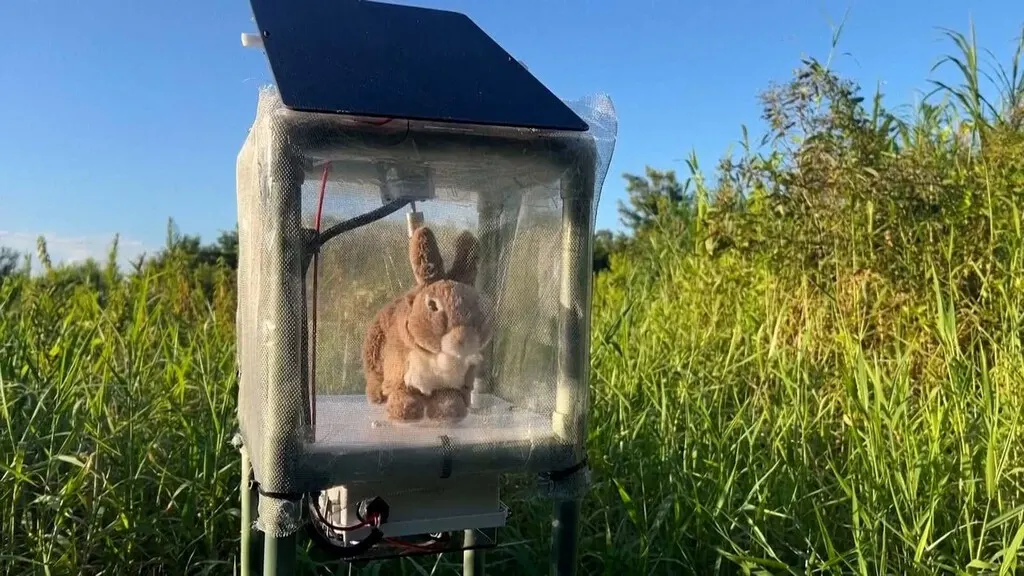
Deep in the Florida Everglades, among the alligators and snakes, sit stuffed rabbits in small cages, each with a solar panel. It looks absurd. It is actually a python trap.
The experiment comes from the South Florida Water Management District. In 2025, researchers from the University of Florida and the district tested these mechanical decoys to attract Burmese pythons, an invasive species that has spread across the wetlands. An adult can reach 6 metres, but size is not the issue. They are so well camouflaged that spotting one by eye is close to impossible.
How do the robot rabbit python traps work?
The researchers took toy rabbits and fitted them with motors, heating elements and other parts, all running on solar power. The aim is to copy what a python would read as live prey: the look of a marsh rabbit, its body temperature, its movement and its smell. Yes, there is a scent emitter inside. When a snake approaches, cameras around the cage detect it and a specialised agent is sent to catch it and remove it.
Why not use real rabbits?
They tried that first. Live rabbits kept safe in cages did attract pythons, but they needed daily care, which makes the method unworkable across thousands of hectares. The robotic versions get the same result without anyone feeding and checking them every day.
How did the pythons get there?
For decades the US imported the snakes to sell as pets. Many are believed to have been dumped in the area in the early 1980s, once they grew too big to keep. South Florida's warm, humid climate, plenty of prey and few natural predators let the population explode. Authorities estimate the pythons have wiped out 95% of the small mammals and upset the Everglades food chain.
The scale of the problem shows in the numbers. According to the Florida Fish and Wildlife Conservation Commission, teams contracted by the state and the water district have removed more than 19,000 pythons since 2017.
Apps worth a look
SUMO: the number puzzleTap the right tiles, add them up, hit the target. Easy to learn, hard to master. Free, for all ages.
Dialo: learn languages by speakingTalk to an AI conversation partner; every sentence comes back corrected and explained in your language. 9 languages, A1 to C2.
ediviewer: read EDI files like documentsOpen EDIFACT and X12 messages, see every segment explained, convert to JSON/XML, export PDF and Excel. Runs locally, no upload.
giftdetect: the right gift in minutesPick who it is for, the occasion and their personality. The search engine reads product descriptions from local shops and ranks what fits. Free, no sign-up.
More from this day
See all →
1Password breach: attacker got in via an employee's GitHub account

Voyager 1 stops sending data just as it hits one light-day away

EA Sports FC 27 brings back John Motson's voice with AI

Google Play payments block in Russia costs business 4.2bn rubles a month
More in: Science
See all →
Chandrasekaran's quantum gravity paper: an OpenAI researcher's claim
Neuralink LINK trial: FDA clears first pivotal study in ALS

Scythian leather study: 2,400-year-old quivers used human skin