Rafale B374 test aircraft delivered to prepare the future F5
France's DGA has received the Rafale B374, its first dedicated test-bed jet, which will serve as a flying laboratory for the future Rafale F5 standard.
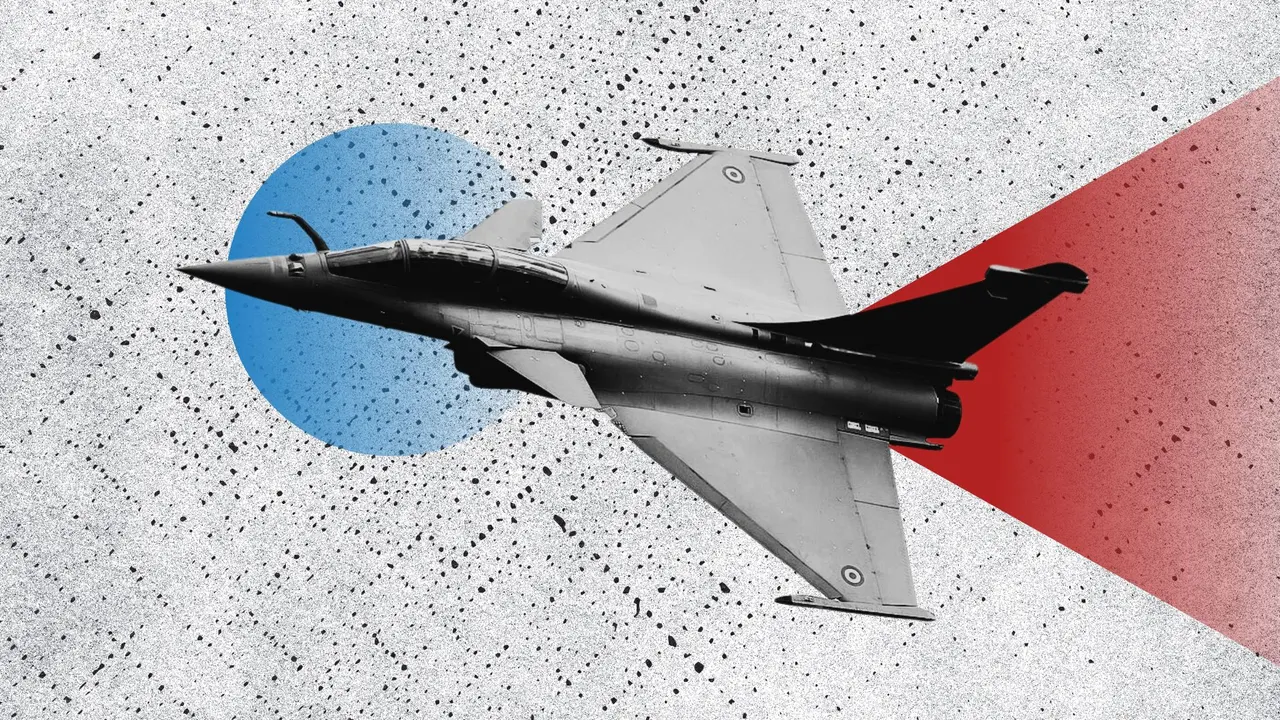
France's defence procurement agency DGA has taken delivery of its first dedicated Rafale test-bed aircraft, the B374. The agency announced on Monday, 2 November, that the jet has been handed over to its flight test centre, DGA Essais en vol. It will never fly operational missions: its job is to act as a flying laboratory for the future Rafale F5 standard.
The B374 replaces the Rafale B348, which the French Air and Space Force has lent to the DGA on a long-term basis. That aircraft can now be returned. The new jet came straight off Dassault Aviation's production line as the 73rd and last aircraft of the fourth production batch, ordered in 2021. It is delivered to the F4.1 standard, the version currently in service.
A test bed that will be complete in 2028
A test-bed aircraft is heavily modified, with measurement equipment, data recorders and a data link to the teams following the trials on the ground. The aim is to check in flight that a radar, a weapon or a piece of software works as intended before it is installed on squadron aircraft.
The B374 will first help refine the current F4 standard, which comes in several steps (F4.1, F4.2, F4.3). For that, it will receive a removable test and measurement installation. Around the second quarter of 2027, Dassault will take the jet back for a major transformation adding the interfaces needed for full, permanent flight instrumentation. It is due to rejoin the test fleet in 2028. The mission computer will then run a test-only "orange" software version, able to host the F5's future sensors, including the RBE2 XG radar, still in development. The Rafale currently uses the RBE2 AESA radar, in series production since 2012.
What the F5 is meant to bring
The F5 is expected to be a major leap. General Jérôme Bellanger, chief of staff of the Air and Space Force, spoke of a "technological rupture" in a 2025 parliamentary hearing and described it as a "new aircraft". It is to operate alongside combat drones and carry AI functions, for which Dassault Aviation has backed the startup Harmattan AI. Dassault CEO Éric Trappier said at the end of August that the company aims for entry into service between 2033 and 2035.
Apps worth a look
 SUMO: the number puzzle
Tap the right tiles, add them up, hit the target. Easy to learn, hard to master. Free, for all ages.
 Dialo: learn languages by speaking
Talk to an AI conversation partner; every sentence comes back corrected and explained in your language. 9 languages, A1 to C2.
 ediviewer: read EDI files like documents
Open EDIFACT and X12 messages, see every segment explained, convert to JSON/XML, export PDF and Excel. Runs locally, no upload.
More from this day
See all →Whittington and Battleday unveil breakthrough from stealth AI lab

Mahesh Babu Buys Minority Stake in Shortgun Games Studio
Solgram raises over $1 million pre-seed for premium grocery

OpenAI Raises Bug Bounty Rewards to $172,000 in Security Push
More in: Other
See all →
Monocam: Transport Minister Backs Nationwide Phone-Detection Cameras
Rafale B374 Delivered to DGA as Flying Lab for the F5 Standard
Australian officer boards Spain's Álvaro de Bazán, finds a twin of HMAS Sydney