Polish AI robot discovers four new chemical reactions at IChO PAN
An autonomous robot from the Polish Academy of Sciences' Institute of Organic Chemistry has independently discovered four previously unknown chemical reactions.
An autonomous robot controlled by artificial intelligence, built at the Institute of Organic Chemistry of the Polish Academy of Sciences (IChO PAN), has independently discovered four previously unknown chemical reactions. The machine ran laboratory experiments on its own and analysed the results as it went. The findings were published in Nature Communications.
Built for asymmetric organocatalysis
The system targets the search for chiral molecules made with organic catalysts. Such compounds exist in two mirror-image forms, called enantiomers, much like a left and a right hand. In a non-chiral environment they behave identically, but they can interact very differently with molecules in the human body. That makes it crucial in drug design to obtain only the desired form. Checking the outcome of a single enantioselective reaction has so far typically taken an experienced chemist several hours.
The hardware was created by Patryk Klochowicz, a doctoral student at IChO PAN. It is a three-axis liquid-handling robot with a needle linked to a remotely controlled syringe pump, reactors and 3D-printed vial racks. Modules cool and heat samples from minus 40 to about 90 degrees Celsius. Chromatography-based analytical modules read the enantiomeric excess of each mixture. With two such modules, researchers could analyse 40 to 50 mixtures a day, and the robot worked at night and on weekends too.
Trained in simulation first
The engineers then added an AI algorithm that decides the conditions of subsequent experiments, including temperature and duration. Based on chromatographic results, it determines whether a product has formed and whether it has the desired chiral properties. The control system uses deep reinforcement learning. Before touching real reagents, the agents trained in two simulators that reproduce reactions and analysis results. The first agent needed 20 million interactions with the simulated environment, the second nearly 10 million. According to the designer, running that many tests in a real laboratory would be impossible for human researchers.
Humans stay in charge
The lead author stresses that AI and automation will not replace researchers in setting scientific directions. Human intuition and abstract thinking remain essential in organic chemistry, though many tedious lab tasks will be automated. The number of theoretically possible organic molecules useful for drug development is estimated at 10 to the power of 60, and automated systems backed by AI computing should help explore that vast space more efficiently and safely.
More from this day
See all →
Mein Haus Digital lands Maschmeyer and Ensthaler after DHDL pitch

Apple Unveils Touchscreen OLED MacBook Pro With M5 Pro, M5 Max
Pixxel Launches US Subsidiary Pixxel Federal to Win Government Deals
Freshworks acquires Israeli AI startup Robusta for Freshservice
More in: Science
See all →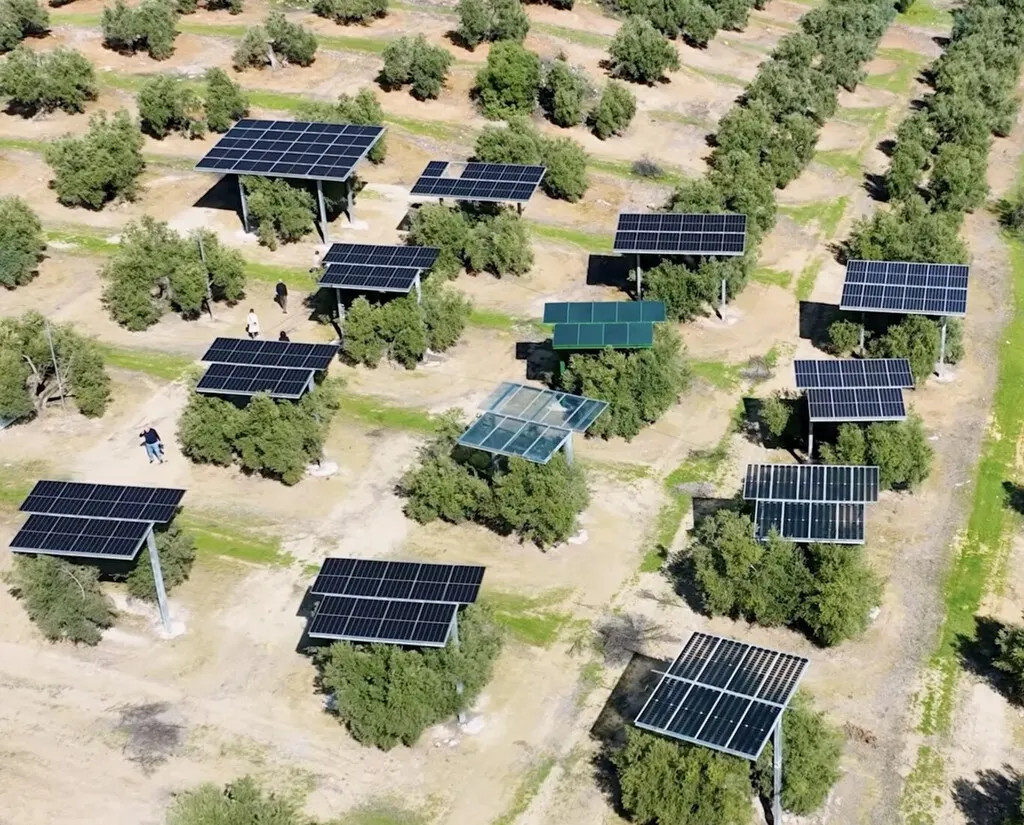
Acesur builds 5,150-panel solar plant above olive grove in Jaén

Northwestern Physicists Trap a Single Positron for Months
Deepwater Horizon Spill Caused Deep Gulf Ecosystem Collapse