PODS: Europe's orbital strike weapon built on a science capsule
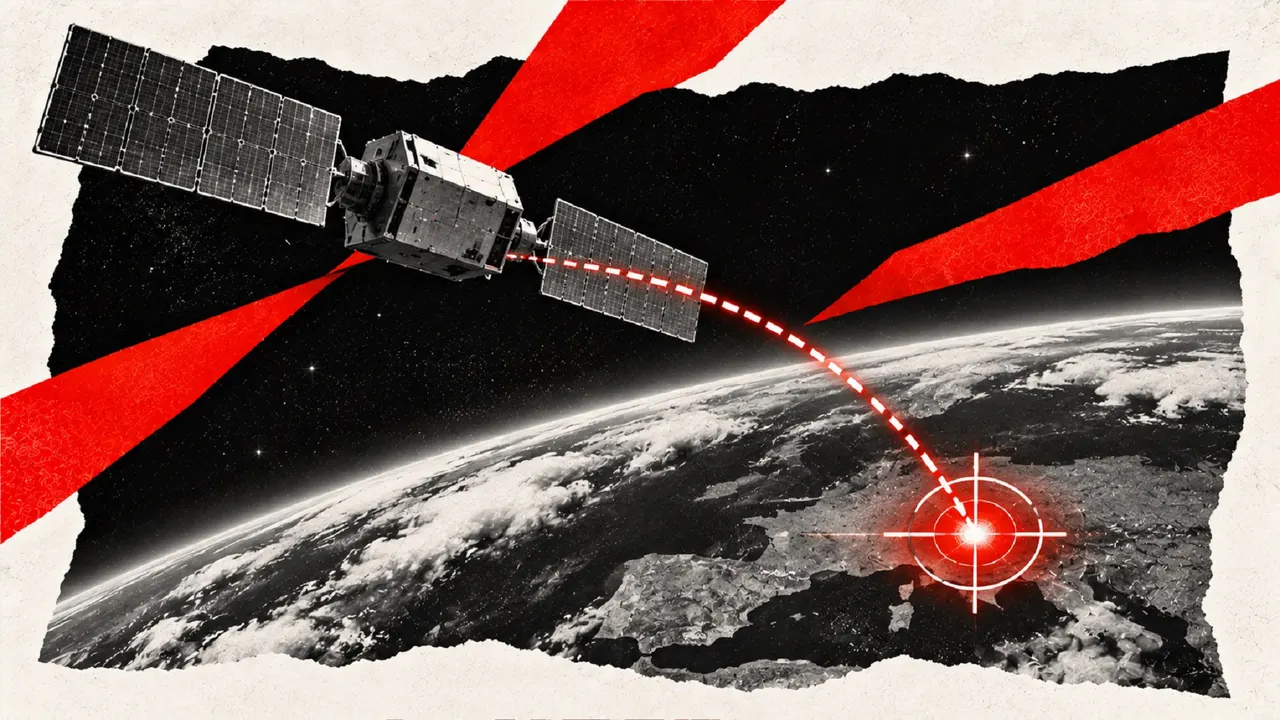
MBDA Deutschland and Atmos Space Cargo want to turn a capsule built to bring science experiments home into a precision weapon launched from orbit.
 SUMO· the number puzzle
 Dialo· learn languages by speaking
 ediviewer· read EDI files like documents
 giftdetect· the right gift in minutes
A German startup that was meant to ferry science experiments back from space is now working on something far less peaceful: a weapon that strikes the ground from orbit. It is called PODS, for Precision Orbital Deep Strike.
On 18 November, Atmos Space Cargo and MBDA Deutschland, the German arm of the European missile maker MBDA, announced an agreement to design, develop and test the concept. Until now Atmos did space logistics. Founded in 2021 in Lichtenau, Germany, it builds Phoenix, a capsule with an inflatable heat shield that brings experiments back to Earth. MBDA employs more than 21,000 people and is owned by Airbus, BAE Systems and Leonardo.
How would an orbital strike work?
The announcement mentions studies of the system's architecture, technical feasibility and integration of military payloads, with possible technology demonstrations. According to Zone Militaire, Atmos would turn Phoenix into an orbital transfer and return vehicle that can stay in orbit for months on its own propulsion and power. MBDA would supply the explosive charge and the guidance. On command, the vehicle would drop out of low orbit, a few hundred kilometres up, onto a specific target. The partners say PODS will be a military system separate from the civil Phoenix capsules.
Nothing is proven yet. Atmos has flown once. In April 2025 Phoenix 1 launched on a SpaceX Falcon 9 and deployed its heat shield, but its trajectory was changed to suit the main payload, and it fell into the South Atlantic, about 2,000 km off Brazil, and was never recovered. Phoenix 2 capsules, with their own engine to choose where they land, are in the works.
Is an orbital weapon legal?
The 1967 Outer Space Treaty bans weapons of mass destruction in orbit but says nothing about conventional ones, a grey area. The treaty and the 1972 Liability Convention still make Germany responsible for what Atmos and MBDA do in space.
There is a military catch too. A craft in low orbit follows a predictable path an adversary can track, and it could be shot down by a ground-launched anti-satellite missile, debris cloud or not. The companies have given no timeline or budget, and say any real development will need separate agreements.
Apps worth a look
SUMO: the number puzzleTap the right tiles, add them up, hit the target. Easy to learn, hard to master. Free, for all ages.
Dialo: learn languages by speakingTalk to an AI conversation partner; every sentence comes back corrected and explained in your language. 9 languages, A1 to C2.
ediviewer: read EDI files like documentsOpen EDIFACT and X12 messages, see every segment explained, convert to JSON/XML, export PDF and Excel. Runs locally, no upload.
giftdetect: the right gift in minutesPick who it is for, the occasion and their personality. The search engine reads product descriptions from local shops and ranks what fits. Free, no sign-up.
More from this day
See all →



More in: Space
See all →
Starship chopsticks catch: tower cameras show Ship in slo-mo
Common Space satellite: a nonprofit's Earth-imaging craft launches 2027

Satellites over your city now outnumber the stars you can see