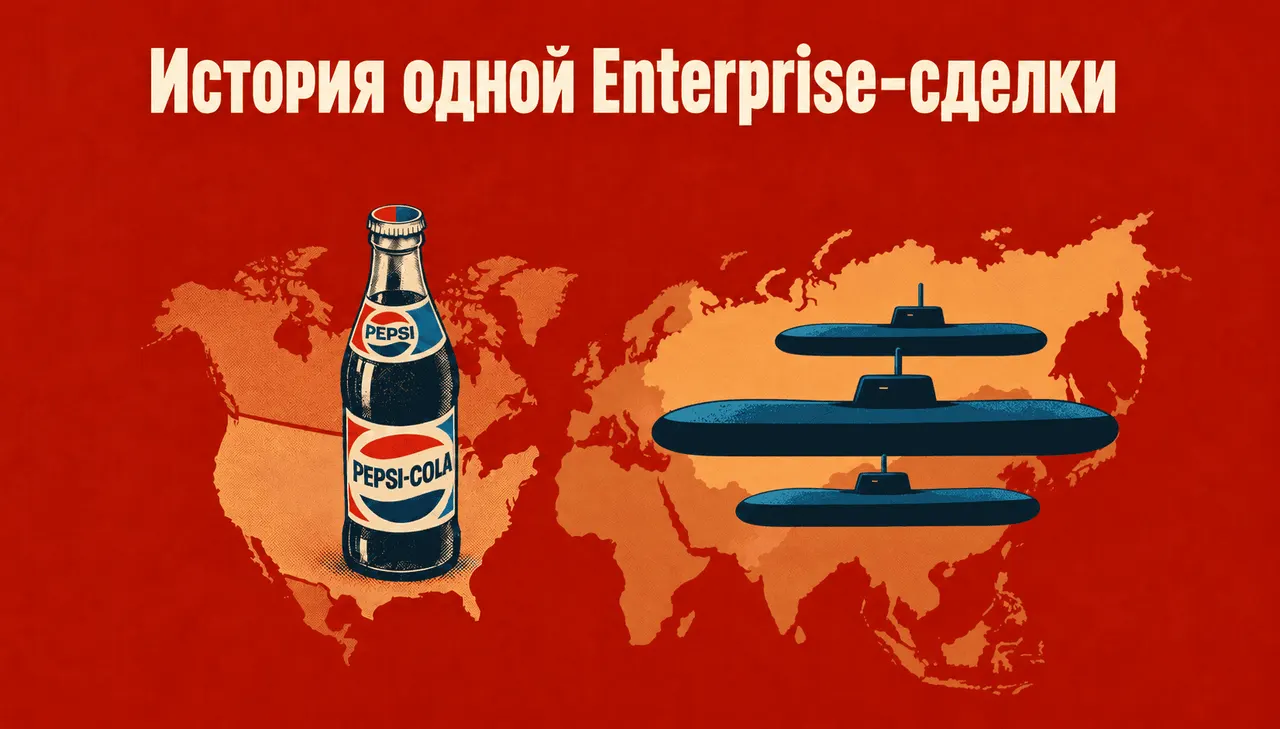
Pepsi in the Soviet Union: a free sip in 1959, submarines in 1989
Pepsi's Donald Kendall got Khrushchev to taste a soda in 1959. A first contract took 13 years, and a later trade deal came with submarines.
 SUMO· the number puzzle
 Dialo· learn languages by speaking
 ediviewer· read EDI files like documents
 giftdetect· the right gift in minutes
A cup of soda handed over at a Moscow exhibition in 1959 ended, 30 years later, with Pepsi receiving submarines as part of a trade deal. The story of Pepsi in the Soviet Union is one of the longest sales cycles in business history.
The man behind it was Donald Kendall, who ran Pepsi-Cola's international division. He saw the USSR as a market of almost 209 million people with hardly any Western consumer brands. The catch: the state controlled imports, production and distribution. To get a bottle onto a shop shelf in Ryazan, someone had to agree to it in Moscow.
How did Pepsi get into the Soviet Union?
In summer 1959 the American National Exhibition opened in Moscow's Sokolniki park. Vice President Richard Nixon, whom Kendall knew, toured it with Nikita Khrushchev, and the two had their famous "kitchen debate" about capitalism and communism. Kendall had asked Nixon to steer the Soviet leader to the Pepsi stand.
It worked. Khrushchev was offered two versions of the drink, one made with American water and one with Moscow water. By Kendall's own recollection, he preferred the Moscow one. That was a neat pitch: the soda could be made inside the USSR with local resources. Visitors drank around three million servings, and the photos travelled the world.
Then politics got in the way. The Soviets shot down a U-2 spy plane in 1960, and the Cuban missile crisis followed in 1962. Kendall became Pepsi-Cola's chief in 1963, Khrushchev left office in 1964, and Nixon became president in 1969. Only in the early 1970s, as tensions eased and trade moved up the agenda, did talks get going.
The first contract arrived 13 years after the exhibition. Another 17 years later Pepsi took submarines in a trade deal, then signed an agreement projected at three billion dollars in sales. By then the customer had been through several leaders, payment problems and consumer boycotts. It was finally dissolved: the Soviet Union itself.
The author of the original analysis, a B2B marketer, reads it as a lesson in account-based marketing: pick one huge customer, run a free pilot, and make sure the person who holds the budget actually sees it.
Apps worth a look
SUMO: the number puzzleTap the right tiles, add them up, hit the target. Easy to learn, hard to master. Free, for all ages.
Dialo: learn languages by speakingTalk to an AI conversation partner; every sentence comes back corrected and explained in your language. 9 languages, A1 to C2.
ediviewer: read EDI files like documentsOpen EDIFACT and X12 messages, see every segment explained, convert to JSON/XML, export PDF and Excel. Runs locally, no upload.
giftdetect: the right gift in minutesPick who it is for, the occasion and their personality. The search engine reads product descriptions from local shops and ranks what fits. Free, no sign-up.
More from this day
See all →
Danawa data breach: names and phone numbers leaked, site still down
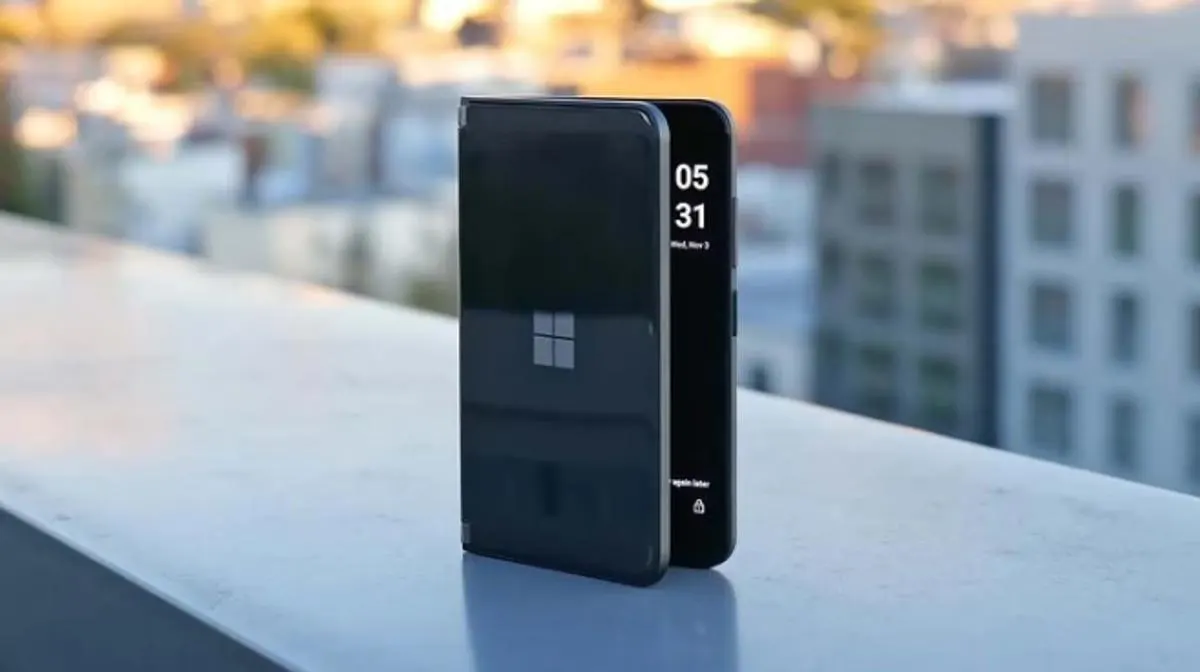
Surface Duo 2 running iOS 26: a modder's iPhone Duo stand-in

Neuralink pivotal study: FDA clears Musk's brain chip trial
Fake Linux boot log and video player run before Windows starts
More in: Business
See all →
KDDI bear detection with Starlink and drones cut response to 15 minutes
Free trial auto-renewal cost a news site 23% of subscribers
Spotify to be blocked in Belarus from 1 December over unpaid VAT