PECOP: Driverless Minibus You Can Order Like an Uber on 5G
Researchers from Austria and China are testing PECOP, an on-demand electric minibus for 15 people that uses 5G roadside cameras to see around corners.
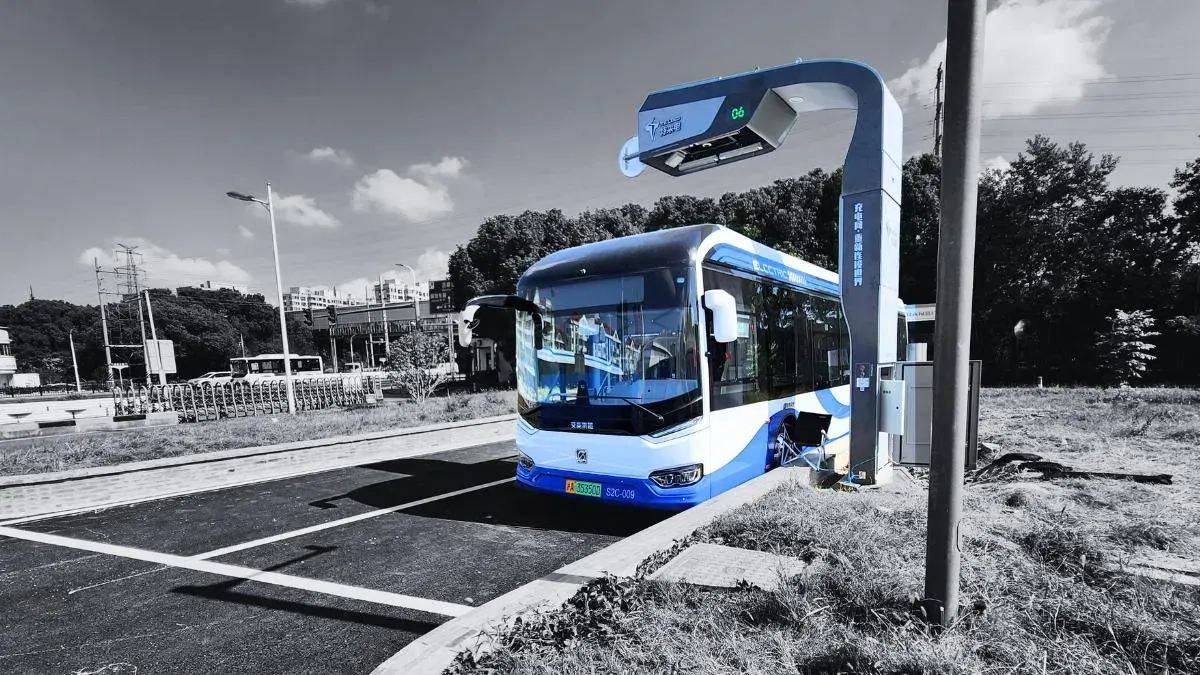
Researchers from Austria and China have developed a driverless public transport system that runs on demand instead of a fixed timetable. The first vehicle, an electric minibus carrying up to 15 passengers, is already being tested in real traffic.
The project, called PECOP, is led by Graz University of Technology together with Chinese partners. Passengers request a ride, and a central system plans the route while taking other orders into account, so one minibus can serve several people heading in similar directions. The aim is a service available around the clock, though the bus will not circle constantly: idle periods are used for charging. Further demonstrators are planned in Austria.
Cameras at intersections as extra eyes
The key feature is what the researchers call shared perception. Besides its own cameras, radar and lidar, the minibus receives data from cameras installed at hard-to-see spots such as intersections and bends, transmitted over 5G. This should let it detect a pedestrian behind a parked truck or a cyclist emerging from behind a building before its own sensors can.
Relying on external infrastructure raises an obvious safety question. According to the researchers, PECOP includes an independent safety mechanism that can bring the vehicle to a controlled stop if the connection is lost, so the system does not assume that connectivity is always available.
Virtual city and fleet planning
Before going on the road, the vehicle was checked in simulations using digital twins of real streets, including buildings and intersections. These allow repeated tests of rare but dangerous situations, such as a pedestrian suddenly appearing, without putting anyone at risk. Simulations do not replace real-world testing, as no model can fully reproduce human behavior.
The Chinese partners built a dynamic route-planning system that weighs the number of orders, vehicle positions, traffic and battery levels. If demand rises in one part of a city, an extra minibus could be sent there. According to the researchers, smart charging planning may also allow smaller batteries.
The approach could suit areas where regular buses run rarely because passenger numbers are low. Its environmental benefit, however, depends on how many people actually share rides.
More from this day
See all →
Grok Imagine releases first AI-made episode of Odyssey on X

Spain Tops Europe for Solar Systems Exposed to the Internet

Touch MacBook Pro Hands-On: First Impressions From Los Angeles

EU customs reform: new €2 fee per item on imports from November
More in: Automotive
See all →Genesis GV90 Engineers Openly Discuss Failures Behind Coach Doors
Peugeot 208 III: What We Know About the Next-Gen City Car
ICOMA tatamo!: A Foldable Robotic E-Bike With a Face and a Home