P vs NP: Anthropic and OpenAI Post Near-Twin Math Preprints
Within six hours, Anthropic and OpenAI each put a preprint on GitHub claiming progress on a cousin of P vs NP. Neither solves the big problem, but both open new routes.
 SUMO· the number puzzle
 Dialo· learn languages by speaking
 ediviewer· read EDI files like documents
 giftdetect· the right gift in minutes
Anthropic and OpenAI published almost twin math papers on GitHub within hours of each other, both aimed at the famous P vs NP problem, one of the seven Millennium Prize problems. Neither solves it. Both claim to have shown that certain kinds of calculation are truly hard, not just hard-looking.
What is the P vs NP problem?
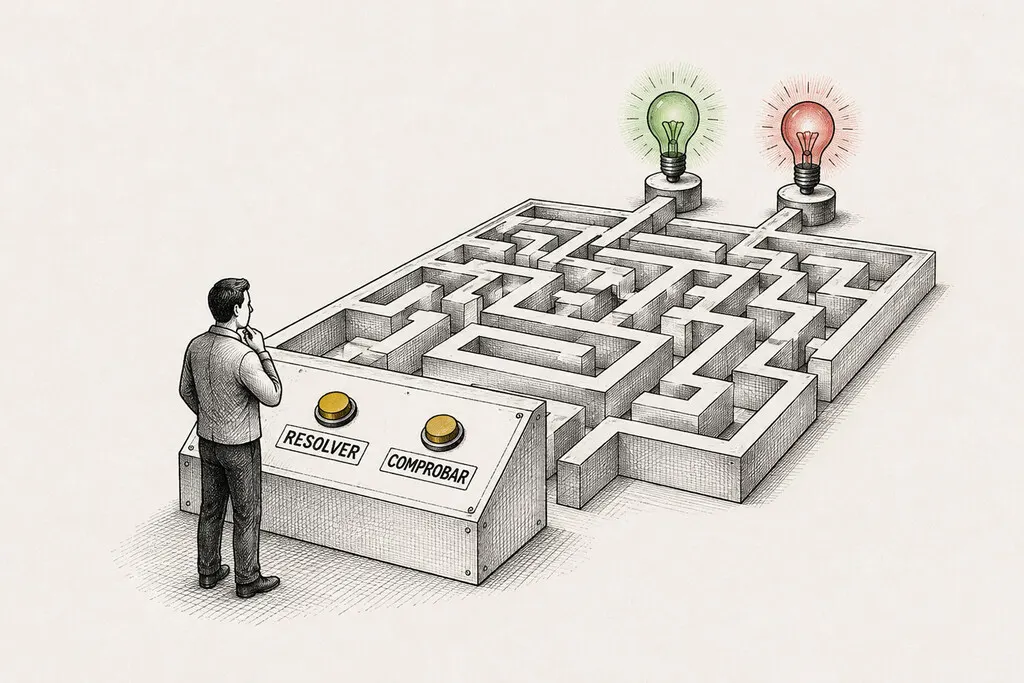
Think of a huge sudoku. Filling it in can take hours or days, but checking a finished grid takes minutes. Computer scientists call problems a computer can solve quickly P. NP covers problems whose solutions can at least be checked quickly. The big question is whether the two groups are really the same. Most experts think not: Scott Aaronson put his confidence that they differ at 96%.
It matters for security. RSA encryption, widely used to protect online payments, relies on the fact that multiplying two huge primes is easy while recovering them from the product is practically impossible today. If P equalled NP, Fulgencio López of the University of Toronto warned, cryptographic keys "would be decrypted very easily".
What did Anthropic and OpenAI publish?
Both tackle an algebraic version called VP vs VNP, which uses polynomials (expressions built from sums and multiplications) instead of yes-or-no questions. Since the 1970s it has been seen as a warm-up for the real thing.
Anthropic's preprint, which humans still have to verify, says some polynomials demand enormous circuits, one of them tied to visiting every city on a map without repeats. The company says an internal Claude model found it and also wrote a computer-checkable version in Lean.
Six hours later OpenAI posted its own preprint. It pictures a computer as a city of calculators joined by wires, with each wire costing more the longer it is. If the wires can't be shortened, certain problems provably need a gigantic number of them. If they can, you can build a circuit that contradicts a supposedly small one. Either way, hardness is shown. But OpenAI says the method doesn't work for yes-or-no problems, the ones in P vs NP, so the cryptographers' question stays open.
How close is this to solving it?
Varun Kanade of Oxford thinks the advances will help but says "we will need new techniques for the P vs. NP question". Tom Gur of Cambridge told New Scientist he was surprised: "We are witnessing decades of progress in a matter of days". He added that the community needs time to study the results.
Apps worth a look
SUMO: the number puzzleTap the right tiles, add them up, hit the target. Easy to learn, hard to master. Free, for all ages.
Dialo: learn languages by speakingTalk to an AI conversation partner; every sentence comes back corrected and explained in your language. 9 languages, A1 to C2.
ediviewer: read EDI files like documentsOpen EDIFACT and X12 messages, see every segment explained, convert to JSON/XML, export PDF and Excel. Runs locally, no upload.
giftdetect: the right gift in minutesPick who it is for, the occasion and their personality. The search engine reads product descriptions from local shops and ranks what fits. Free, no sign-up.
More from this day
See all →
Chrome still uses RAM after closing? Gemini tray setting is why
Hisense TV sends Nexxen an audio fingerprint every 2.7 seconds
Softonic bought by China's Newborn Town for up to €50 million