7,200-Year-Old Goat Leather From Granada Yields Ancient DNA
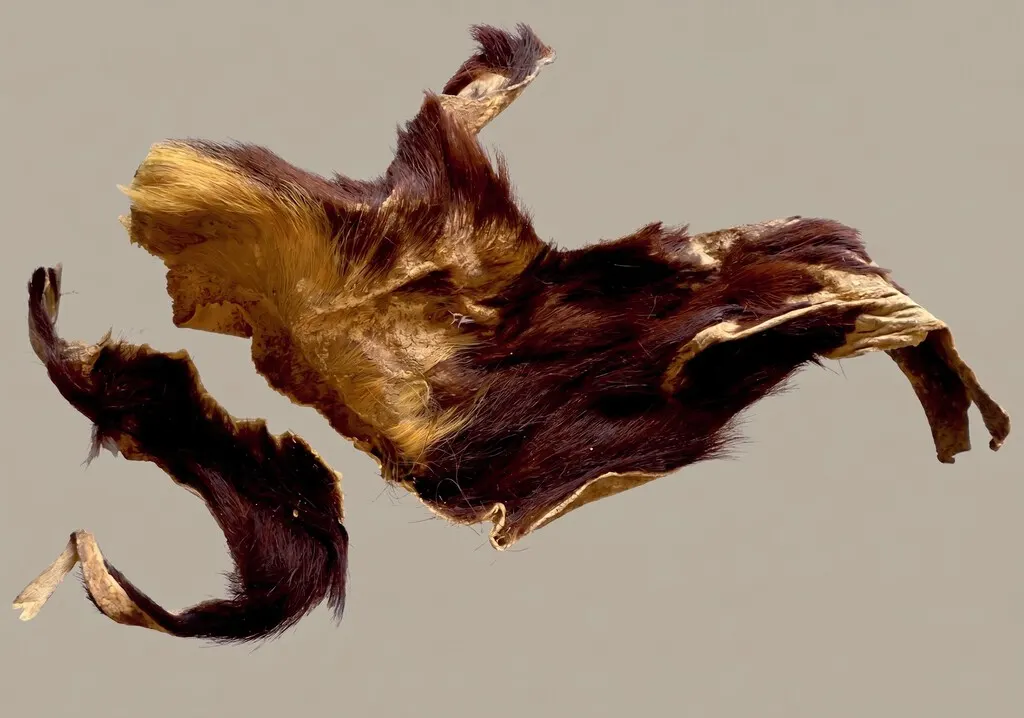
A leather fragment from a cave in Albuñol, Spain, dated to about 7,200 years ago, has yielded nuclear DNA from a Neolithic domestic goat, a first for the Iberian Peninsula.
 SUMO· the number puzzle
 Dialo· learn languages by speaking
 ediviewer· read EDI files like documents
 giftdetect· the right gift in minutes
An international team has dated a piece of goat leather from the Cueva de los Murciélagos in Albuñol, Granada, to roughly 7,200 years ago. Radiocarbon dating gives an age of between 7,246 and 7,008 calibrated years before the present, with 1950 as the reference. The fragment still has hair on one side and tanning marks on the other, and it has four holes.
The research was led by University College Dublin and the Universidad de Alcalá. The study considers the two fragments found to be probably from the same animal. The team also recovered traces of human DNA, consistent with someone handling or wearing the piece, and of a canid, probably from a later period.
Why the DNA matters
According to the team, this is the first time nuclear DNA from domestic goats has been obtained in the Iberian Peninsula. It is also one of the oldest genomes recovered from organic remains outside very cold or high-mountain settings. Comparable cases so far come from ice, such as the leather of the Iceman or goat-skin leggings from the Alps. Ancient DNA rarely survives in a warm region.
Genetics identifies the animal as a female domestic goat (Capra hircus). It showed no African ancestry, which suggests that mixture arrived later. Among the breeds compared, the closest match was the bermeya, though only four Spanish breeds were included and the sample is limited.
A cave that preserves the rarest finds
The cave lies about seven kilometres from the Mediterranean at 450 metres of altitude. The researchers say its microenvironment preserves organic materials by desiccation, which almost never survive. The site has also yielded the oldest basketry in southern Europe and the first evidence of early Neolithic archery, with bowstrings about 7,000 years old.
The cave served as a burial ground in five phases, beginning about 9,500 years ago in the Mesolithic and ending in the Bronze Age, roughly 3,900 to 3,700 years ago. The leather probably belonged to a grave assemblage, perhaps as a body wrapping or a garment. In the 19th century, miners searching for galena walled it into the rock, where it stayed until it was found and dated.
The earliest evidence of domestic goat use in southern Iberia dates to about 7,500 years ago, linked to the first farmers and herders.
Apps worth a look
SUMO: the number puzzleTap the right tiles, add them up, hit the target. Easy to learn, hard to master. Free, for all ages.
Dialo: learn languages by speakingTalk to an AI conversation partner; every sentence comes back corrected and explained in your language. 9 languages, A1 to C2.
ediviewer: read EDI files like documentsOpen EDIFACT and X12 messages, see every segment explained, convert to JSON/XML, export PDF and Excel. Runs locally, no upload.
giftdetect: the right gift in minutesPick who it is for, the occasion and their personality. The search engine reads product descriptions from local shops and ranks what fits. Free, no sign-up.
More from this day
See all →
Citus Demonstrates GPS-Free Firefighter Tracking, Eyes Military Use

Google Cloud expands CodeMender and AI agent security tools

Operation Ghostbusters: 830,840 Suspected Ghost Students Found