Oak Ridge launches IBM-AMD quantum-HPC error correction testbed
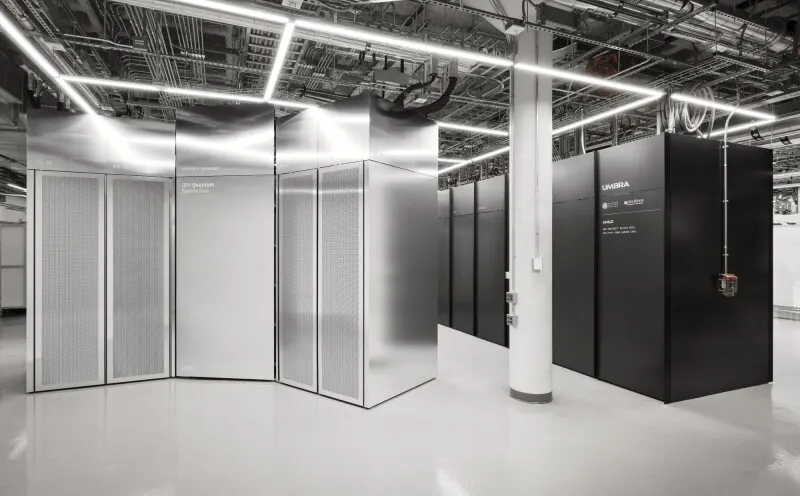
Oak Ridge National Laboratory has unveiled a co-design platform that pairs IBM quantum processors with an AMD-powered supercomputer to study quantum error correction.
 SUMO· the number puzzle
 Dialo· learn languages by speaking
 ediviewer· read EDI files like documents
 giftdetect· the right gift in minutes
Oak Ridge National Laboratory (ORNL) now has a dedicated system for researching quantum error correction, combining IBM quantum processors with a high-performance computing (HPC) machine built on AMD silicon. The Quantum Science Center (QSC) at ORNL, funded by the US Department of Energy, unveiled it as a co-design platform.
What is in the system
The quantum side is an IBM Quantum System Two fitted with the latest 120-qubit Nighthawk r2 processors. The classical side is Umbra, an HPC system using AMD 5th Gen Epyc CPUs and Instinct MI355X GPU accelerators. According to AMD, the CPUs handle orchestration and general-purpose work, while the GPUs speed up simulation, optimization and the parallel scientific computations around quantum workloads.
AMD Versal SoCs complete the setup, providing low-latency control, readout and decoding for the quantum circuitry. ORNL says this puts the infrastructure needed for error correction into a single environment and opens it to more researchers than before.
Why it matters
Fault-tolerant quantum computers have long seemed a decade away, but ORNL points to notable progress in recent years, including early demonstrations of shielding quantum information from environmental noise that destroys fragile quantum states. QSC director Travis Humble called solving error correction essential to making quantum computing a practical tool for scientific discovery.
IBM's Jay Gambetta said the question is no longer whether error correction works, but how to accelerate and optimize it. The platform, he said, will let researchers evaluate approaches and determine which architectures, software and workflows scale.
One approach IBM expects to explore is hierarchical error correction: an inner code protects qubits within a module, and an outer code wraps the inner code's logical qubits for a second layer of protection. IBM research suggests this could reach a trillion logical operations at a physical error rate of one in a thousand. Such codes depend on powerful classical compute, which the GPUs in a low-latency environment are meant to supply.
What comes next
Researchers will use the platform to develop and validate algorithms, workflows and applications for quantum-centric supercomputing, where QPUs, CPUs and GPUs work as one system. It is likely to feed into the DoE's Quantum Genesis Mission, including the recently announced Q Competition, which aims to deliver a system with 100 logical qubits able to run hundreds of millions of fault-tolerant operations. That follows an executive order from President Trump to develop a full-blown quantum system by 2028.
Apps worth a look
SUMO: the number puzzleTap the right tiles, add them up, hit the target. Easy to learn, hard to master. Free, for all ages.
Dialo: learn languages by speakingTalk to an AI conversation partner; every sentence comes back corrected and explained in your language. 9 languages, A1 to C2.
ediviewer: read EDI files like documentsOpen EDIFACT and X12 messages, see every segment explained, convert to JSON/XML, export PDF and Excel. Runs locally, no upload.
giftdetect: the right gift in minutesPick who it is for, the occasion and their personality. The search engine reads product descriptions from local shops and ranks what fits. Free, no sign-up.
More from this day
See all →
Citus Demonstrates GPS-Free Firefighter Tracking, Eyes Military Use

Google Cloud expands CodeMender and AI agent security tools

Operation Ghostbusters: 830,840 Suspected Ghost Students Found