Nuclear bomb in space: one blast could wipe out most satellites
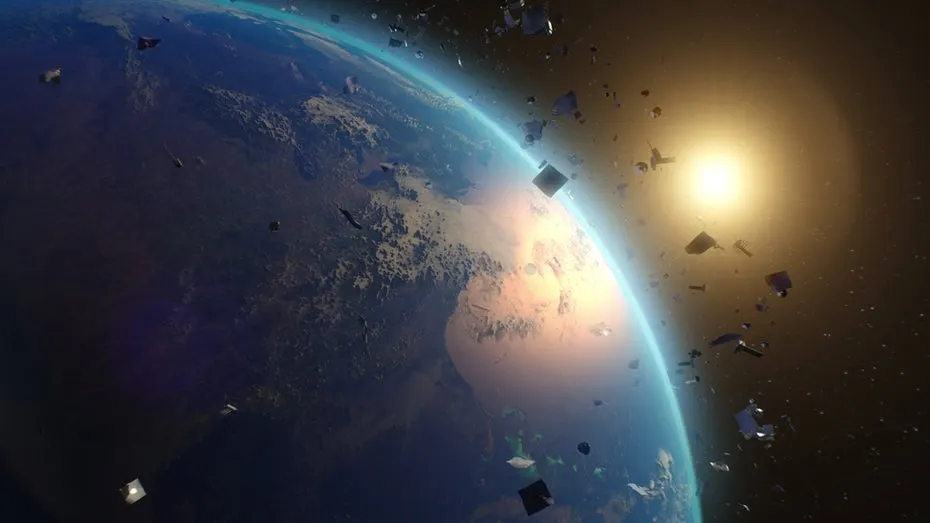
A new preprint says a single nuclear blast 500 km up could knock out about 98 percent of low-orbit satellites within a week. The test data comes from 1962.
 SUMO· the number puzzle
 Dialo· learn languages by speaking
 ediviewer· read EDI files like documents
 giftdetect· the right gift in minutes
One nuclear explosion in space could disable nearly every satellite in low Earth orbit within a week. That is the result of a preprint on arXiv from researchers at the University of Wisconsin-Madison and Princeton University. The paper has not yet been peer reviewed.
The trigger was a warning. In late October, the US Defense Intelligence Agency pointed to reports of a Russian nuclear satellite project. According to astrophysicist Jonathan McDowell's data, more than 17,200 active satellites now circle the planet.
What did the Starfish Prime nuclear test do to satellites?
On 9 July 1962 the US detonated a 1.4-megaton warhead about 400 kilometres above the North Pacific. The sky glowed red and green for minutes. In Hawaii, 1,450 kilometres away, around 300 street lights went out. Within months, a third of the roughly 24 satellites then in orbit failed, including Telstar 1, which launched the day after the blast. The 1962 measurements are still the basis for risk calculations today.
How would a nuclear blast in orbit destroy Starlink and other satellites?
There is no shock wave in a vacuum. The initial flash of X-rays and gamma rays hits only satellites in direct line of sight. The real damage comes from fast electrons that Earth's magnetic field traps, forming an artificial radiation belt. Satellites keep flying through it until their solar cells and chips fail.
Location matters. Over the Indian Ocean the upper atmosphere absorbs the electrons quickly. Over the South Atlantic, where the magnetic field is weak, about 47 percent stay trapped. In the model, a one-megaton blast there knocks out roughly 98 percent of more than 13,000 satellites below 2,000 kilometres within seven days. GPS and Galileo, at over 20,000 kilometres, and weather satellites at about 36,000 kilometres would be spared. Dead satellites can't dodge each other, so the model predicts 26 collisions and about 3,900 pieces of debris in ten years.
Can satellites be protected?
Technically yes, says Kari Bingen of the Center for Strategic and International Studies. But 90 percent of satellites are commercial, and heavy shielding rarely pays off for operators.
Limits of the study
The model assumes uniform 2 mm aluminium shielding and a failure threshold of 400 gray. A RAND report suggests a 110-kilotonne warhead would endanger about 20 percent of satellites for months. The intelligence claims are unverified, and Moscow denies them. Germany's BND reportedly believes a mounted satellite called Sputnik-S is in storage near Moscow. Such a blast would also hit Russian and Chinese satellites. Political scientist Frank Sauer calls nuclear weapons primarily political weapons.
Apps worth a look
SUMO: the number puzzleTap the right tiles, add them up, hit the target. Easy to learn, hard to master. Free, for all ages.
Dialo: learn languages by speakingTalk to an AI conversation partner; every sentence comes back corrected and explained in your language. 9 languages, A1 to C2.
ediviewer: read EDI files like documentsOpen EDIFACT and X12 messages, see every segment explained, convert to JSON/XML, export PDF and Excel. Runs locally, no upload.
giftdetect: the right gift in minutesPick who it is for, the occasion and their personality. The search engine reads product descriptions from local shops and ranks what fits. Free, no sign-up.
More from this day
See all →
Rackspace Spot shuts down on December 8 after a security breach

ARTEX AI hacking tool now used by Salt Typhoon, Microsoft says

iPhone ads in notifications and Live Activities are piling up
Drug submarine with Starlink and autopilot found off Colombia
More in: Science
See all →
NGC 4394: Hubble's Photo of a Galaxy That Looks Like Ours
Vaticinaria gulicola: a new clam found living in a sea urchin's throat
OUTSENSE origami engineering folds wood and metal to a tenth of the size